
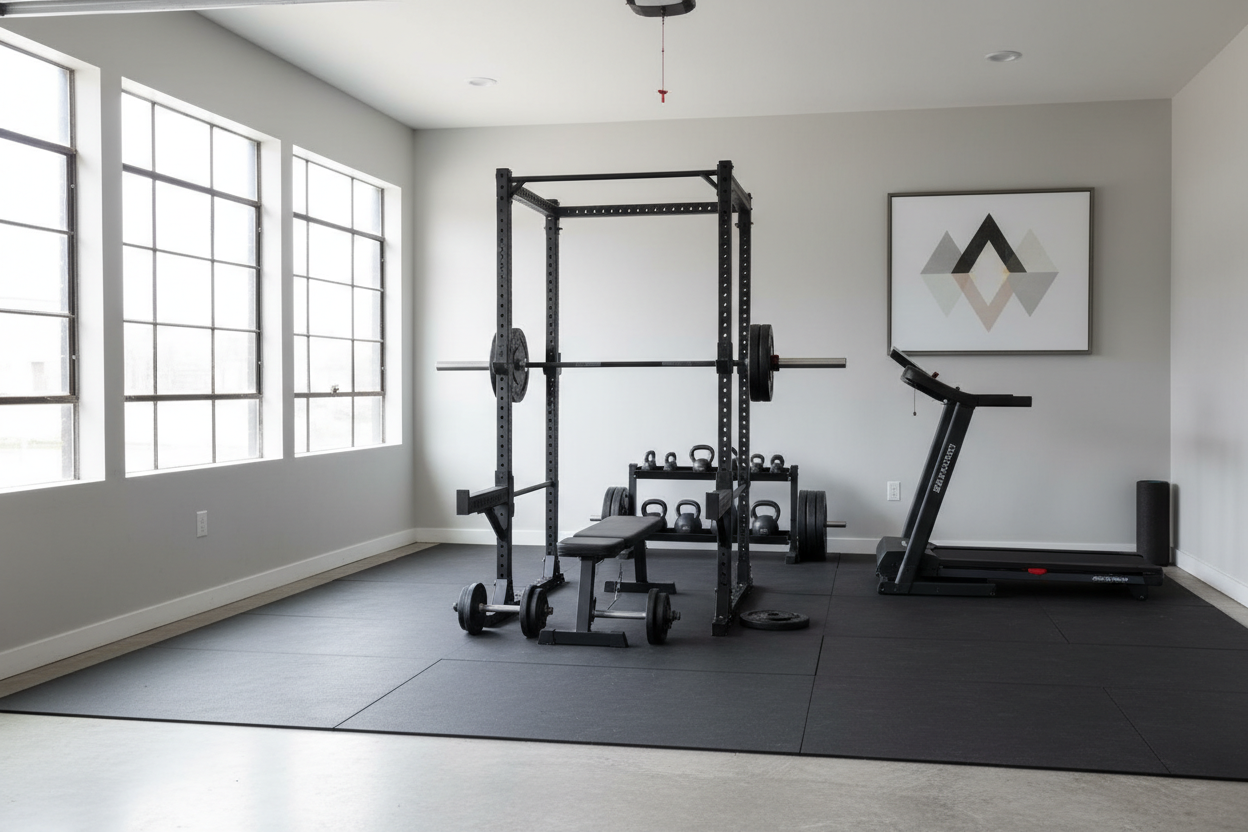
I remember the day my local commercial gym hiked its monthly fee to $75. I looked at the crowded racks, the broken cable machines, and the guy taking a nap on the only flat bench, and I realized I was paying for a headache. I decided to see if I could build the best home gym under 500 that wouldn't fall apart after a month of heavy rows.
Quick Takeaways
- Prioritize heavy-duty flat benches over cheap adjustable ones.
- Loadable dumbbells are the ultimate budget space-saver.
- Buy your weight plates used to save nearly 50% of your budget.
- Avoid any machine with a plastic pulley system under $300.
The $500 Reality Check: What You Can (and Can't) Buy
Let's be real: five hundred bucks is a drop in the bucket for some people, but for a lifter, it's a challenge. You aren't getting a 3x3 11-gauge steel power rack or a dual-stack functional trainer. If you try to buy those things at this price point, you'll end up with a 'rack' that shakes when you rack a 135-pound bar.
When building a home gym on this budget, you have to be a minimalist. You are buying the essentials to move heavy iron safely. We are skipping the bells and whistles—no LCD screens, no Bluetooth connectivity, and definitely no flimsy plastic covers. We want steel, iron, and sweat.
The goal is a setup that fits in a 6x8 foot corner of your garage or spare room. It needs to handle everything from heavy goblet squats to weighted pull-ups without snapping. If you can't drop it (within reason), we don't want it.
The Exact Receipt: My $500 Breakdown
I spent weeks scouring marketplaces and clearance sections to find the best bang for the buck. Here is the exact list of what I bought to stay under the limit.
- Loadable 1-inch Dumbbell Handles ($40): Skip the fancy selectorized sets for now. A pair of 14-inch chrome handles with star-lock collars is indestructible.
- 160 lbs of Standard Iron Plates ($180): I found these used at $1.12 per pound. You need a mix of 25s, 10s, 5s, and 2.5s.
- Heavy-Duty Flat Bench ($150): I chose a bench with a 1,000-lb capacity. It doesn't fold, and it doesn't incline, but it is rock-solid. A cheap adjustable bench is a safety hazard.
- Doorway Pull-up Bar ($35): The multi-grip version that bolts into the frame or uses leverage. This is your entire back workout.
- Heavy Resistance Band Set ($45): These fill the gaps for tricep extensions, face pulls, and assisted pull-ups.
- Total: $450 (Leaving $50 for tax or a cheap floor mat).
This setup allows you to train every single muscle group. Those loadable dumbbells can become 80-lb monsters for rows or stay light for lateral raises. The bench is your anchor for pressing, and the pull-up bar is non-negotiable for upper body thickness.
The Trap of Cheap All-In-One Machines
You’ve seen them on Amazon—the $299 'Total Home Gym' with a 150-lb weight stack and ten different attachments. Stay away. These machines are the reason people quit home workouts. The cables are sticky, the range of motion is designed for someone five feet tall, and the 'multi-function' arms flex under any real load.
It is much smarter to invest in budget-friendly home gym equipment that relies on free weights. Gravity never breaks. A solid iron plate will look and function exactly the same in thirty years. A cheap cable machine will be a clothes rack by next Christmas.
If a piece of equipment has more than three moving parts and costs less than a pair of high-end sneakers, it’s probably junk. Stick to the basics. You want gear that can survive a move and a decade of abuse.
How to Actually Train With Just This Gear
You don't need a leg press to build wheels. A Push/Pull/Legs (PPL) routine works perfectly with this $500 kit. For 'Push' days, you have dumbbell bench presses, overhead presses, and floor flies. For 'Pull' days, you have weighted pull-ups and heavy one-arm rows.
Leg day is where people get skeptical, but 80-lb goblet squats and Bulgarian split squats will torch your quads. Use the resistance bands for leg curls by anchoring them to the bench. It’s not fancy, but it’s effective. The intensity you bring matters more than the number of pulleys in your garage.
Where to Upgrade When You Finally Have More Cash
Once you’ve outgrown the 80-lb dumbbells or you’re tired of changing plates between sets, it’s time to level up. You don't throw away the starter kit; you build around it. The first upgrade should always be a barbell and a squat stand.
If you find yourself missing the feel of a commercial gym, you might eventually look into a Smith machine home gym station. It offers the stability for heavy pressing and squats without needing a spotter, which is a huge plus for solo garage lifters. But for now, that $500 kit is more than enough to get you stronger than 90% of the people at your local big-box gym.
Personal Experience: My Biggest Mistake
When I first started, I bought a 'budget' adjustable bench for $60. The first time I tried to do heavy incline presses with 60-lb dumbbells, the adjustment pin sheared off. I dropped the weights and nearly crushed my chest. I learned the hard way: never go cheap on the thing that supports your spine. Buy a flat bench that feels like a tank.
FAQ
Is 160 lbs of weight enough?
For dumbbells, yes. Doing a Bulgarian split squat with 80 lbs in each hand is enough to challenge almost anyone. When you can do that for 12 reps, buy more plates.
Can I put this on carpet?
You can, but it’s not ideal. Standard iron plates can be loud and might leave indentations. A $40 set of foam tiles or a single horse stall mat from a tractor supply store will save your floor.
Why not buy a cheap barbell set instead?
A $100 barbell is usually a 'standard' 1-inch bar that bends at 200 lbs. A decent Olympic bar alone costs $200. On a $500 budget, dumbbells give you more versatility and safety than a low-quality barbell.
Share:
I Tested the Best At Home Fitness Machines (And Destroyed Most)
Does the Best All In-One Workout Machine Actually Exist?