
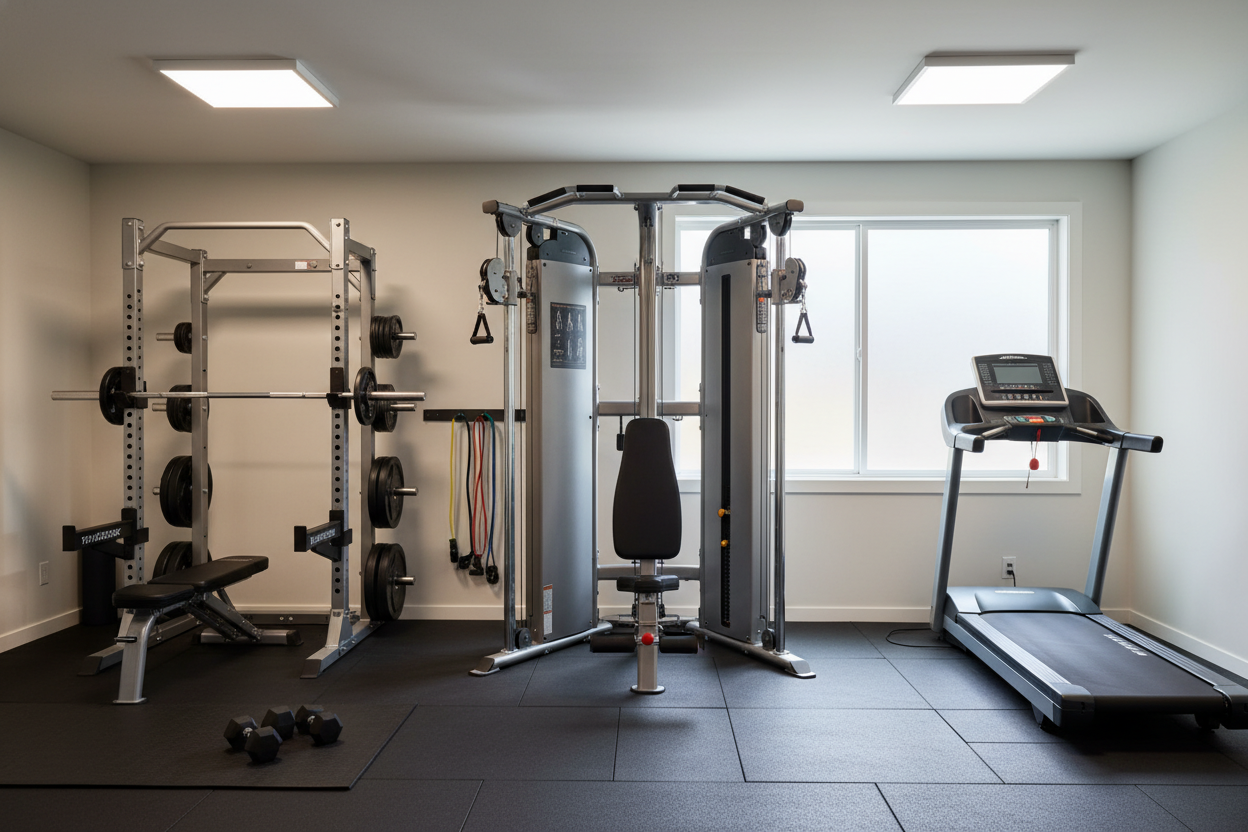
I remember the first time I tried to price out a full home setup. I spent three hours comparing tabs, only to realize I was looking at commercial-grade gear that cost more than my first car. gym machines prices vary wildly, and if you do not know what to look for, you are going to get burned by marketing fluff or, worse, dangerous engineering.
Quick Takeaways
- Sub-$300 machines are usually 'disposable' gear with plastic pulleys.
- The $1,500 to $2,500 range is the 'Sweet Spot' for durability and function.
- Plate-loaded machines save you money over selectorized (pin-stack) units.
- Always check the steel gauge; 11-gauge is the standard for serious lifters.
The Sticker Shock is Real (But Usually Justified)
When you start searching for a gym machine with price tags that make sense, you often end up looking at specialized equipment you do not even need yet. I have seen guys drop three grand on a single-function leg press before they even own a barbell. It is easy to get overwhelmed by the sheer volume of options.
Often, beginners price out the wrong equipment because they do not understand the utility of the machine versus its cost. I Matched Every Weird Gym Machine With Name And Purpose to help you avoid buying a $2,000 adductor machine when you really just needed a versatile cable system. Commercial gyms pay a premium for 'liability-proof' builds, but for your garage, you can get 90% of that quality for half the cost.
The 'Budget' Tier: Why Cheap Gear Actually Costs You More
We have all seen those $250 multi-gyms at big-box retailers. They look okay in the photos, but once you get them home, reality hits. These machines use 14-gauge or even 16-gauge steel, which is basically a glorified soda can. When you try to pull a heavy lat pulldown, the whole frame flexes.
The pulleys are the real killer here. Budget machines use plastic pulleys with cheap bushings instead of sealed bearings. They feel 'crunchy' under load and the cables start fraying within six months. By the time you replace the cables and realize the frame is wobbling, you have spent more than if you had just bought a mid-tier machine to begin with. If it weighs less than you do, do not buy it.
The 'Sweet Spot': Heavy-Duty Residential Equipment
This is where the magic happens. In the $1,000 to $3,000 range, you stop paying for 'home' junk and start getting 'light commercial' specs. You are looking for 11-gauge steel, 2,000-lb rated aircraft cables, and aluminum pulleys that spin like silk. This gear is built to take a beating for a decade.
Take the All In One Smith Machine With Cable Crossover S1 V4 as a prime example. Instead of buying four separate machines that take up your entire garage, this hits the sweet spot by combining a rack, a Smith bar, and a cable system into one footprint. It is heavy, it is stable, and it does not feel like it is going to tip over when you are doing pull-ups.
The 'Commercial' Tier: Do You Really Need It?
Once you cross the $5,000 mark for a single machine, you are paying for the brand name and the ability to survive 18 hours of daily use by 300-lb meatheads. For a residential user, this is almost always overkill. Unless you have a massive budget and a massive floor plan, buying a single-station Life Fitness or Hammer Strength machine is a waste of resources.
Instead of blowing your entire budget on a single seated row, look at outfitting a complete Home Gym that covers every muscle group. You can get a high-end rack, a specialized bar, and a full set of plates for the same price as one commercial-grade leg extension machine. Unless you are running a pro-athlete training facility, stick to the heavy-duty residential tier.
How to Spot a Good Deal Without Getting Scammed
To judge if a price is fair, look at the shipping weight. Steel is expensive. If two machines look identical but one weighs 100 lbs more, buy the heavy one. That extra weight is in the thickness of the steel and the quality of the uprights. You want 2x3 or 3x3 inch tubing with 11-gauge thickness.
Check the warranty. A company that offers a 10-year or lifetime warranty on the frame actually trusts their welds. Also, look at the weight ratio on the cables. A 1:1 ratio means you feel every pound; a 2:1 ratio is smoother but 'halves' the weight. If a machine is cheap but has a 2:1 ratio with a small weight stack, you will outgrow it in a month.
My Blueprint for a Budget-Friendly Garage Setup
Stop buying single-use machines. If you want to maximize your dollar, you need a versatile foundation. I always recommend starting with a Smith Machine Home Gym Station. It acts as your squat rack, your bench press, and your cable station all in one. It is the most cost-effective way to get a 'big gym' feel in a small space.
Focus on your 'Big Three' movements first. Once you have a solid rack and cable system, then you can look at adding 'fun' pieces like a functional trainer or a dedicated leg press. Build slow, buy heavy, and never trust a machine that uses plastic bolts.
Personal Experience: The 'Cheap' Lesson
I once bought a $150 lat pulldown from a random Amazon seller. The 'aircraft grade' cable snapped while I was doing 120-pound rows. I ended up with a bruised chin and a lesson learned: if the steel feels like a soda can, it probably is. I spent the next month trying to find replacement parts that didn't exist. Now, I won't touch anything that doesn't have at least a 2x3 inch 11-gauge frame.
Frequently Asked Questions
Is 14-gauge steel okay for a home gym?
It is fine for basic storage or very light accessories, but for anything that holds your body weight or heavy plates, stick to 11-gauge or 12-gauge. 14-gauge flexes too much under real load.
Why are plate-loaded machines cheaper?
Shipping weight stacks is incredibly expensive. Plate-loaded machines allow the manufacturer to ship a lighter frame, and you provide the weight. It is the best way to save money on high-end gear.
Should I buy a 'multi-gym' or separate pieces?
If you have the space, separate pieces are usually more durable. But for most garage gyms, a high-quality all-in-one unit offers the best value-per-square-foot and a better overall price point.
Share:
When to Stop Buying Dumbbells and Get a Weightlifting Barbell Set
Don't Hate the Smith Machine Bench Press Planet Fitness Makes You Use