
I remember staring at a 400-pound pallet in my driveway while it started to rain. My wife was annoyed, the delivery driver refused to move the crate past the curb, and I realized I had absolutely no plan for how to get a functional trainer up a narrow flight of stairs. That is usually the exact moment people start googling companies that build home gyms.
The dream is simple: you point at a room, hand over a credit card, and a week later you are squatting in a space that looks like a Nike commercial. But between the design fees and the equipment markups, you are often paying a 20% to 40% premium over the cost of the gear itself. Is that 'convenience tax' actually worth it, or are you just paying someone to do what a few YouTube videos and a Saturday afternoon could accomplish?
Quick Takeaways
- White-glove builders handle the freight logistics and 'last-mile' delivery headaches that break most DIYers.
- You pay a significant premium (often thousands) for the design and assembly labor.
- Professional installation is crucial for complex, multi-cable units and precision flooring.
- If your budget is under $5,000, you are almost always better off DIYing the build.
The Allure of the 'Done-For-You' Lifting Sanctuary
There is a specific kind of stress that comes with DIY gym building. It is not just the assembly; it is the research. You spend three weeks debating 11-gauge vs. 14-gauge steel, measuring ceiling heights for the hundredth time, and praying the bolt-down rack you ordered doesn't rip up your post-tension slab.
Hiring custom home gym builders removes the paralysis by analysis. You aren't just buying a rack; you are buying the certainty that the pull-up bar won't hit the ceiling fan and the flooring won't smell like a tire fire for six months. For a busy professional, the eight hours saved on assembly and the four hours saved on research are often worth more than the markup.
What Do Custom Home Gym Builders Actually Do?
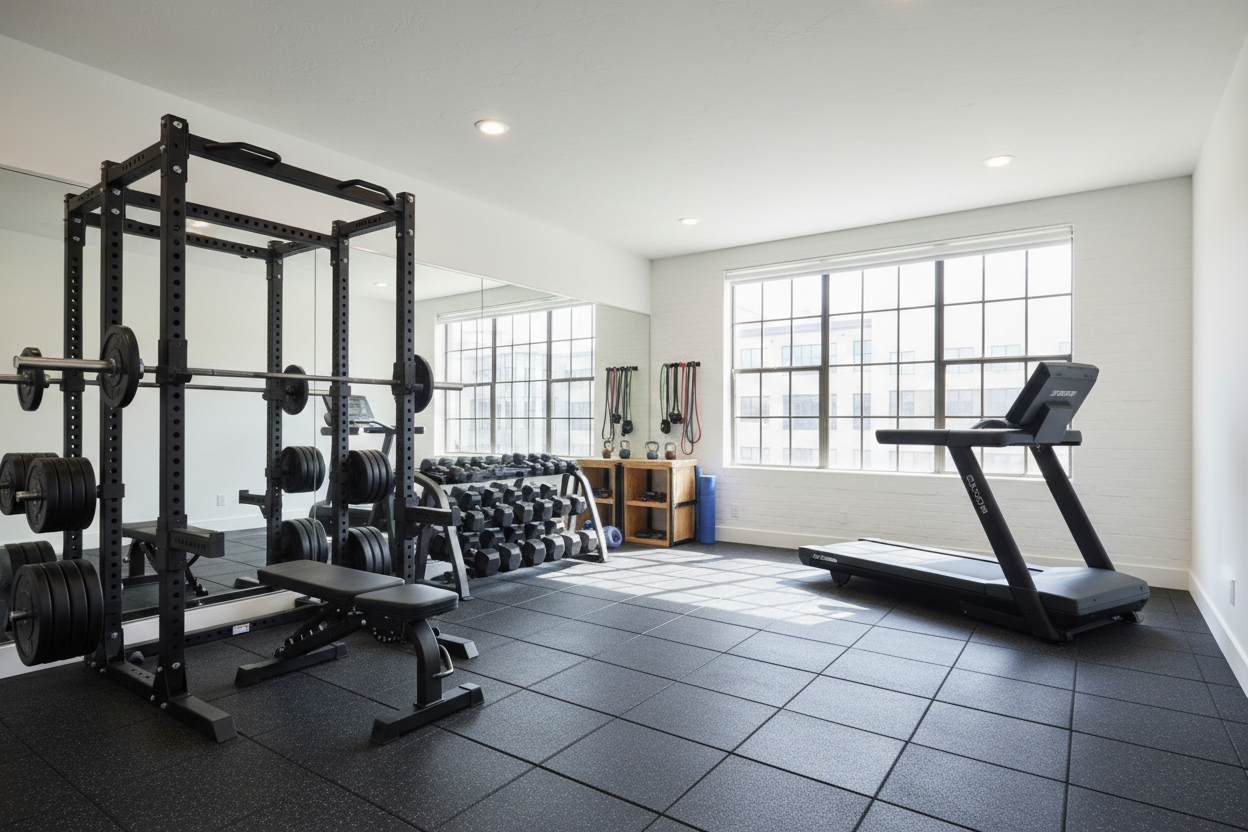
A legitimate builder does more than just order stuff off a website. They start with a CAD drawing of your room, ensuring that your 45-pound plates actually have enough clearance to be loaded onto the bar without hitting a wall. They source complete home gym setups that are curated for your specific training style, whether that's Olympic lifting or high-intensity interval training.
They also act as a single point of contact for warranties. If a cable snaps or a bench tears, you call the builder, not a nameless customer service rep overseas. They are the project managers for your gains, handling everything from the initial floor plan to the final wipe-down of the stainless steel bars.
The Logistics You're Actually Paying For
Freight shipping is the hidden boss of the fitness industry. Most high-end gear arrives on semi-trucks that can't enter residential cul-de-sacs. Builders manage the 'last-mile' delivery, meaning they receive the heavy pallets at their warehouse and bring them to your house in a smaller box truck.
They also handle the labor of laser-leveling your flooring. If you have ever tried to lay 8mm rubber mats on a sloped garage floor, you know it is a nightmare of gaps and ripples. Pros use precision cuts and industrial adhesives to make the floor look like a single, seamless piece of granite. That level of finish is nearly impossible to hit on your first DIY try.
The Markup: Sourcing Your Own Gear vs. Hiring the Pros
Let's talk numbers. If you want to build a home gym under $2000, you are firmly in DIY territory. At that price point, a builder would eat your entire budget just in service fees and shipping. You are buying the gear, hauling it into the garage yourself, and spending a Saturday with a socket wrench.
However, once you start looking at high-end Smith machine home gym stations or integrated power racks with weight stacks, the complexity spikes. These machines often have 200+ individual parts and complex cable routing. A professional crew can knock out a Smith machine assembly in two hours; it might take you two days and three trips to the hardware store for a tool you didn't know you needed.
When Does It Make Sense to Write the Big Check?
You should hire a pro if your time is worth more than $150 an hour. Period. If you are a surgeon, an executive, or a business owner, spending twenty hours researching, unboxing, and assembling gear is a poor use of your capital. You pay the markup so you can spend your Saturday morning actually training, not reading an instruction manual written in broken English.
It also makes sense if you are dealing with a difficult space. If you are building a gym in a basement with a low ceiling or a high-end spare room where you don't want to scuff the baseboards, the insurance and experience of a pro builder are invaluable. They know how to pivot when they realize your walls aren't perfectly square—and they always are not.
How to Vet a Gym Installation Firm Before Giving Them a Dime
Don't just hire a general contractor or an interior designer. You need people who actually lift. Ask them about the 'footprint vs. working area'—if they don't understand that a 4x4 rack actually needs an 8x10 space for plate loading and bar clearance, walk away. They are just selling furniture, not a training environment.
Check their flooring specs. If they suggest thin foam tiles instead of 3/4-inch horse stall mats or specialized 8mm-10mm rubber, they don't understand impact acoustics. You want a firm that talks about things like bolt-down requirements and ceiling clearance for overhead presses, not just which color the upholstery should be.
My Personal Take
I once tried to save $500 by installing my own wall-mounted folding rack into a garage wall with metal studs. I didn't use a stringer, I guessed on the height, and I ended up with a rack that was slightly crooked and felt 'spongy' every time I racked a heavy triple. I eventually had to tear it out, patch the drywall, and hire a pro to do it right. I wasted three days and $200 in materials just to end up paying the pro anyway. Sometimes, the 'markup' is just the price of doing it once.
FAQ
Do these companies provide the equipment?
Most have partnerships with major brands like Rogue, Rep, or Life Fitness. They usually buy at wholesale and sell to you at MSRP, keeping the difference as part of their profit margin.
Can I buy the gear myself and just hire them to install it?
Some firms offer 'install-only' services, but many prefer to source the gear to ensure they aren't dealing with missing parts or cheap, off-brand hardware that breaks during assembly.
How long does a professional build take?
From the time the equipment arrives, most residential gyms are finished in one to two days. The lead time for ordering the gear is usually the longest part of the process.
Share:
Why Your Exercise Equipment for Flabby Arms Isn't Working
What Nobody Tells You About the Best Home Gyms Under $500