
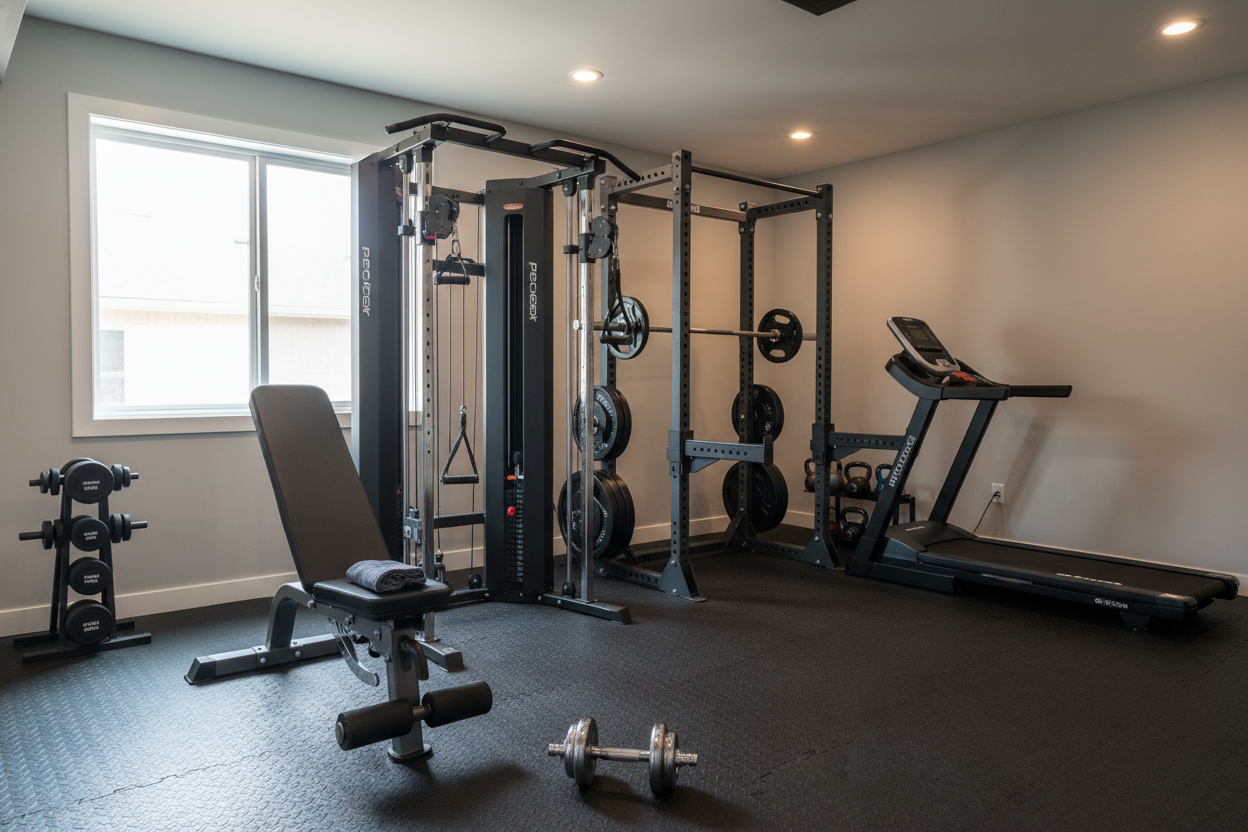
I’ve spent more nights than I’d like to admit scrolling through marketplace listings, trying to find that one piece of iron that would finally make my home fitness gym feel complete. For years, I was a barbell purist. If it didn’t involve a 7-foot stick of steel and the constant risk of crushing my windpipe on a failed bench press, I didn’t think it was 'real' training. But after a particularly sketchy solo session where I had to 'roll of shame' 225 pounds off my chest at 6:00 AM, my perspective shifted. I realized that training to failure is impossible if you’re constantly terrified of the weight.
Quick Takeaways
- Safety is the primary driver for solo lifters switching to machines.
- Modern full-body systems offer better range of motion than the clunky home gyms of the 90s.
- Space efficiency is massive; one machine can replace a rack, a bench, and a cable tower.
- Look for 11-gauge steel and aircraft-grade cables to ensure durability.
The Solo Lifter's Dilemma: Pushing to Failure Without a Spotter
The biggest lie in fitness is that you can always just 'use the safety pins.' While a high-quality power rack is great, setting those pins perfectly for every exercise is a chore that most people skip. When you're training in a basement or garage by yourself, that lack of a spotter creates a mental ceiling. You stop two reps short because you don’t want to get pinned. This artificially limits your progressive overload, which is the literal engine of muscle growth. A dedicated weight lifting machine for home use removes that mental barrier. You can take a set of chest presses to absolute mechanical failure, knowing that the weight isn't going to crush you if your triceps give out before your pecs do.
I’ve found that using workout machines at home allows for a level of intensity that I just couldn't safely replicate with a barbell. When you're using a home workout system with built-in stops or a selectorized stack, you can focus 100% on the muscle contraction rather than the fear of a trip to the emergency room. This is especially true for the home lifting gym enthusiast who doesn't have a training partner on speed dial. Pushing through those last 'grinder' reps is where the real progress happens, and a machine provides the safety net you need to get there.
Why I Stopped Hating on Workout Machines at Home
I used to be the guy who laughed at 'all-in-one' systems. I thought they were for people who didn't want to work hard. But then I actually used a modern strength training home gym setup that didn't feel like it was made of soda cans and recycled plastic. The shift in home workout systems over the last decade has been wild. We’ve moved away from flimsy pulleys to commercial-grade bearings that feel as smooth as the stuff you’d find at a $100-a-month health club. I finally traded free weights for a full-body workout machine and my joints have never felt better.
Modern workout machines for home allow for better isolation. If you’ve got a nagging lower back injury, a barbell squat is a nightmare. But a weight training machine for home—like a leg press or a hack squat attachment—lets you hammer your quads without loading your spine. This isn't 'cheating'; it's smart training. Using a home indoor gym setup that prioritizes your specific biomechanics means you can train harder, more often, and with fewer 'weird' pains the next morning. It’s about longevity. I want to be lifting when I’m 70, and a machine at home makes that a lot more likely than ego-lifting heavy triples on a deadlift bar every week.
The Space-Saving Magic of Full-Body Systems
Let’s talk logistics. Unless you have a three-car garage to dedicate to iron, space is your most valuable resource. A full power rack, a set of dumbbells from 5 to 50 pounds, and a dedicated cable crossover will eat up about 150 square feet before you even add a bench. When you’re building out a complete home gym, you quickly realize that a single full-body home gyms unit can cut that footprint in half. Most home workout gym machines are designed to fit in a 6x8 foot area, which is perfect for a spare bedroom or a corner of the basement.
A high-quality home fitness system integrates your pull-ups, your heavy presses, and your cable work into one central hub. This means less time moving plates around and more time actually lifting. For anyone looking at the price home gym equipment commands these days, buying one multi-functional workout system for home is often cheaper than buying four separate specialized pieces. It’s the ultimate hack for the residential gyms owner who needs to keep the floor clear for other things, like, you know, living their life.
How to Pick a Weight Lifting Machine That Actually Survives Heavy Use
Don’t buy the first new workout machine you see on a late-night infomercial. If it looks like it’s made of thin, shiny tubes, stay away. You want a strength machine at home that uses at least 11 or 12-gauge steel. If the manufacturer doesn't list the steel gauge, it's probably because it's thin. Look at the pulley system, too. A 2:1 pulley ratio is common in a home gym resistance machine, meaning 100 pounds on the stack feels like 50 pounds of actual resistance—this is great for functional movements and high-rep work. If you want raw strength, look for 1:1 ratios.
I always recommend a Smith machine home gym station for people who want the best of both worlds. You get the guided path of a machine for safety, but you can still use standard Olympic plates. When evaluating best home workout systems, check the maximum weight capacity. If a home weight training systems unit is capped at 200 pounds, you’re going to outgrow it faster than you think. Aim for something that can handle at least 300 to 500 pounds of total load to ensure the frame is overbuilt for whatever you throw at it.
Why Independent Arms Are Non-Negotiable
If you're buying a weight machines home gym, make sure it has independent movement arms. Cheap at home weight machine units often use a single fixed bar for chest and shoulder presses. The problem? Your dominant side will always do 60% of the work, leading to massive imbalances. You want a chest press machine with independent arms so each side of your body has to carry its own weight. This mimics the stabilization benefits of dumbbells while maintaining the safety of a machine path.
This is a critical feature for any home strength training machines. It forces your core to engage and prevents your 'strong' side from masking weaknesses in your 'weak' side. Whether you're looking at in home weight machines or a complex home training system, independent movement is the difference between a 'meh' workout and a pro-level session. It’s one of those best weight training machines features that you’ll regret skipping once you start getting serious about your physique.
The Verdict: Should You Completely Abandon the Barbell?
I’m not saying you should melt down your barbell and turn it into wind chimes. There is still a place for a simple free weight setup if you have the space and a reliable spotter. But for the average home workout systems user, a machine-centric approach is safer, more efficient, and frankly, more fun. You can jump from a chest press to a seated row in ten seconds without stripping plates and moving J-cups. That's the beauty of a workout system designed for the modern lifter.
Ultimately, the best at home workout system is the one you actually use. If you’re intimidated by the barbell or tired of the setup time, a strength training machine at home will get you more results because you’ll actually do the work. My in home gym system is now centered around a heavy-duty multi-station, and I’ve never been stronger or less injured. Don't let the internet purists tell you that machines aren't 'hardcore' enough. If you’re pushing 300 pounds to failure, your muscles won't know the difference—but your joints and your safety certainly will.
FAQ
Is a home gym resistance machine as good as free weights for building muscle?
Absolutely. Your muscles only understand tension and fatigue. As long as you are providing enough resistance to challenge the muscle and progressing over time, a machine can build just as much size as a barbell, often with less risk of injury.
How much should I expect to spend on a quality in home gym set?
For a unit that won't wobble or break, expect to spend between $1,500 and $3,500. While you can find a work out home gym for $500, the pulley quality and frame stability usually aren't worth the frustration of a 'clunky' feel.
Do these machines require a lot of maintenance?
Not really. A quick wipe-down of the guide rods with a silicone-based lubricant once every few months is usually all it takes to keep a home body gym running smoothly. Check the cable tension occasionally to ensure nothing is fraying, and you're good to go.
Share:
Does a Circular Dumbbell Actually Belong in a Home Gym?
Stop Paying the Upcharge for Fake Pro Fitness Equipment