
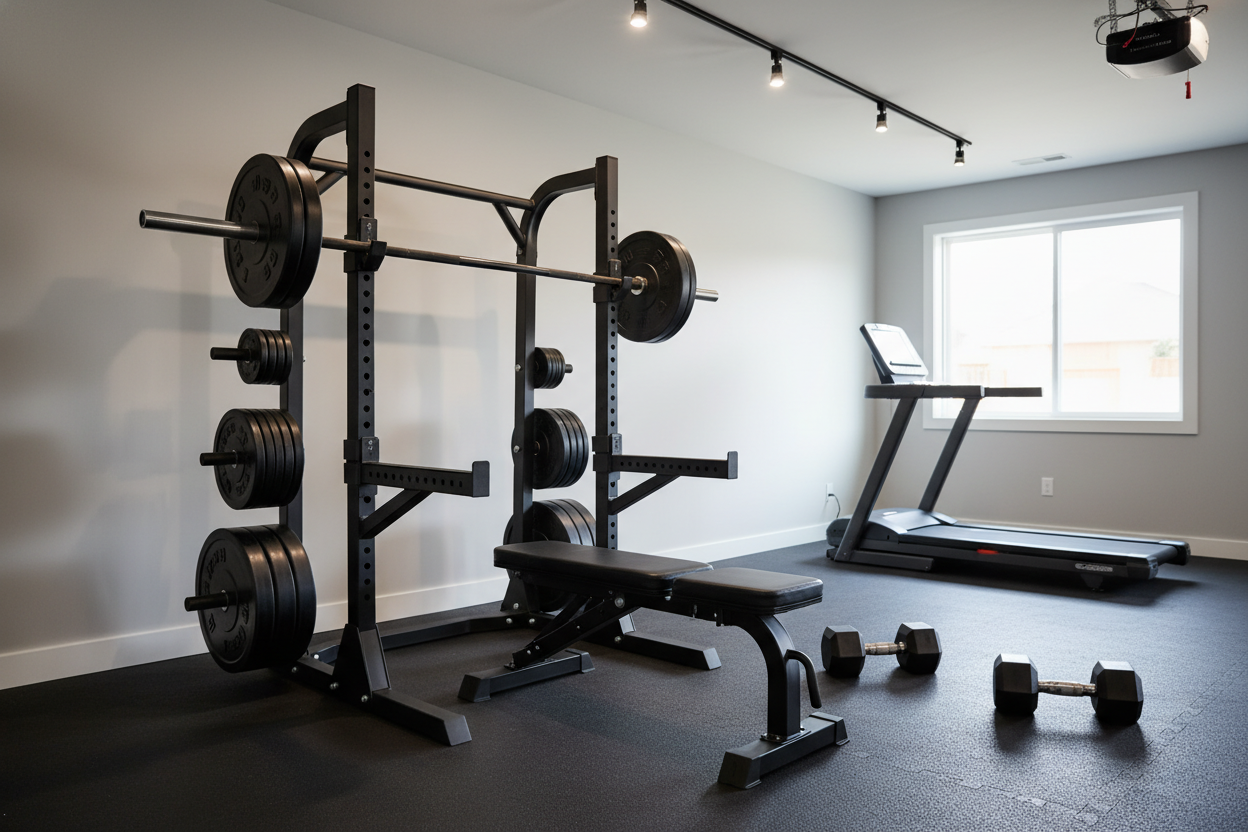
I remember the first time I dropped a 315-lb deadlift on my bare garage floor. The 'clack' didn't just wake up the neighbors; it felt like a structural threat to my house. That was the moment I realized buying rubber barbell weights isn't just a luxury—it is an insurance policy for your foundation and your sanity.
Quick Takeaways
- Rubber prevents micro-cracks in concrete slabs.
- Iron is deafening; rubber creates a manageable thud.
- Rubber-coated plates stop rust before it starts.
- Bumper plates are non-negotiable for Olympic lifting or overhead drops.
The Day I Almost Cracked My Concrete Foundation
Concrete seems indestructible until you start dropping hundreds of pounds of cast iron on it. I spent years lifting on raw iron because it was cheap and it looked 'hardcore.' Then I noticed the spiderweb cracks forming under my stall mats. Every time I set the bar down, the vibration rattled the tools on my workbench and probably the dishes in my kitchen.
Switching to a rubber weight barbell setup changed the entire vibe of my garage. Suddenly, I wasn't holding back on my last reps because I was afraid of the noise. I could actually train at 5 AM without the fear of a local noise complaint. If you are serious about a home gym, you have to think about the long-term health of your floor. A barbell rubber alternative is the only way to go if you plan on lifting heavy for years.
Cast Iron vs. Rubber: What Actually Matters in a Home Gym
Cast iron has its place, but in a 20x20 garage, it’s a liability. Iron plates are loud, they rattle on the bar, and they eventually chip and rust. If you live in a humid climate, your iron plates will look like they were pulled from a shipwreck within two seasons. A gym rubber plate solves the rust issue entirely by sealing the core away from the elements.
I’ve seen people try to save money by buying those sand-filled vinyl weight sets at big-box retailers. Take it from me: don't do it. The plastic shells split, the sand leaks, and the plates are so thick you can barely fit 135 lbs on the bar. Real rubber plates give you the durability of iron with the acoustic benefits of a professional facility. It’s the difference between a sharp 'ting' and a dull, satisfying 'thump.'
The Three Types of Rubber Lifting Plates (Don't Get Scammed)
When you start shopping for a rubber barbell weight set, the terminology gets messy fast. First, you have rubber-coated iron. These are basically standard iron plates with a thin skin of rubber. They are great for general strength training, but you shouldn't drop them from overhead. They protect the floor better than raw iron, but the inner core can still crack if abused.
Then you have virgin rubber bumper plates. These are solid rubber throughout. They are designed to be dropped from shoulder height (or higher) during cleans and snatches. They have a consistent bounce and almost no odor. If you're looking for durable weight plates for a CrossFit-style workout, these are your best bet. Finally, there's crumb rubber—made from recycled tires. These are the tanks of the lifting world. They have a higher bounce and can survive being used on a driveway or gravel, but they are usually a bit wider, meaning you can fit fewer of them on the bar.
Do You Really Need a Full Rubber Barbell Weight Set?
Buying a complete barbell set rubber package is the dream, but it can be a hit to the wallet. If you're on a budget, I recommend the 'Bumper Base' strategy. I started by buying two 45-lb rubber lifting plates. Since these have the largest diameter, they take the brunt of the impact when the bar hits the ground. You can then slide your cheaper iron plates inside them—they won't touch the floor, so they won't cause damage.
However, if you can swing the cost, colored rubber plate sets are a massive quality-of-life upgrade. Being able to glance at the rack and know exactly which plate is which based on the color (red for 55, blue for 45, etc.) makes your rest periods much smoother. It also looks significantly more professional than a mismatched pile of rusted metal in the corner.
Final Verdict: Your Floor Will Thank You
At the end of the day, you get what you pay for. You can find cheap iron at a garage sale, but you'll pay for it in floor repairs and annoyed family members. If you're training with just a barbell and weight set, that equipment is the centerpiece of your health. Spending the extra 20% upfront for quality rubber is the smartest move you can make.
My garage floor is still intact, my neighbors still talk to me, and my plates still look brand new five years later. Stick with rubber. Your ears, your floor, and your PRs will all be better for it.
FAQ
Do rubber weights smell like chemicals?
Cheap recycled rubber can have a 'tire shop' smell for a few weeks. High-quality virgin rubber plates have almost no scent at all. If yours smell, leave them in the sun for a day and the odor usually dissipates.
Can I use rubber plates on a regular barbell?
Yes, as long as they have a 2-inch center hole (Olympic size). Most high-quality rubber plates are designed for standard 2-inch sleeves, which is the industry standard for home and commercial gyms.
Are rubber plates too thick for heavy lifting?
Standard bumper plates are thicker than iron, so you might max out the sleeve at around 405-495 lbs depending on the bar. If you're deadlifting 600+, you'll want to look for 'competition' thin rubber plates or mix in some iron.
Share:
Why Most Home Garage Gyms Become Expensive Storage Units
No Space for a Sled? My Favorite Leg Press Alternative for Home Gyms