
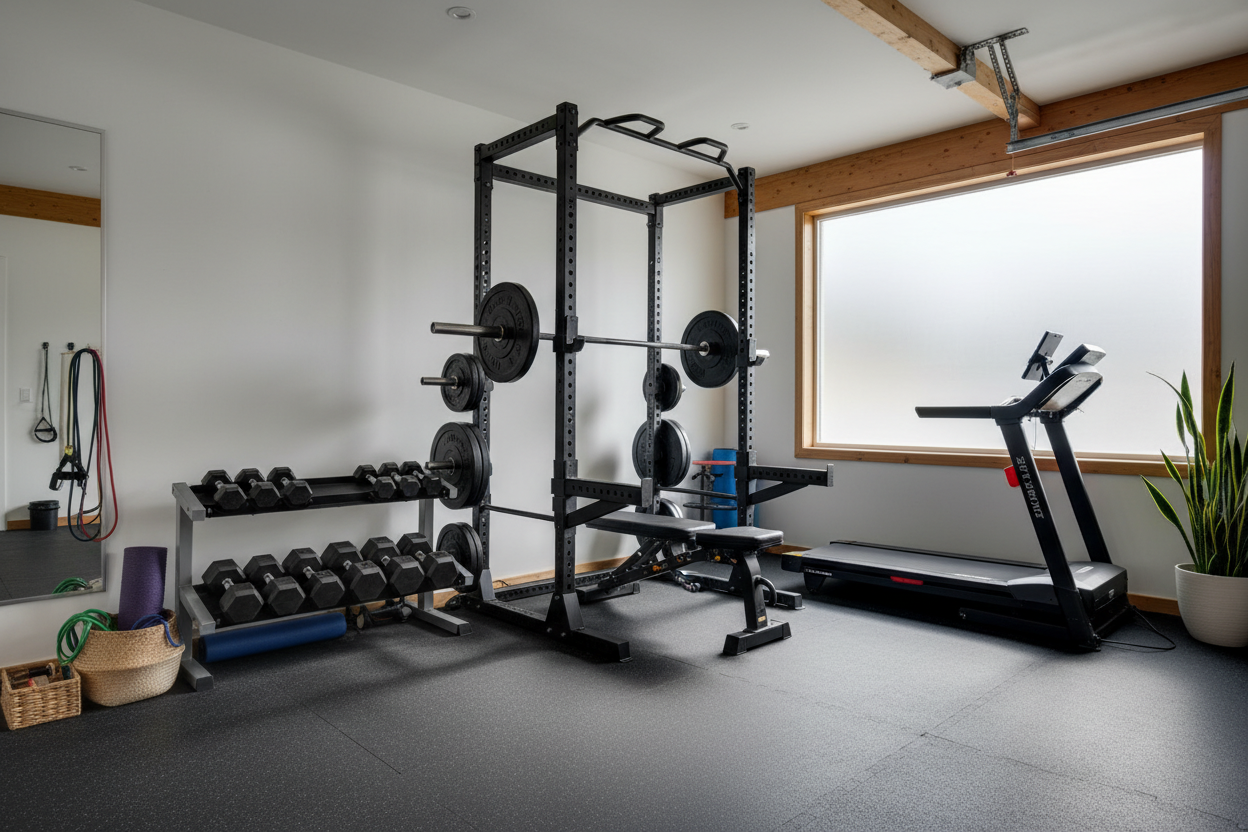
I remember staring at a $200 power rack on Amazon at 2 AM, convinced I had outsmarted the entire fitness industry. Three weeks later, that rack arrived, and it swayed like a palm tree in a hurricane every time I racked a modest 225-pound squat. Finding the best affordable home gyms isn't about hunting for the lowest price tag; it's about identifying the equipment that won't buckle when you're pinned under a barbell.
Quick Takeaways
- 11-gauge steel is the gold standard for safety; avoid 14-gauge for primary racks.
- Aluminum pulleys with ball bearings beat plastic bushings every single time.
- Check shipping weights—heavy equipment usually means better raw materials.
- Modular systems offer the best home gym value by growing with your strength.
The Dangerous Difference Between 'Budget' and 'Cheap'
In my years of testing gear, I’ve learned that 'budget' implies a calculated compromise, while 'cheap' implies a safety hazard. When you buy budget gear from a reputable brand, they usually save money by stripping away the chrome, the fancy logos, and the laser-cut numbering. The structural integrity remains intact. You’re getting the same welds and the same steel, just without the bells and whistles.
Cheap gear is a different animal. Manufacturers of cheap junk save money on the things you can’t see until it’s too late. They use low-grade recycled steel that’s brittle. They use 'tack welds'—tiny spots of solder that barely hold the joints together—rather than full, deep-penetrating beads. If you're planning on running a serious strength program like 5/3/1, you need to know your equipment can handle a failed rep. Saving $300 upfront feels great until a weld pops during a heavy bench press and you realize your medical deductible is ten times what you 'saved.'
Where Brands Cut Corners on Budget Racks
If you want to spot the junk, look at the hardware. Most best affordable home gyms will still use Grade 5 or Grade 8 bolts. Cheap racks use 'butter bolts'—soft, silver hardware that strips the moment you put a wrench to it. If the bolts feel light and look like they came from a toy set, the rest of the rack isn't far behind. I’ve seen bolts shear off under lateral tension because they simply weren't rated for the load.
Then there’s the powder coating. High-quality racks use a multi-stage finishing process that bonds the paint to the steel. Cheap brands spray a thin layer of textured paint directly over oily, unprepared metal. Within six months, that paint will flake off, and your 'new' gym will be covered in surface rust. When building a durable home gym, you want a finish that can survive the occasional missed j-cup or the humidity of a summer garage session without looking like a scrap yard find.
The Pulley Test: Your First Red Flag
If the home gym includes a cable system, the pulleys are the ultimate 'tell.' Cheap machines use 3.5-inch nylon pulleys with plastic bushings. These create massive amounts of friction, making a 50-pound lat pulldown feel jerky and inconsistent. Worse, plastic pulleys are prone to cracking under high tension.
I always look for at least 4.5-inch pulleys, preferably made of aluminum with sealed ball bearings. Aluminum doesn't deform under load, and bearings ensure the movement is butter-smooth. If you pull the cable and it feels like you're dragging a bag of rocks across a gravel driveway, that machine is junk. A smooth cable path is non-negotiable for hypertrophy work where time under tension is everything.
Why Steel Gauge is Non-Negotiable
Steel gauge numbers are counterintuitive: the lower the number, the thicker the steel. Most commercial gyms use 11-gauge steel (roughly 3mm thick). Many budget brands try to sneak by with 14-gauge (roughly 2mm thick). On paper, it doesn't sound like much, but in the real world, it’s the difference between a tank and a soda can.
When you rack a heavy barbell, 14-gauge steel vibrates. It hums. It feels nervous. 11-gauge steel just takes the hit and stays silent. If you’re a 150-pound beginner, you might get away with 14-gauge for a year. But the moment you start pulling 400-plus pounds, you’ll wish you had invested in the thicker walls. Thicker steel also allows for larger, more secure holes for attachments, meaning your dip bars and spotter arms won't wobble while you use them.
How to Maximize the Best Home Gym Value
To get the most out of your budget, stop buying single-use machines. A dedicated leg extension machine is a luxury for people with 1,000-square-foot basements and unlimited cash. For the rest of us, value is found in 'force multipliers.' This means looking for pieces that serve three or four purposes within the same four-post footprint.
For example, a sturdy Smith machine home gym station can often replace a squat rack, a functional trainer, and a pull-up station all at once. By consolidating the frame, the manufacturer can put more money into the quality of the steel and the pulleys rather than building three separate, flimsy frames. Look for modularity—racks that allow you to add a lat pulldown or a heavy-duty bench later. This lets you spread the cost out over time while ensuring every piece you own is high-quality.
Stop Chasing Unicorns (Buy This Instead)
The biggest mistake I see people make is chasing the 'all-in-one' unicorn that costs $400 and claims to do 50 different exercises. Those machines are almost universally garbage. They try to do everything and end up doing nothing well. The cables are too short, the seat is wobbly, and the range of motion is designed for someone five feet tall. It’s a recipe for frustration and injury.
Instead, focus on the 'Big Three': a solid rack, a high-quality barbell, and a bench that doesn't creak. You can find the closest thing to the perfect setup by prioritizing raw materials over flashy features. I’ve owned benches that cost $50 and benches that cost $600. The $50 one once collapsed while I was holding 90-pound dumbbells. I learned the hard way that my safety is worth the extra $150. Invest in the frame, and the gains will follow.
Personal Experience: My $200 Mistake
Early in my lifting career, I bought a 'budget' adjustable bench from a big-box store. It looked fine in the store, but the first time I tried to do incline presses with 80s, the adjustment pin sheared off. I ended up flat on my back with two heavy dumbbells hovering dangerously over my ribcage. It wasn't just a gear failure; it was a wake-up call. I realized that a 600-lb weight capacity rating on a cheap box means absolutely nothing if the hardware is made of pot metal. Now, I check the grade of every bolt before I lie down under a bar.
FAQ
Is 14-gauge steel safe for a home gym?
It depends on your strength level. For light accessory work or people lifting under 250 lbs, it's fine. If you’re a serious lifter or plan to grow into heavy squats and presses, stick to 11-gauge for your primary rack.
Can I upgrade the pulleys on a cheap home gym?
Usually, yes. Most budget machines use standard 3.5-inch or 4.5-inch pulleys. Swapping plastic pulleys for aluminum ones with high-quality bearings is the single best way to make a cheap machine feel expensive.
What is the most important spec to check?
Check the total shipping weight. If a 'full power rack' weighs 90 lbs, the steel is thin. A quality budget rack should usually weigh at least 130–150 lbs to ensure it has enough mass to stay stable during use.
Share:
Why the Best At Home Gym Machine Is Built for Solo Lifters
Why Do LA Fitness Machines Feel So Much Better Than Home Gear?