
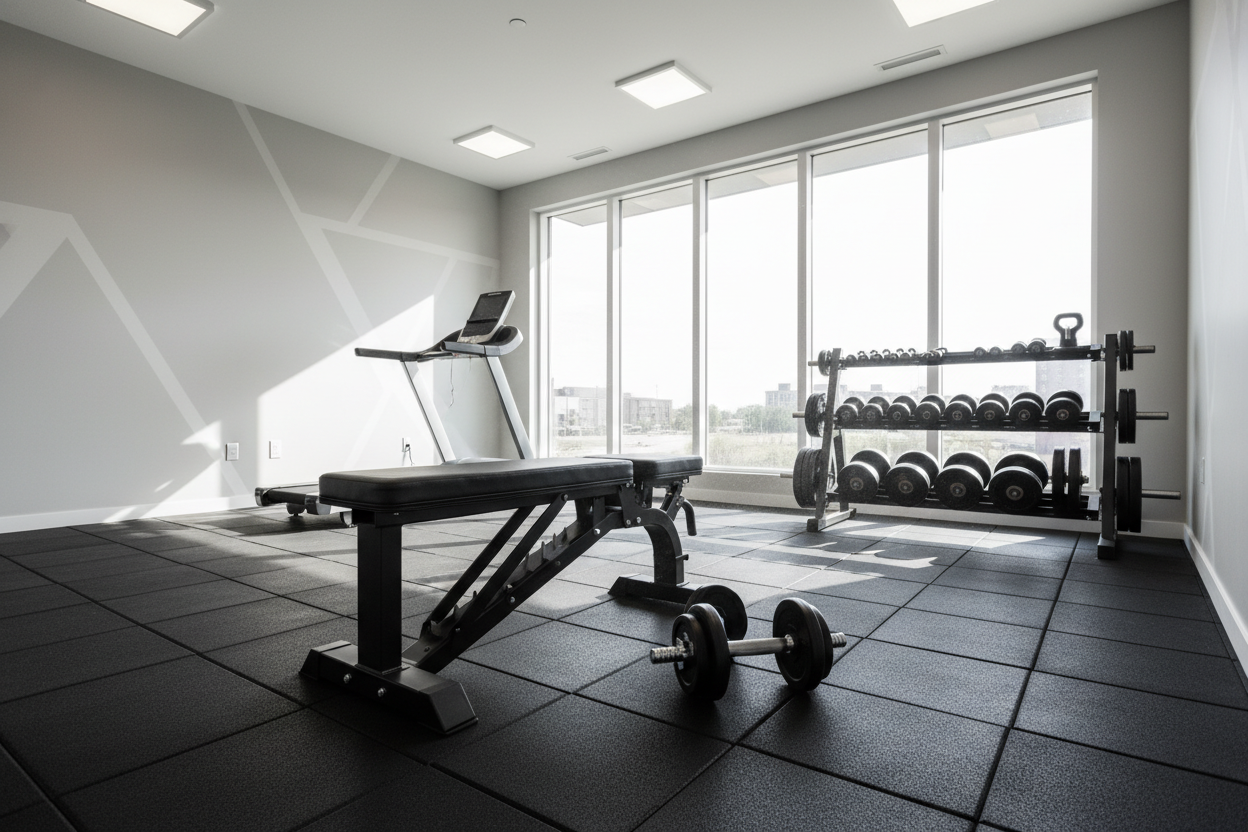
I remember the first time I tried to max out my incline press on a sixty-dollar 'deal' I found online. As I kicked the 80-pounders up, the backrest groaned like a haunted house door. That is the exact moment you realize a bench for working out isn't just a piece of furniture; it is the only thing keeping your spine off the concrete floor.
- Stability beats extra features every single time.
- A 12-inch pad width is the gold standard for protecting your rotator cuffs.
- If the bench weighs less than 40 lbs, it is probably a toy, not a tool.
- Most home lifters hit the sweet spot between $150 and $300.
The Terrifying Reality of Lifting on a Cheap Pad
Most people start their search for a home fitness bench by filtering for the lowest price. It is a natural instinct, but it is a dangerous one in the garage gym world. I have been there—lying back with heavy dumbbells while the seat wiggles like a loose tooth. It is impossible to focus on your chest contraction when you are subconsciously wondering if the bolt holding the frame together was tightened by a human or a machine with a deadline.
A real weight bench home gym setup needs to feel like a rock. Those flimsy sporting goods store traps that dominate the budget market are fine for light curls, but once you start a real bench press home routine, that wobble becomes a massive safety hazard. You want a frame that does not shift when you drive your feet into the floor for leg drive.
Flat vs. Adjustable: Don't Buy More Than You Need
A basic flat weights bench is the simplest, strongest tool in the shed. Because it has no moving parts, it is inherently more stable and usually cheaper. However, most of us want a multi use exercise bench to hit those upper pecs and perform seated shoulder presses. The trade-off is the hinge. Cheap manufacturing leads to a gap between the seat and the backrest, which is exactly why your adjustable gym bench for home feels so unstable when you are trying to focus on your form.
If you are on a tight budget, a heavy-duty flat bench is a better purchase than a cheap, shaky adjustable one. But if you have the cash, a high-quality incline bench opens up a world of variety for your home workout benches. Just make sure the adjustment mechanism is a ladder style or a thick steel pin—stay away from plastic knobs that feel like they belong on a lawnmower.
Three Non-Negotiable Specs for Heavy Lifters
Cuts through the marketing fluff. First, look at the steel gauge. You want 11 or 12-gauge steel. If it is 14-gauge, it belongs in a kid's bedroom, not under a 200-lb man. Second, check the pad width. A narrow pad (under 10 inches) will leave your shoulders hanging off the sides, which is a recipe for impingement. Look for a 12-inch pad to provide a solid base for your scapula.
Finally, look at a realistic weight capacity. A '300-lb limit' sounds like a lot until you realize that includes your body weight. If you weigh 200 lbs and you are lifting 150, you are already over the limit. A solid adjustable weight bench should handle at least 600-1,000 lbs total to ensure the frame does not flex under the load of a heavy bench for press sessions.
When Is It Worth Spending the Extra Cash?
When do you transition from a simple workout bench to something more advanced? If you are a solo lifter training to failure, the risks change. I eventually moved to a setup that allowed for more control because I did not always have a spotter in my garage. For some, this means moving toward a chest press machine with independent arms which offers the safety of a machine with the unilateral benefits of dumbbells.
Spending extra is about the quality of the vinyl and the density of the foam. Cheap foam bottoms out, meaning your shoulder blades hit the steel frame mid-set. Premium benches use high-density rebond foam that stays firm for years. If you are training four or five days a week, that extra $100 pays for itself in comfort and durability within the first year.
My Final Verdict on Your Next Purchase
Do not buy a bench press cheap just to save fifty bucks. You will regret it the first time the frame creaks during a heavy set. But you also do not need a $700 competition-grade unit designed for a commercial facility. Most home lifters can find a pro workout bench that hits all the safety specs for a reasonable price. If you are ready to stop lifting on the floor and start building a real setup, browse a vetted weight bench home gym collection that actually holds up to real iron.
FAQ
How much do bench press cost?
For a basic, high-quality flat bench, expect to pay $120-$180. For a solid adjustable bench that won't wobble, the sweet spot is usually between $250 and $350.
Where can I buy a bench press?
Avoid big-box department stores. Stick to specialized fitness equipment retailers online who provide detailed steel specs and actual weight capacities.
Is a simple weight bench enough for a full body workout?
Absolutely. With a bench and a set of dumbbells, you can hit chest, back, shoulders, and even use it for Bulgarian split squats. It is the most versatile piece of equipment you can own.
Share:
Why I Actually Prefer a Flat Exercise Bench for Heavy Pressing
The Ugly Truth About That $99 Black Friday Workout Bench