
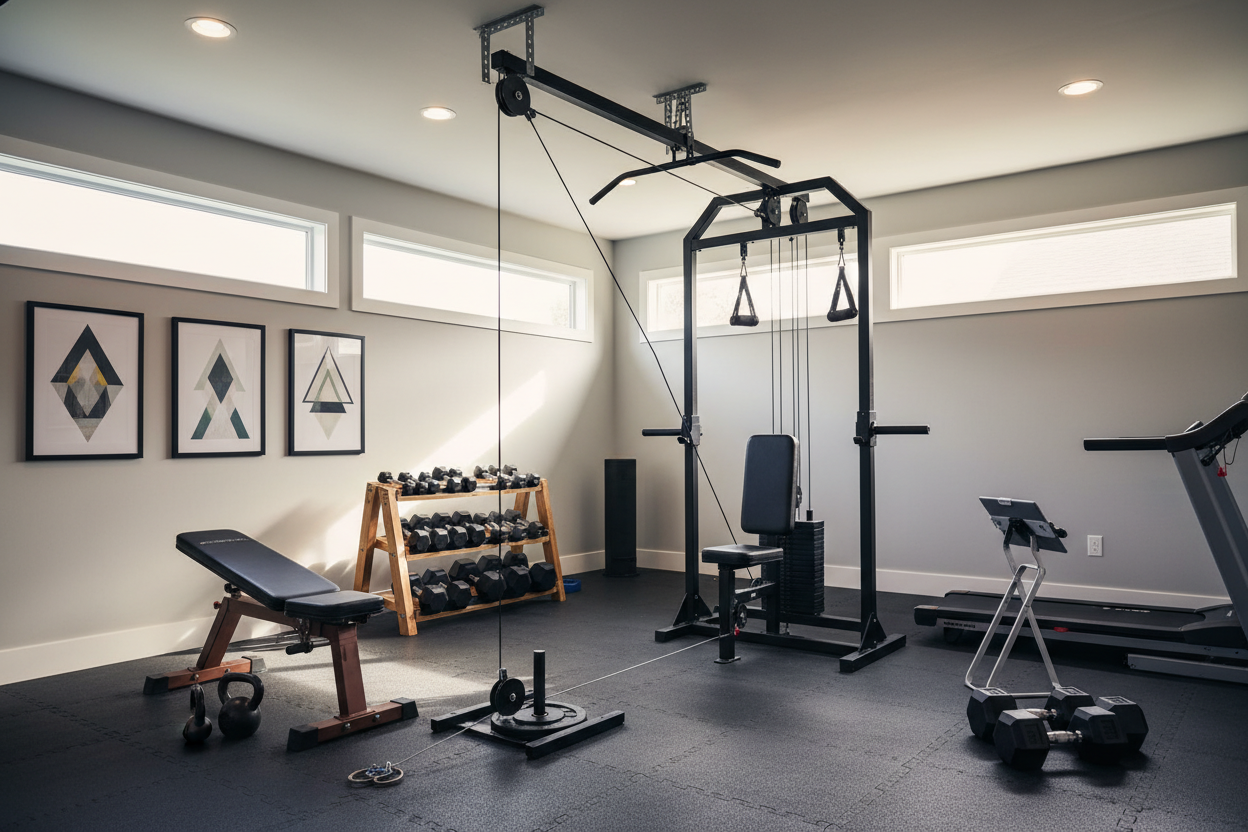
I remember the day I unboxed my first budget lat pulldown. It looked great in the listing, but the first rep felt like dragging a sled through wet sand. If you have ever bought a cheap muscle exercise machine, you know that 'gritty' feeling. It is the sound of plastic rubbing on metal and the sensation of the weight stack stuttering halfway through a rep.
You do not have to live with it. Most home gym owners think they are stuck with that friction until they can drop three grand on a commercial unit. I spent a weekend and about fifty bucks proving that theory wrong. By swapping out the weakest links, I turned a rattling budget unit into a buttery-smooth hypertrophy tool that actually keeps tension on the muscle.
Quick Takeaways
- Replace plastic pulleys with 6061 aluminum versions to eliminate drag instantly.
- Swap factory PVC-coated cables for 3/16-inch aircraft cable for better flexibility.
- Use silicone-based lubricant on guide rods instead of WD-40 or grease.
- Add resistance bands to fix dead spots in the strength curve.
The Real Difference Between Budget and Commercial Gear
The reason that $4,000 gym muscle machine at your local club feels so good is not just the heavy frame. It is the lack of friction. Commercial units use precision-machined pulleys with sealed ball bearings and high-tensile cables that do not stretch. When you pull, 100% of that force goes into the weight stack.
On a budget muscle workout machine, the manufacturers cut corners on the 'touch points.' They use nylon plastic pulleys that flex under load and guide rods that are often slightly out of alignment. This creates 'stiction'—that annoying moment where the weight stalls out mid-rep and then jumps forward. It ruins your mind-muscle connection and makes high-rep isolation work feel like a chore rather than a workout.
The $20 Aluminum Pulley Upgrade
The single most effective mod you can do is binning the factory-issue nylon wheels. Most budget machines come with 3.5-inch or 4.5-inch plastic pulleys. Under a heavy load, these plastic wheels actually compress slightly, which increases the surface area of the cable contact and creates massive drag.
I replaced mine with 6061 aluminum pulleys I found online. Aluminum does not flex. When you pair it with a high-quality bearing, the cable glides without any side-to-side play. It took me twenty minutes with a socket wrench to swap six pulleys, and the difference was night and day. The weight felt 'lighter' simply because I was no longer fighting the machine itself.
Ditch the Stiff Nylon Cables
Factory cables on budget gear are usually thick, stiff, and coated in a gummy PVC that cracks over time. If your cable retains a 'memory' of being coiled in the box, it is going to jump and skip as it passes over the pulleys. This kills the smoothness of any muscle workout machine.
I suggest buying bare or thinly-coated 7x19 aircraft cable. The '7x19' refers to the strand count—it is incredibly flexible and follows the contour of the pulley perfectly. You want immediate tension from the very first inch of the movement. If there is a delay between your hands moving and the weight stack lifting, your cables are the culprit.
Fixing the Strength Curve With Bands
Budget machines often have terrible biomechanics. A common issue is a 'dead spot' at the top of a movement where the resistance falls off. This is especially true on lower-body gear. I found that by looping a light resistance band around the carriage of my compact 30-degree leg press, I could fix the lockout tension.
The band adds progressive resistance. As you reach the top of the rep where you are strongest, the band stretches and increases the load. This prevents you from 'cheating' by using momentum and forces the quads to work through the entire range of motion. It is a simple hack that makes a small home unit feel like a heavy-duty plate-loaded machine found in a pro bodybuilding gym.
When to Mod and When to Buy New
I love a good DIY project, but you have to know when you are polishing a piece of junk. If the frame of your machine is made of thin 14-gauge steel and wobbles when you load two plates, no amount of aluminum pulleys will save it. You cannot fix a fundamentally weak structure that flexes under tension.
If you find yourself spending more on upgrades than the machine is worth, it is time to stop. At that point, it is smarter to invest in a multi-station gym machine that is built to handle heavy use from day one. If you want the ultimate fixed-path safety for heavy benching or squatting without the DIY headache, look into a Smith machine home gym station. These units use linear bearings and case-hardened rods that no $200 mod can ever truly replicate.
My Personal Experience
I once spent three weeks trying to 'fix' a $150 cable crossover I bought off a local marketplace. I swapped the pulleys, replaced the cables, and even sanded down the guide rods to make them smoother. It felt better, but the frame was so light that the whole machine shifted every time I did a chest fly. I eventually sold it and bought a unit with a wider base and heavier gauge steel. The lesson? Upgrade the moving parts, but do not try to fix a bad foundation.
FAQ
What is the best lubricant for gym machine guide rods?
Never use WD-40 or heavy grease. Grease attracts dust and skin cells, turning into a thick paste that slows the machine down. Use a 100% silicone spray or a dry Teflon lubricant. Wipe the rods clean first, spray a cloth, and rub it on the rods for a thin, even coat.
How do I know what size pulley to buy?
Measure the outer diameter of your current pulley and the width of the hub (the center part where the bolt goes through). Most budget machines use a 10mm or 3/8-inch bolt. Ensure the new aluminum pulley matches these dimensions or includes spacers to fit your frame's brackets.
Can I add more weight to a budget stack?
Be careful. Most budget stacks use a 1-inch selector pin and thin guide rods. If you start hanging extra plates off the pin, you risk bending the rods or snapping the top plate. If you consistently max out the stack, it is time to upgrade to a commercial-grade machine with a 200-lb or 300-lb stack.
Share:
The Used Market for Dumbbells Gym Equipment is a Complete Joke
Stop Using Bands: Why the Smith Machine Pull Up Is Better