
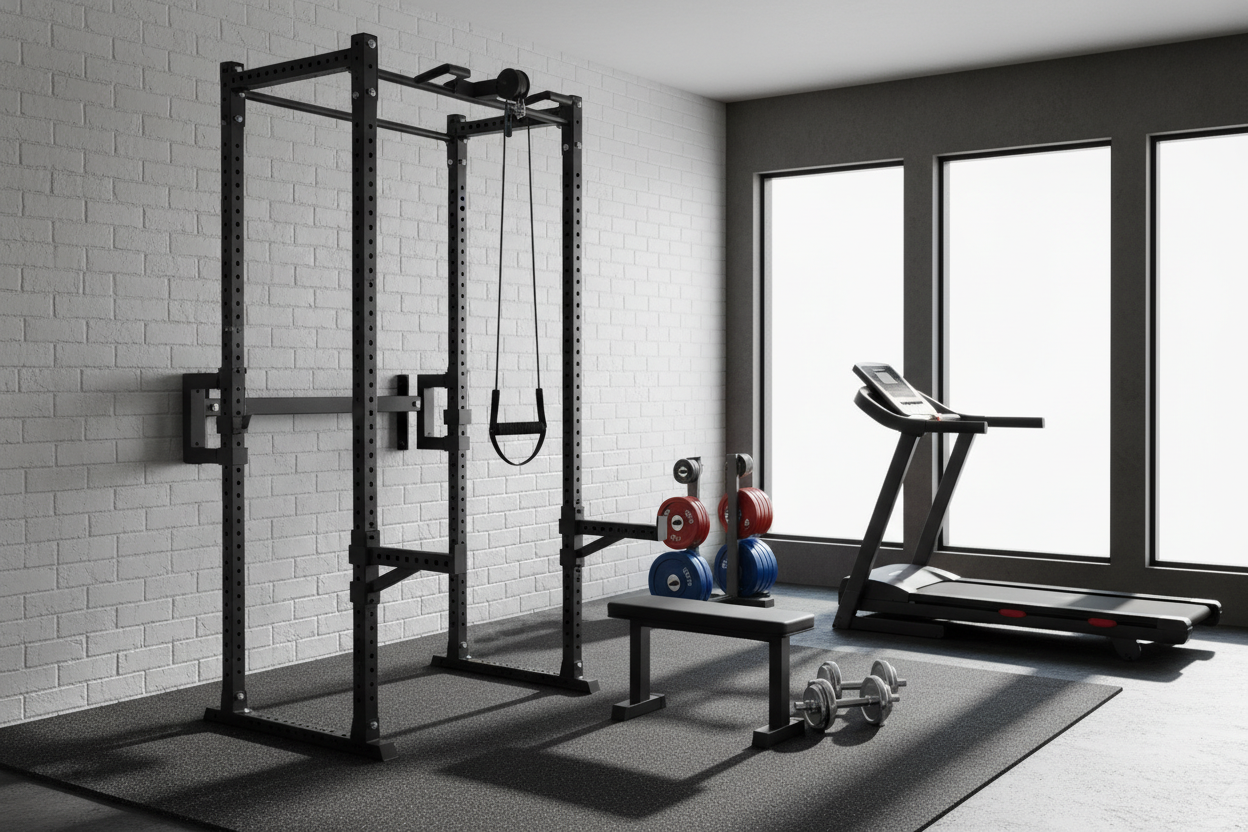
I remember staring at a 15-square-foot patch of empty concrete in my garage, wondering if I could actually squeeze in a commercial-grade leg pulling machine. My floor was already crowded with a power rack and a stack of bumpers, and the thought of adding a single-use beast felt like a death sentence for my mobility. I almost pulled the trigger on a used unit before I did the math on my square footage and realized I was about to make a massive mistake.
- Dedicated machines eat up too much space for a single isolation movement.
- Cable hacks provide more consistent tension for hamstrings than cheap pivot-point units.
- Ankle cuffs and a utility bench can replace a $1,500 machine for under $50.
- Multi-use combo units are the only way to justify heavy leg machinery in a home gym.
What We Actually Mean When We Talk About Leg Pulling
People get tangled in the names. Is it a leg pull in machine, a seated curl, or a glute-ham developer? Most of the time, when a lifter is searching for these terms, they are looking for knee flexion—the act of pulling the heel toward the glute under load. It is the literal 'pull' of the posterior chain.
Beginners often search for a 'leg pulling machine' because they want to isolate the hamstrings without the systemic fatigue of a heavy deadlift. Understanding that 'pulling' in this context is just posterior chain engagement helps you stop shopping for a specific label and start looking for a specific stimulus. You do not need a machine that only does one thing to get that deep, hamstring-splitting burn.
Why a Dedicated Leg Pull Exercise Machine is a Garage Gym Trap
A standalone leg pull exercise machine is a notorious space hog. We are talking about a 4x6 foot footprint once you account for the weight horn swing and your own body position during the set. In a standard 400-square-foot garage, that is prime real estate you are lighting on file. You are essentially sacrificing a second rack or a dedicated cardio corner for an isolation move you might do twice a week.
I have seen too many guys buy the wrong leg exercise machine only to realize six months later that it has become a very expensive coat rack. The return on investment for a solo lifter is terrible. Unless you are a competitive bodybuilder who needs that 1% difference in isolation, that floor space is better served by equipment that allows for multiple planes of movement.
How to Hack Your Own Leg Pull In Machine with Low Cables
My current setup for a leg pull in machine is dead simple and costs almost nothing if you already have a cable stack. I use the low pulley on my functional trainer, a pair of 3-inch thick padded ankle cuffs, and my standard adjustable utility bench. I set the bench about three feet away from the pulley, lie face down, and hook the cuffs to the cable.
This hack actually provides a better resistance curve than many cheap machines. Because it is a cable, the tension is constant throughout the entire arc of the pull. There is no 'dead spot' at the top of the movement. When I am done, the 'machine' disappears—I just toss the ankle cuffs in a drawer and roll the bench back into the rack. It is a zero-footprint solution for a high-value movement.
The Heavy-Duty Combo Machines That Actually Earn Their Footprint
If you are dead set on dedicating floor space to a lower body unit, make sure it is a multi-tasker. I would much rather spend my budget on a compact 30 degree leg press hack squat combo than a single-use puller. This type of unit handles the heavy compound pushing movements that are much harder to replicate with cables or bands.
By letting a heavy-duty combo machine handle your primary leg presses and squats, you free up your cables and barbells to handle the pulling side of the equation. This creates a balanced gym where your 'big' machines are doing the 'big' work, while your modular gear handles the isolation and accessory pulls. It is about maximizing the utility of every bolt and steel tube in your gym.
Why I Dropped the Leg Pulls Machine for Barbell and Smith Work
Eventually, I stopped hunting for a dedicated leg pulls machine altogether. I realized that a Smith machine and a standard barbell offer a level of posterior tension that isolation machines struggle to match. A slow, controlled stiff-legged deadlift or a Romanian deadlift provides a massive stretch-mediated hypertrophy response that builds real thickness.
I even found an underrated leg exercise on Smith machine for quads that I modified into a posterior pull just by shifting my foot position and hip hinge depth. Using a tracked barbell allows you to focus entirely on the pull without worrying about balancing the weight, giving you that 'machine' feel while using a tool that can do fifty other exercises. It makes the specialized isolation machine look like a total waste of cash.
Personal Experience: The Bolt-On Disaster
I once bought one of those cheap, bolt-on leg curl attachments that hooks onto the front of a utility bench. It was a nightmare. The padding was thin, the pivot point did not line up with my knee, and it rattled like a bucket of bolts every time I hit a rep. I spent more time tightening the 17mm nuts than I did actually training my hamstrings. I sold it for forty bucks on Marketplace and went back to my cable and ankle cuff setup. If it is not commercial-grade or a clever cable hack, it is usually just junk taking up space.
FAQ
Can I use resistance bands for leg pulls?
You can, but the resistance is lightest at the start of the move where the hamstring is most stretched. Cables are a much better choice because the load stays consistent throughout the rep.
Are ankle cuffs uncomfortable for heavy pulling?
Only if you buy the cheap, thin ones. Look for cuffs that are at least 3 inches wide with neoprene padding. They should feel secure, not like they are cutting into your Achilles.
What is the best substitute for a leg curl machine?
Nordic curls are the gold standard if you have the strength. If not, the cable-seated leg curl (using a bench and a low pulley) is the closest feel to a commercial gym unit.
Share:
Are Commercial Precor Dumbbells Actually Worth the Price?
Why the Best Adjustable Dumbbell Reddit Loves Might Break