
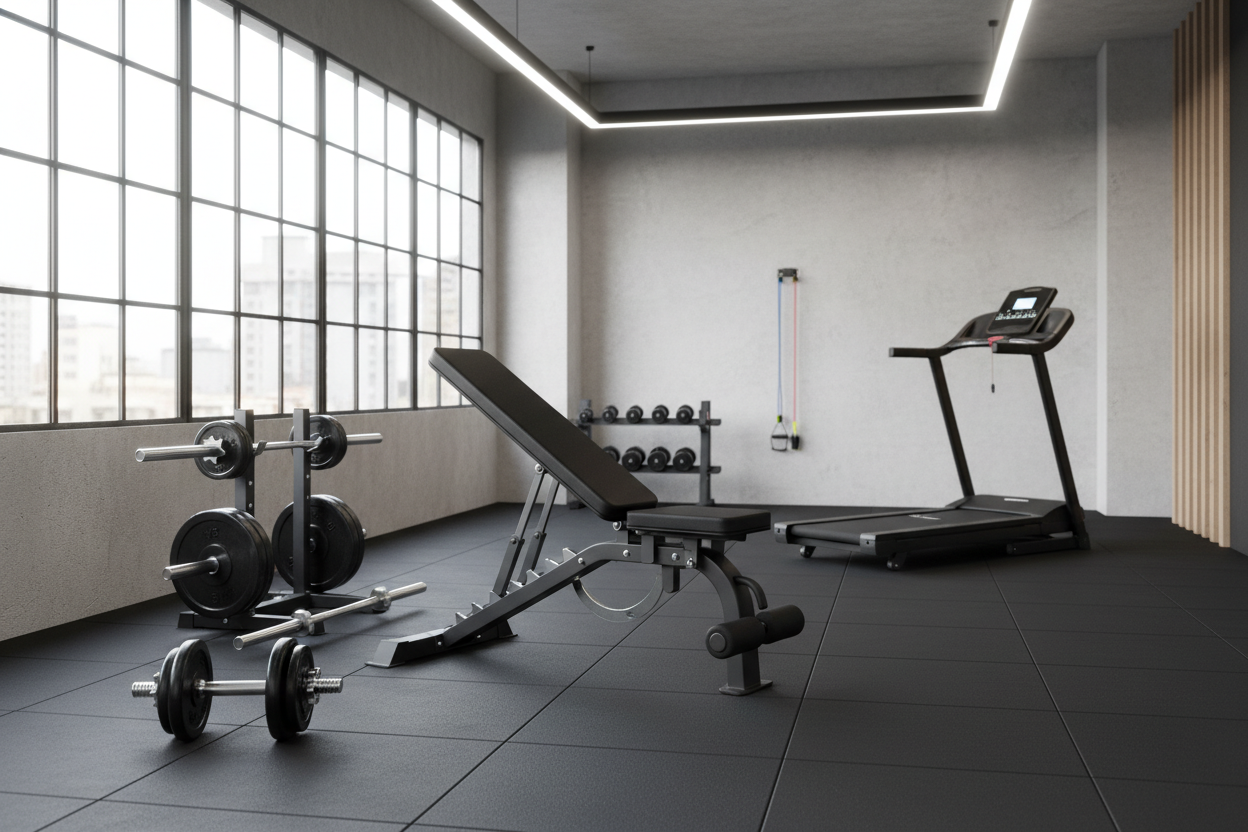
I remember my first 'all-in-one' kit. It cost $150 and felt like it was made of recycled soda cans. You’re finally ready to stop paying for a gym membership you barely use, but searching for a beginner weight lifting set online is a minefield of hollow steel and plastic-coated cement.
The goal isn't just to move heavy stuff; it's to do it without the equipment folding under you. If your setup shakes when you rack the bar, you won't train with confidence. Here is how to build a foundation that actually lasts.
- Prioritize the bench frame over the total plate weight.
- Avoid 'kit' bundles that use thin 1-inch standard bars.
- Look for a weight capacity of at least 600 lbs (user weight + weights).
- Ensure the bench pad is high-density foam, not soft sponge.
The Fatal Flaw in Most Box-Store Starter Kits
Big-box stores love the 'everything in a box' model. They give you a bar, some plates, and a bench for a price that seems too good to be true. It usually is. They often stop paying for filler by cutting corners on the frame gauge and the weld quality just to keep the shipping weight down.
These kits are designed to look good in a glossy flyer, but they fail in the garage. You’ll get a bar that’s too short for a standard rack and a bench that uses M6 bolts where it should have M12s. It’s a recipe for a starter weight lifting set that ends up on Facebook Marketplace within three months because it feels like a toy.
Why Your Base Matters More Than the Iron
Stability is the secret to strength. If your feet aren't planted and your back isn't supported by something that feels like a tank, your brain will subconsciously hold back. It’s called protective inhibition. You can't push a heavy press if you're worried about the legs folding underneath you.
When you start browsing a solid weight bench collection, look for 11-gauge or 14-gauge steel. Anything thinner is just a lawn chair with cushions. A heavy bench provides a wide footprint that prevents tipping during rows or step-ups. If you're building a weight lifting set for beginners, spend the bulk of your budget on the bench and the rest on the iron.
Flat vs. Adjustable: Sizing Up Your First Bench
A flat utility bench is the gold standard for stability. There are no hinges to rattle and no gaps in the padding to annoy your lower back. If you only care about the 'Big Three' lifts, a flat bench is a tank that will never fail you. It's also usually cheaper, letting you put more money toward better plates.
However, most people want variety. If you want to hit incline presses or seated shoulder work, you need a pivot point. The trick is finding a versatile adjustable weight bench that doesn't suffer from 'hinge-wobble.' Look for a bench that weighs at least 60 lbs; mass usually equals stability in the home gym world. If the back pad wiggles more than an inch side-to-side when you're unweighted, it's a pass.
How to Future-Proof Your Setup So You Don't Have to Buy Twice
You won't stay a beginner forever. In six months, you'll be pulling heavier numbers and looking for more variety. A cheap beginner weight lifting set usually hits a dead end because it can't be expanded or handle the load. I've seen too many people buy a second bench a year later because their first one started creaking at 225 lbs.
Instead, look for a 'system' bench. I’m a fan of a bench with independent press arms because it allows you to transition from basic free weights to machine-style movements without buying a whole new rack. Buying gear that accepts attachments—like a leg developer or a preacher curl pad—means your gym grows with your PRs.
My First Big Mistake
I once bought a 'gold' branded starter set from a local liquidator. The first time I tried to do a 185-lb bench press, the uprights started swaying like a palm tree in a hurricane. I had to roll the bar off my chest because I didn't trust the rack to hold it. I ended up selling the iron for pennies and buying a proper utility bench. It was a $200 lesson in 'buy once, cry once.'
FAQ
How much weight capacity do I actually need?
Don't just look at your current lift. Add your body weight plus your goal weight. If you weigh 200 lbs and want to bench 200 lbs, a 300-lb capacity bench is already failing you. Aim for a 600-lb minimum to be safe.
Should I get a 1-inch or 2-inch bar?
Always go with a 2-inch Olympic bar. The 1-inch 'standard' bars are a relic of the 80s. They have lower weight capacities, they bend easily, and the plates are much harder to find second-hand.
Is a wider bench pad better?
A 12-inch wide pad is the sweet spot. It provides enough shoulder support to prevent injury without getting in the way of your shoulder blades during the bottom of a press. Anything narrower than 10 inches feels like balancing on a tightrope.
Share:
I Upgraded to a 5 75 Dumbbell Set (Here Is What Surprised Me)
Is the Best Smart Home Gym Worth the Monthly Fee?