
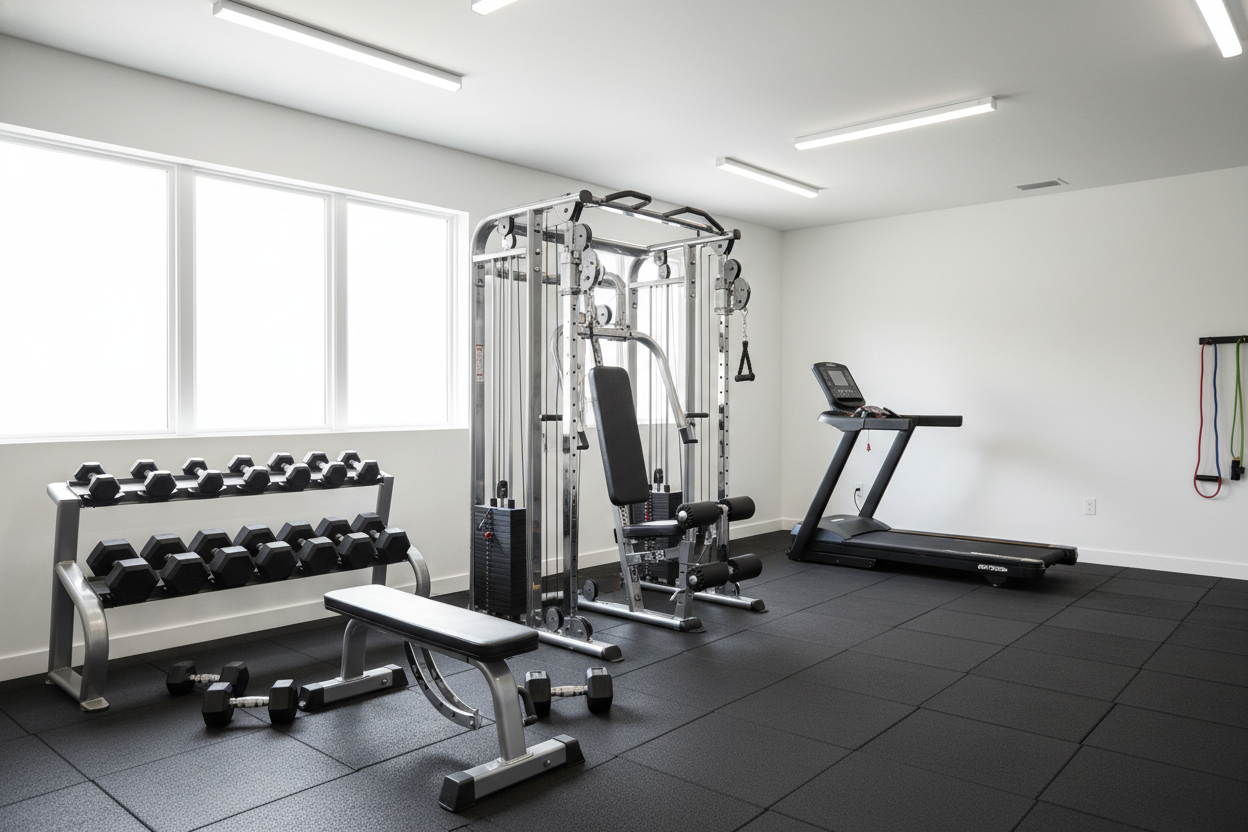
I spent a decade as a barbell snob. If it didn't involve a chalk-covered bar and a power rack, I didn't think it was worth my time. Then I hit 35, and my shoulders started sounding like a bag of potato chips every time I pressed. I realized that a life fitness training approach isn't just for commercial gym-goers who want to scroll on their phones between sets; it is a legitimate way to pack on muscle while keeping your joints from feeling like they are filled with glass.
Quick Takeaways
- Machines provide constant tension that free weights physically cannot match during the eccentric phase.
- Fixed paths allow you to train to absolute failure without needing a spotter or risking a crushed windpipe.
- A successful life fitness machine workout plan requires strict attention to seat height and limb alignment.
- Don't guess your progress; track the pin settings and weight stacks just as you would a bench press PR.
Why I Stopped Ignoring the Machine Circuit
The stigma around machines is mostly ego. We are told that 'real' strength is built with free weights, but your muscles don't have eyes. They only know tension. Shifting my focus to life fitness equipment workouts allowed me to isolate specific muscle groups without my lower back or stabilizer muscles giving out first. When you are doing a barbell row, often your grip or your spinal erectors fail before your lats do. On a selectorized row machine, you can hammer your back into the floor because your body is supported.
Using a life fitness machine workout also drastically reduces the 'warm-up tax.' You aren't spending 20 minutes plate-loading and checking your squat depth. You move the pin, adjust the seat, and you are under tension. This efficiency is why many pro bodybuilders have moved toward a life workout style—it maximizes hypertrophy while minimizing the systemic fatigue that comes from heavy compound barbell movements. If you want to walk without a limp in your 50s, the machine circuit is your best friend.
I have found that the life fitness academy approach—focusing on the biomechanics of the machine—yields better results than just throwing weight around. The fixed path of a life fitness machine exercises your target muscle through its entire range of motion. You can't 'cheat' the weight up using momentum as easily as you can with a dumbbell curl. This forced discipline is exactly what triggers new growth in stubborn muscle groups.
The Anatomy of a Real Life Fitness Workout Plan
Building a life fitness workout plan isn't about wandering aimlessly from the chest press to the leg extension. You need a logical sequence. I see too many people hitting the machines in the order they appear on the gym floor. That is a recipe for a mediocre pump. Your life fitness machine workout routines should start with the most demanding compound movements—like the leg press or the chest press—where you can move the most weight.
Structure your life fitness program around movement patterns: push, pull, and legs. Because machines take stability out of the equation, you can actually increase your training volume. I typically recommend a higher rep range, usually 8 to 15 reps, focusing on a slow three-second eccentric (lowering) phase. This is where the magic happens. Since the machine is balancing the weight for you, you can focus entirely on the mind-muscle connection. If you are following a life fitness workout, your goal is to make the weight feel heavier, not lighter.
One mistake I see often is ignoring the seat adjustments. If the pivot point of the machine doesn't align with your joint, you're asking for an injury. Take the extra ten seconds to check the yellow adjustment knobs. A well-executed life fitness machine workout plan is built on these small technical details. When the machine is set up for your height, the tension stays on the muscle belly and off the tendons.
The Upper Body Blueprint: Pushing and Pulling
For the upper body, the goal is to exploit the fixed path of the selectorized stacks. Start with a heavy chest press and a wide-grip lat pulldown. These are your 'big' movers. The Life Fitness Signature Series machines are particularly good here because they often feature converging and diverging axes of motion, which mimic the natural path of your limbs better than older, linear machines.
When it comes to isolation, don't sleep on the triceps. Using a dedicated seated dip machine is a game-changer for hitting the lateral head of the triceps without the shoulder strain that comes from bench dips. I personally use this to finish off my push days because it allows for a massive stretch at the top of the movement that is hard to replicate with dumbbells. It is also a safer way to hit the lower chest if you lean forward slightly during the press.
For the back, I prefer a seated cable row or a chest-supported machine row. The key to lifetime fitness machine workouts for the back is the 'squeeze.' Because you don't have to worry about falling over, you can really pull your elbows back and hold the contraction for a full second. This is how you build thickness. Finish your upper body session with lateral raises on a machine; the constant tension at the bottom of the movement is something you just can't get with a pair of 25-pound dumbbells.
Lower Body: Maximizing Leg Day on Tracks and Cables
Leg day on machines is a special kind of hell. Because you are locked in, you can push your quads and hamstrings to a level of fatigue that would be dangerous with a barbell on your back. A life fitness machine workout for legs should center on the leg press and the lying leg curl. The leg press allows you to experiment with foot placement—high on the sled for glutes and hams, or low and narrow for quad dominance.
If you miss the feeling of a squat but your back is fried, a versatile Smith machine setup is the perfect middle ground. It provides the stability of a track while allowing for the compound movement of a squat or lunge. I often use the Smith machine for Bulgarian split squats; not having to balance allows me to load the movement significantly heavier. However, you need to be precise with your tracking. I recommend weighing your Smith machine bar if you are serious about your data. Most people assume the bar is 45 pounds, but many commercial Smith bars are counterbalanced to weigh as little as 15 or 25 pounds. Knowing the true starting weight is vital for progressive overload.
Don't forget the hamstrings. Most people have weak hamstrings because they only do deadlifts. A seated or lying leg curl provides a peak contraction that is impossible to get with free weights. I like to perform 'drop sets' on the leg curl stack—start heavy, do 10 reps, drop the weight by 20%, do another 10, and keep going until your legs feel like jelly. This is the beauty of life fitness exercises; changing the weight takes two seconds.
Your 3-Day Life Fitness Program
If you are looking for a plug-and-play routine, this 3-day split covers all the bases. It is designed to be performed with a day of rest between sessions. This allows for maximum recovery, which is when the actual muscle growth happens. If you are training at home, a full body multi training station can replicate almost every one of these commercial movements in a single footprint.
- Day 1: Upper Body Push/Pull - Chest Press (3x10), Lat Pulldown (3x10), Shoulder Press (3x12), Seated Row (3x12), Tricep Pressdown (3x15).
- Day 2: Lower Body - Leg Press (4x12), Leg Extension (3x15), Lying Leg Curl (3x15), Calf Press (4x20).
- Day 3: Full Body Hypertrophy - Smith Machine Squat (3x10), Machine Incline Press (3x12), Lat Pulldown (3x12), Leg Press (3x15), Cable Bicep Curls (3x15).
My personal experience with this routine was eye-opening. I once tried to 'ego lift' on a leg extension machine, pinning the whole stack and ignoring my setup. I didn't have the backrest adjusted properly, and I felt a sharp 'zip' in my knee. It took two weeks of icing to recover. The lesson? Machines aren't 'easy'—they are precise. Treat them with the same respect you'd give a 400-pound squat, and they will reward you with more muscle than you thought possible without a barbell.
FAQ
Can I build as much muscle with machines as free weights?
Yes. Hypertrophy is about mechanical tension and metabolic stress. Machines are actually superior for isolation because they remove the 'weak link' of stabilizer muscles, allowing the target muscle to reach true failure.
How often should I change my life fitness workout plan?
Stick with the same routine for at least 8-12 weeks. You need time to get proficient at the movements and progressively increase the weight on the stack before swapping exercises.
Are machines safer than free weights?
Generally, yes, because the path is fixed and there is no risk of dropping a weight on yourself. However, poor seat adjustment can still cause joint strain, so setup is everything.
Share:
Is the CAP Barbell 100 lb Vinyl Weight Set With Bar Trash?
The Best Full Body Machine Workout If You Hate Jumping Around