
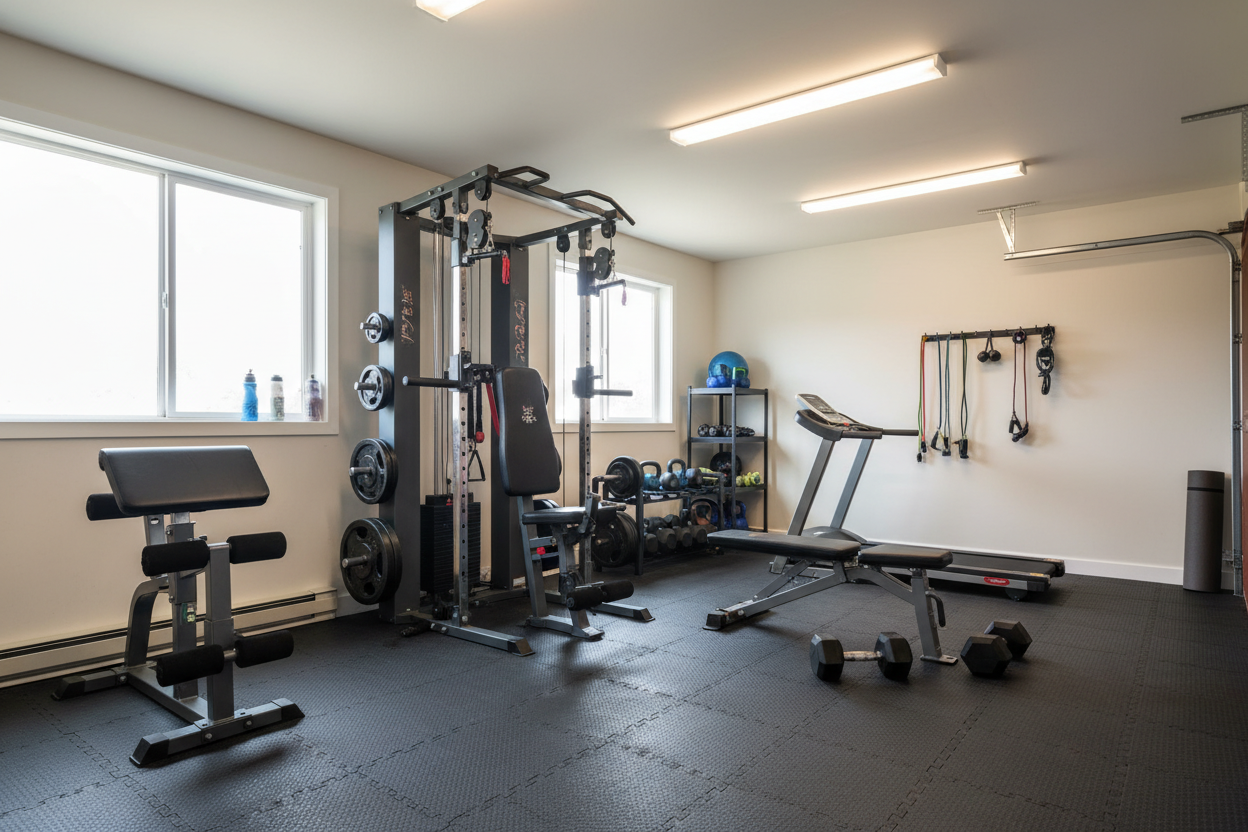
I remember the exact moment I realized my 'budget' home gym was a disaster. I was trying to hit a heavy set of lat pulldowns on a machine that cost less than a pair of high-end lifters, and the whole frame started tipping toward my face. It didn't just feel cheap; it felt like a liability.
Finding weight machines cheap is the dream, but the reality is usually a graveyard of bent bolts and frayed cables. You want the isolation and the fixed path of a machine without spending four grand on a single piece of commercial gear. It is possible, but you have to know where the manufacturers cut corners and where those cuts become dangerous.
Quick Takeaways
- Prioritize 11-gauge steel frames; anything thinner will wobble under real load.
- Aluminum pulleys are non-negotiable for long-term smoothness over plastic.
- Used commercial gear from a closing gym is almost always better than new 'entry-level' retail gear.
- If a machine feels light enough to pick up with one hand, it won't handle your top sets.
The Brutal Reality of Bargain-Bin Gym Gear
Most ultra-cheap machines you find on big-box retail sites use 2-inch by 2-inch 14-gauge steel. In plain English: it is thin. When you load 200 pounds onto a carriage supported by thin-wall tubing, the metal flexes. That flex ruins the alignment of the pulleys, which leads to that jerky, 'stuttering' feeling during your reps.
Then there are the leverage curves. Cheap machines are often designed by engineers who do not lift. I've used leg extensions where the tension disappears at the top of the movement—exactly where you need it most. I tested 4 cheap home weight machines a few years back, and every single one of them failed the 'smoothness test' once I loaded more than 50% of the stack.
The cables are another trap. Budget rigs use thin aircraft cables with cheap plastic coatings that peel within six months. Once that coating catches in a plastic pulley, your workout is over. You aren't just buying a machine; you're buying a maintenance headache.
Where the Real Deals Are Actually Hiding
If you want quality without the 'new car' price tag, stop looking at Amazon and start looking at your local community. Facebook Marketplace and Craigslist are gold mines for people who bought gear as a New Year's resolution and realized they'd rather use it as a clothes rack. Look for brands like Body-Solid, Titan, or even older Life Fitness units.
Gym liquidations are your best friend. When a local 'globo-gym' goes bust or refreshes their floor, they often sell off units for pennies on the dollar. You might have to deal with some cosmetic scratches, but a commercial-grade frame will outlive you. I once scored a plate-loaded row machine for $150 because the owner just didn't want to move it.
Also, keep an eye on direct-to-consumer brands that ship from the warehouse. These companies skip the retail markup. Focus on plate-loaded options rather than selectorized machines. Plate-loaded gear is inherently cheaper because the manufacturer doesn't have to ship 250 pounds of iron bricks with the frame.
The 3 Non-Negotiable Features You Cannot Compromise On
First: The frame. If the specs don't list the steel gauge, assume it's garbage. You want 11-gauge or 12-gauge steel. This provides the mass needed to keep the machine anchored to your floor while you are grinding out reps.
Second: The pulley system. Plastic pulleys are the hallmark of junk. They develop flat spots and create friction. Look for machined aluminum pulleys with sealed bearings. They cost more upfront, but the difference in feel is night and day. It makes a $500 machine feel like a $2,000 one.
Third: Movement geometry. On budget gear, manufacturers often use a single crossbar for pressing movements. This forces your body into a fixed path that might not fit your joints. I always recommend looking for a chest press machine with independent arms. Unilateral movement allows your stronger side to avoid overcompensating and keeps the stress on your muscles, not your joints.
When You Should Just Buy Free Weights Instead
There is a point where 'cheap' becomes 'useless.' If your total budget for a multi-gym is $300, my honest advice is to stop. A $300 all-in-one machine is a pile of bolts waiting to snap. You are much better off taking that money and investing in a solid weight bench and a pair of adjustable dumbbells.
Free weights do not have cables to snap or pulleys to grind. They offer infinite versatility. If you can't afford a machine that uses thick steel and quality bearings, you are better off building a foundation with iron. You can always add a dedicated cable tower or a leg press later when you have saved up for something that won't shake when you breathe on it.
Machines are a luxury in a home gym. Don't let the desire for a 'complete' look lead you into buying a piece of equipment that you'll hate using after the third workout.
Personal Experience: The Wobbly Lat Tower
Early in my garage gym days, I bought a 'no-name' lat tower for $120. It looked great in the photos. In reality, the seat was so narrow I felt like I was balancing on a tightrope, and the weight peg was a slightly different diameter than my Olympic plates, so they rattled the whole time. I ended up selling it for $40 three months later just to get the floor space back. Buy once, cry once.
FAQ
Are plate-loaded machines better than weight stacks?
For a home gym, usually yes. They are significantly cheaper to buy and ship, and you can use the plates you already own. Weight stacks are convenient but add massive cost and shipping weight.
How can I tell if a used machine is in good shape?
Check the cables for any fraying or kinks. Run the machine through its full range of motion without weight, then with a heavy load. If it grinds or hitches, the bearings are likely shot.
Is 14-gauge steel really that bad?
For a power rack, it's okay for beginners. For a weight machine with moving parts and pivot points, it is too thin. The stress on the bolt holes will eventually cause them to deform or 'egg out' over time.
Share:
I Wasted Years on Bad Exercise Equipment Routines (Do This Instead)
I Hate Cardio, But This Is the Best Aerobic Exercise Machine