
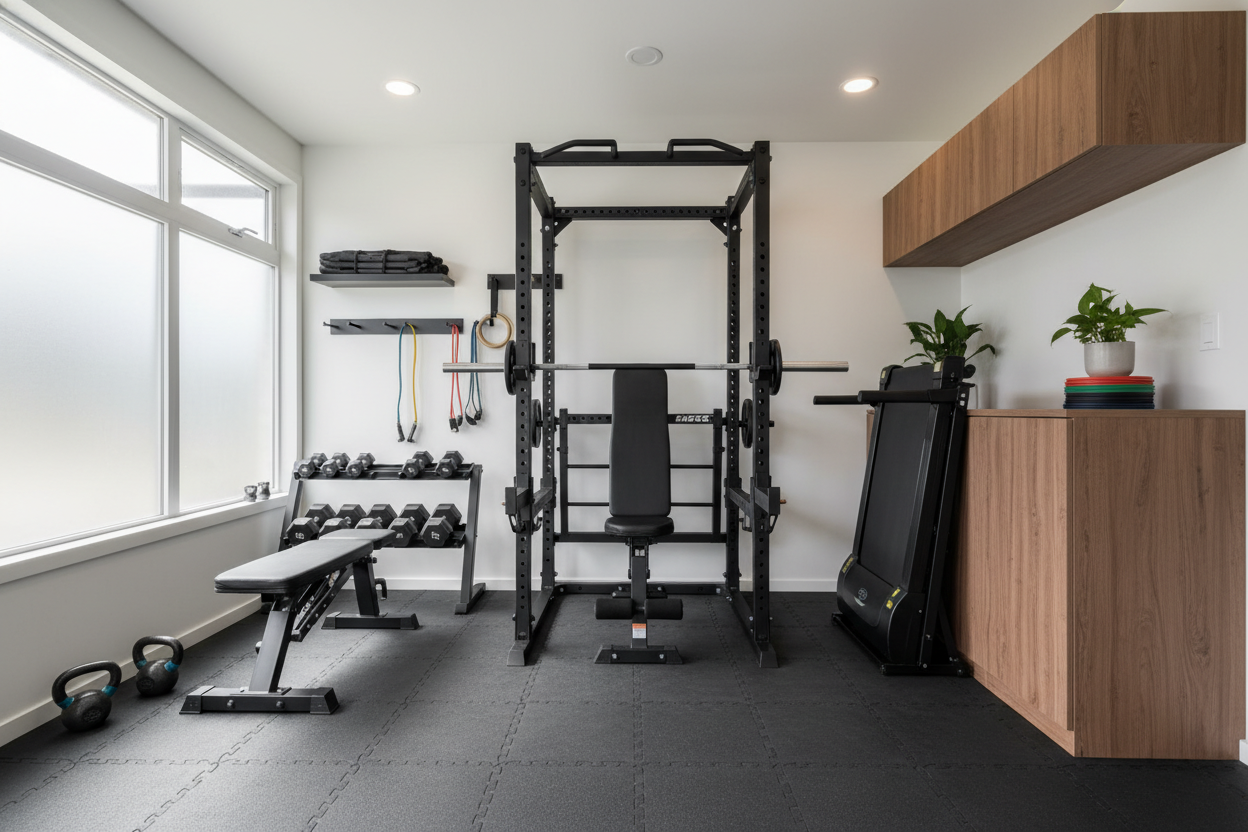
I remember staring at my 600-square-foot condo, wondering if I could fit a power rack without losing my security deposit—or my sanity. The commercial gym down the street just hiked their rates to $120 a month, and the squat rack line is usually four people deep by 5:00 PM. You do not need a suburban two-car garage to build real strength, but you do need to be ruthless about your compact exercise equipment choices.
Quick Takeaways
- Prioritize weight-to-footprint ratio: if it is light, it is likely flimsy.
- Vertical storage is non-negotiable for small home fitness equipment.
- Always measure your 'working envelope,' not just the machine's base.
- Multi-purpose machines beat single-use gear every single time.
The Difference Between Small Gear and Useful Gear
Most 'mini exercise equipment' you see on late-night infomercials is absolute trash. It is light, it is flimsy, and it will likely snap the second you put real tension on it. When you are hunting for a small exercise machine, you have to look at the gauge of the steel and the weight capacity. If a machine weighs less than you do, it is probably going to slide across your floor mid-set.
Small exercise machines for home still need structural integrity to support real resistance. I have seen too many people buy those plastic 'steppers' only to have them become expensive tripping hazards three weeks later. Real small at home workout equipment should feel dense. You want heavy-duty materials that happen to have a small footprint, not 'lightweight' gear that compromises your safety.
Measuring Your Actual Usable Footprint
Mapping out your floor space is the most critical step, and a tape measure is your best friend here. Most people make the mistake of measuring the static dimensions of the machine and calling it a day. That is a recipe for a hole in your drywall. You have to account for the 'lifter in motion.'
If you are looking at the best home gym equipment for limited space, you need to factor in plate loading. If a machine is 48 inches wide but you need to slide 45-lb plates onto the sleeves, you actually need about 72 inches of clearance. Always map out your 'working envelope' by standing where the machine will go and mimicking the full range of motion with your arms extended. If you hit a bookshelf, the gear is too big.
The 3 Pieces That Maximize Awkward Corners
When floor space is at a premium, you have to think vertically and multi-functionally. A Smith machine home gym station is the ultimate corner-saver for solo lifters. It provides a safely guided barbell path without the need for a massive power rack or extra clearance for a spotter to stand behind you. It is the anchor of a high-end small space home gym equipment setup.
For the lower body, do not settle for tiny bands that offer zero progressive overload. You can actually fit a compact leg press hack squat combo into a surprisingly tight area. This gives you the heavy-duty stimulus of two separate massive sleds in a single, space-saving footprint. Combine these with a set of adjustable dumbbells, and you have a full-body setup that fits in an 8x8 corner.
Solving the Cardio Space Problem
Cardio machines are notoriously bulky. A standard treadmill is basically a permanent piece of furniture that screams 'I live in a gym.' To keep your condo looking like a home, you need space saving exercise equipment that can actually disappear when you have guests over.
I personally recommend a foldable upright exercise bike for apartment dwellers. It is quiet enough that you won't annoy the neighbors downstairs, and the magnetic resistance is smooth. The best part? You can hammer out a 20-minute interval session and then wheel it into a standard coat closet in about thirty seconds. It is the gold standard for small home gym equipment that stays out of the way.
Ditching the Garage Mentality
You have to stop trying to replicate a 400-square-foot commercial layout in your living room. A garage gym mentality involves spreading gear out; a condo gym mentality involves modular efficiency. You need to embrace a setup where every piece of gear earns its keep by performing three or four different roles.
I realized this myself when I decided to pivot my training style. I actually wrote about compact weight training home gym setups because I was tired of my living room looking like a CrossFit box. Moving to a smarter, more dense equipment list did not cost me any gains—it just gave me my floor space back. High-quality home exercise equipment for small spaces is about density, not just downsizing.
My Personal Experience: The Wobble Factor
I once bought a 'space-saving' squat stand from a big-box retailer because it was cheap and small. The first time I tried to re-rack 225 lbs, the whole thing swayed like a tree in a hurricane. I ended up having to sandbag the legs just to keep it from tipping. It was a huge mistake. Now, I only buy gear that uses 11-gauge or 14-gauge steel. If the manufacturer doesn't list the steel gauge or the total weight of the machine, stay away. True heavy-duty gear has some mass to it.
FAQ
Can I actually build muscle with small workout equipment?
Absolutely. Muscle doesn't care if the resistance comes from a 2,000-lb cable jungle or a compact Smith machine. As long as you can achieve progressive overload and the machine is stable enough to handle heavy loads, you will grow.
How do I protect my floors in a small apartment?
High-density rubber tiles are a must. Do not use the soft foam 'puzzle' mats; they compress under heavy weight and offer zero protection for your subfloor. Use 1/2-inch or 3/4-inch stall mats or dedicated gym flooring.
What is the best way to move heavy equipment in a tight space?
Look for machines with integrated transport wheels. If the machine doesn't have them, you can use furniture sliders under the feet. This allows you to push a 200-lb machine against the wall when you are done training.
Share:
The 'Best At Home Gym' Doesn't Exist (But This Comes Close)
The Only 3 Rules of Home Gym Fitness That Matter