
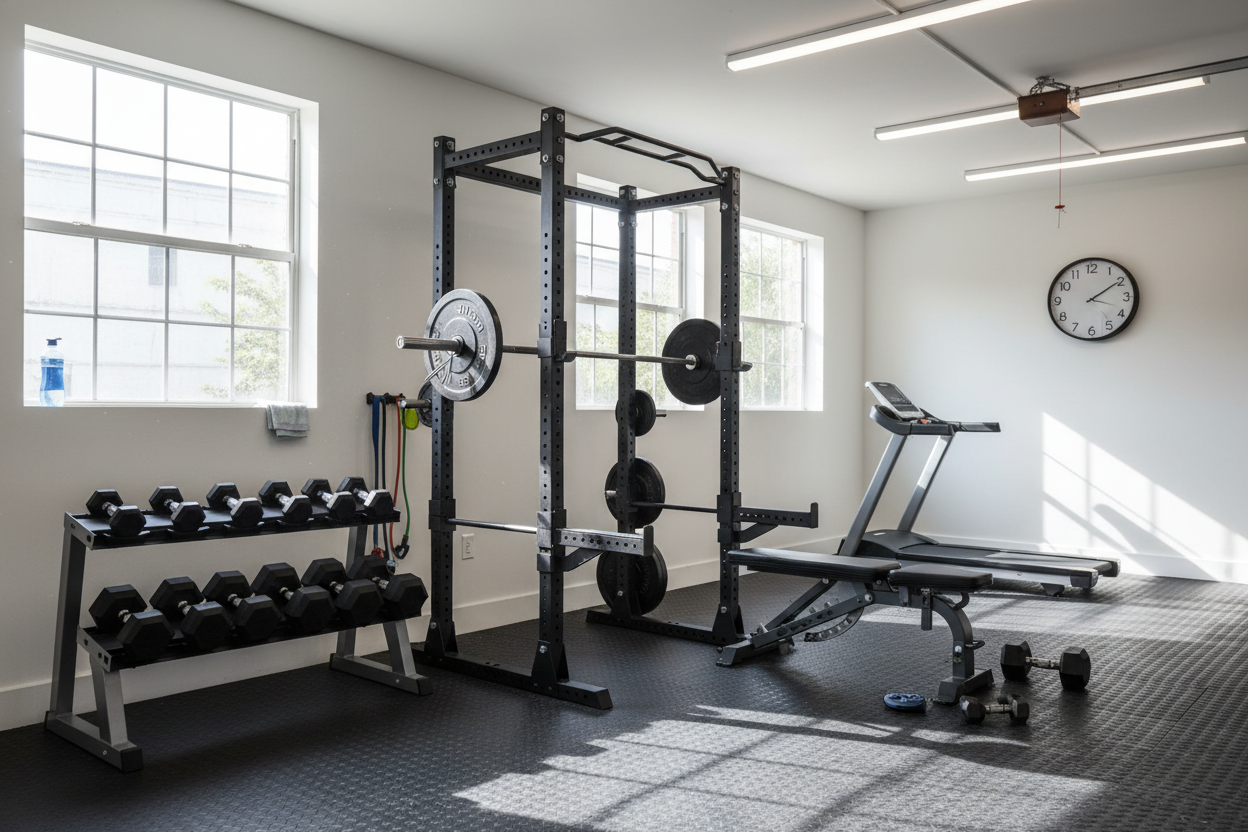
I remember the day I realized my commercial gym membership was a scam. I was waiting 15 minutes for a squat rack while some guy scrolled TikTok. I went home and bought the first cheap weight set for home I found online. Huge mistake. It was a set of plastic-coated plates filled with sand that leaked all over my carpet after three workouts. I learned the hard way that quality matters more than a low price tag.
- Dial-style adjustable weights save space but hate being dropped on the floor.
- Rubber hex dumbbells are the gold standard for durability and grip.
- Avoid 10-lb jumps; you need smaller increments to actually get stronger.
- A solid bench is the most important accessory you can buy for your setup.
The 'Clothes Hanger' Trap of Buying Home Fitness Dumbbells
Most people buy home training weights because they feel a sudden burst of motivation. They grab a tiny 40-lb set of home fitness dumbbells that are too light for squats and too heavy for lateral raises. Three months later, those weights are buried under a pile of laundry in the corner of the bedroom. It's a classic trap.
Before you spend a dime, look at your actual goals. If you want to build real muscle, you need a weight set home setup that allows for progressive overload. That means having enough resistance to challenge your legs and back, not just your biceps. I once bought a set of fixed 25s thinking they'd be enough. Within two weeks, I was doing 50 reps just to feel a burn. That's not training; that's cardio.
Adjustable vs. Fixed: Finding the Right Weight Sets for Home
If you have a three-car garage and a massive budget, buy a full rack of rubber hex weight sets for home. They feel better in the hand, and you can drop them when a set gets spicy without worrying about shattering a plastic gear. But for the rest of us, building a functional home gym is about maximizing every square inch of the spare room.
Modern dial-a-weight systems are incredible. I've tested sets that replace 15 pairs of dumbbells in the space of a shoebox. The transition speed is the real winner here. You can go from a heavy chest press to a light fly in five seconds. Just be warned: these are precision tools. If you have a habit of ghost-loading your weights or slamming them down after a PR, you'll break the internal locking mechanism. I've seen it happen, and it's a $400 mistake.
Space-Saving Tactics for Your Weight Set Home Setup
I used to have a full power rack in a 10x10 spare bedroom. It was a disaster. I couldn't even open the closet door. I eventually wised up and switched to a compact weight training home gym approach that actually let me move. If you're working in a tight spot, vertical storage is your best friend.
For your weights for home, get a small A-frame rack or a dedicated stand for your adjustables. It keeps the floor clear and saves your lower back when picking up the heavy stuff. If you're in an apartment, a 3/4-inch rubber stall mat is non-negotiable. Your home.weight set will eventually hit the floor, and your neighbors (and your security deposit) will thank you for the dampening.
The Unsung Hero: Why Your Weights Need a Good Bench
You can do a lot of work on the floor, but you'll eventually hit a ceiling. A weight set for home is only half the equation. You need a sturdy adjustable weight bench to unlock movements like incline presses, seated rows, and Bulgarian split squats. Without a bench, you're basically stuck doing standing curls and overhead presses.
I once tried to save money by using a sturdy-looking coffee table for chest presses. I ended up on the floor with a bruised ego and a broken table. Don't be me. Look for a bench with a 14-gauge steel frame and a weight capacity of at least 600 lbs. If it wobbles when you sit on it, it's a liability, not a piece of equipment.
Making It Work: A Simple Routine for Your Home Weight Set
You don't need a fancy commercial gym to see results. I've built more muscle in my garage than I ever did at the local big-box gym. The key is consistency and tracking your lifts. Here is a brutal 3-day split you can run with almost any home training weights:
- Day 1: Goblet Squats (4x12), Dumbbell Bench Press (4x10), One-Arm Rows (3x12).
- Day 2: Romanian Deadlifts (4x12), Overhead Press (4x10), Lunges (3x15 per leg).
- Day 3: Floor Press (4x10), Step-ups (3x12), Lateral Raises (3x15).
Stick to this for eight weeks. Focus on adding one rep or five pounds to every movement each week. That's how you actually change your physique without leaving the house.
What is the best weight for a beginner?
Start with a set that goes up to at least 50 lbs per hand. You might think 20 lbs is heavy now, but your legs and back will outgrow that in a matter of weeks. Buying too light is the fastest way to waste money.
Are iron or rubber weights better?
Rubber-coated hex dumbbells are quieter and won't rust. Iron plates are classic but they clank and can chip your floor. If you're training in a living space, go with rubber every time.
Can I build muscle with just dumbbells?
Absolutely. Your muscles don't know the difference between a $2,000 selectorized machine and a $50 dumbbell. They only know tension. If you push yourself close to failure, you will grow.
Share:
The Only 3 Pieces of Gear You Need for a Beginner Home Gym
I Skip 90% of the Back Exercise Machines at Gym (Here is Why)