
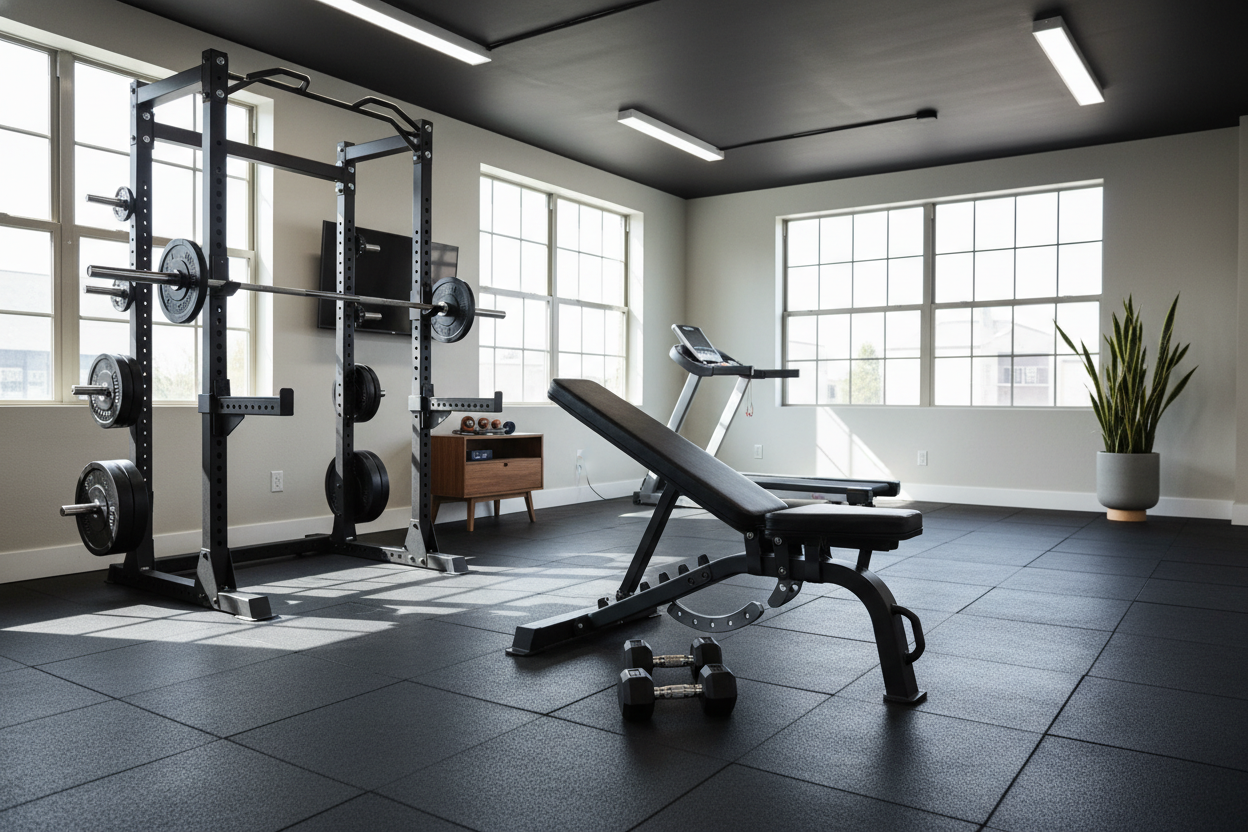
I spent three hours last night scrolling through marketplace listings and Amazon ads, and honestly, it is a disaster out there. You are looking for work out benches for sale and you are met with five hundred identical-looking pieces of black-and-red steel that all claim to hold 1,000 pounds. Spoiler: most of them will not even hold a 225-lb squatter without creaking like a haunted house floorboard.
Quick Takeaways
- Check the steel gauge: 11-gauge is the gold standard; 14-gauge is for light hobbyists.
- Avoid 'fake' sales where the price is permanently discounted from an imaginary MSRP.
- Look for a tripod base or a rear stabilizer wider than 15 inches for safety.
- If the pad gap is wider than 2 inches, your lower back will regret it.
Why Searching for Benches Online Feels Like a Minefield
When you type 'where to buy workout bench' into a search bar, you are entering a world of drop-shipped clones. Manufacturers use the same stock photos but swap the logo. One costs $80, the other $180. It is frustrating because the price does not always correlate with quality—sometimes you are just paying for a bigger marketing budget.
I have seen benches that look like tanks in photos but arrive feeling like they were made from recycled soda cans. The market is flooded with 'home use only' gear that is barely fit for a coat rack. To find the gems, you have to stop looking at the shiny powder coating and start looking at the bolt size and frame weight.
Can You Actually Trust a Weight Bench Set Under $100?
The 'weight bench set under $100' is a siren song for anyone trying to build a budget gym. I have tested several of these, and the structural compromises are terrifying. To hit that price point, companies use thin-gauge steel and cheap plywood backers that can snap under a heavy load. If you are a 150-lb person doing 20-lb dumbbell presses, you might survive. If you plan on actually getting strong, stay away.
Stability is the biggest casualty at this price. These benches often wobble laterally, which is the last thing you want when you are holding heavy iron over your face. I abused the Vibespark adjustable weight bench for 30 days and the experience confirmed my fears: the hinges loosened after a week and the vinyl started tearing before the month was up. You get what you pay for.
The 3 Specs That Separate Real Gear From Marketing Fluff
If you want to read a spec sheet like a pro, ignore the 'max capacity' claim—it is often unregulated and exaggerated. Instead, look at the steel gauge. 11-gauge is roughly 3mm thick and is what you find in commercial gyms. 14-gauge is thinner and common in 'big box' store gear. If a listing does not mention the gauge, it is probably because it is thin and they are hiding it.
Next, look at the footprint. A narrow base is a tipping hazard. You want a rear stabilizer that is wide enough to prevent side-to-side rocking during step-ups or seated presses. Finally, check the pad gap on adjustable models. A massive 3-inch gap between the seat and the backrest will kill your positioning. I always suggest browsing a reliable weight bench collection that prioritizes 11-gauge frames and high-density foam that won't bottom out after three months of use.
How to Spot a Genuine Sale on a Bench That Won't Kill You
Finding a legitimate weight lifting bench sale requires a bit of cynicism. Reputable brands usually run sales during Black Friday, New Year, or when they are clearing out a 'Version 1' to make room for 'Version 2.' If a bench is '70% off' on a random Tuesday from a brand you have never heard of, it is not a sale—it is a marketing trick to make a cheap product look like a bargain.
Look for hardware details. Real benches use Grade 5 or Grade 8 bolts, not the soft, silver hardware that strips the moment you put a wrench to it. The Adjustable Weight Bench OWB01 is a great example of a piece that justifies its price with actual structural reinforcement and a ladder-style adjustment system that is much safer than a cheap pull-pin design. When that goes on sale, it is a steal; when a generic brand goes on sale, it is a hazard.
The Verdict on Upgrading Your Home Gym Seating
Your bench is the foundation of almost every upper-body movement you do. It is the one piece of equipment, aside from your rack, where a failure can result in a trip to the ER. Stop treating it like an afterthought and start viewing it as a safety investment. If you are outgrowing your basic flat bench and want to move into specialized training, the Weight Bench Chest Press Machine Independent Arms Z1 Pro is the kind of premium upgrade that offers the stability and fixed path you need for heavy volume without the 'shake' of a cheap adjustable.
Personal Experience: The Wobbly Bench Lesson
Early in my garage gym days, I bought a 'pro' bench from a local sporting goods store because it was $90 and 'looked fine.' The first time I tried to hit a heavy triple at 275 lbs, the bench shifted two inches to the left mid-rep. I didn't drop the bar, but I felt my shoulder tweak as I tried to compensate. I sold that bench for $20 the next day and bought a 70-lb tank of a bench that hasn't moved a millimeter in five years. Don't learn the hard way like I did.
Frequently Asked Questions
What is the best steel gauge for a weight bench?
11-gauge steel is the standard for serious lifters. It provides the weight and rigidity needed to stay planted during heavy sets. 14-gauge is acceptable for very light work, but it will feel 'springy' under heavy loads.
Are 'bench press benches for sale' with built-in racks worth it?
Usually, no. Fixed units are harder to adjust to your body type. You are almost always better off buying a high-quality standalone bench and a separate power rack or squat stand for maximum versatility.
How wide should a weight bench pad be?
Look for a pad between 11 and 12 inches wide. Anything narrower won't support your shoulder blades properly during a press, and anything wider can interfere with your range of motion at the bottom of the lift.
Share:
I Built a Cheat Sheet for Gym Equipment With Name and Pictures
I Spent 3 Months Testing the Major Fitness Home Gym Barbell