
I remember the first time I stepped into one of those massive, warehouse-sized lifting stores. The air smelled like fresh rubber and expensive powder coating. It’s intoxicating. You walk in looking for a simple pair of spring collars and suddenly you’re staring at a $5,000 selectorized functional trainer, wondering if you can skip a mortgage payment. I’ve been there, and I’ve seen enough people blow their budget on shiny junk to know how the trap works.
Quick Takeaways
- Test the foam: If you can feel the plywood through the pad with your thumb, your back will feel it under a 200-lb load.
- Check the hole spacing: Standard 2-inch or 3-inch spacing is king; proprietary patterns are a prison sentence for your wallet.
- Prioritize the 'Big Three': Rack, barbell, and plates should eat 80% of your budget.
- Ignore the accessory wall: You don't need a $150 specialized tricep rope when a basic one works the same.
The 'Kid in a Candy Shop' Trap
Walking into dedicated weight lifting stores is a psychological assault. They want you to feel like your current garage setup is a pile of scrap metal. You see rows of specialized bars—multi-grip, safety squat, cambered—and you start convincing yourself that your plateau is because you lack 'variety.' It isn’t. Most people don’t need a specialized bar until they’re moving at least three plates on their main lifts.
The showroom floor is designed to highlight the high-margin items. Those $400 adjustable dumbbells with the fancy chrome finish? They’re front and center because they make the store a killing, not because they’re the best tool for your rows. I’ve seen guys walk out with a trunk full of gadgets and not enough money left for a decent set of iron plates. Stay focused. If it doesn't help you squat, bench, or deadlift better, it's a distraction.
Filter Out the Fluff: Stick to the Iron Core
Before you get seduced by the latest cable-attachment-thingy, you need to lock down your foundation. Most of the weight lifting things you see in the 'As Seen on TV' section of the store are destined to become expensive laundry racks. You need to know The Only Lifting Weight Equipment You Actually Need At Home before you even pull into the parking lot. If you don't have a solid rack and a bar that won't bend, nothing else matters.
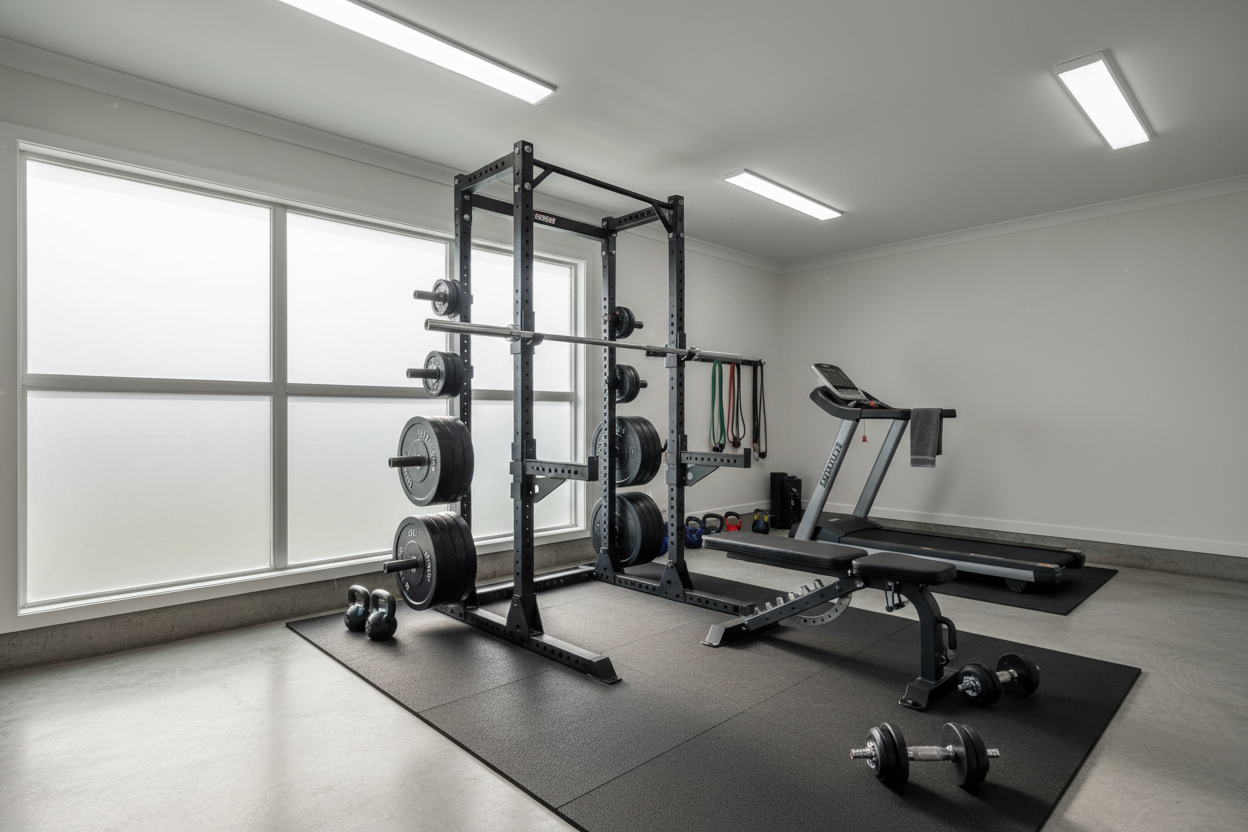
Focus on 11-gauge steel. If a sales rep tries to sell you a rack made of 14-gauge steel for 'serious lifting,' they’re lying to you. 14-gauge is for patio furniture, not for catching a failed 400-lb squat. Look for 3x3 or 2x3 uprights. These are the industry standards for a reason—they don't wobble when you rack the weight, and they won't fold under pressure. Spend your money on the skeleton of your gym first; you can buy the fancy stuff later when you've actually earned it through sweat.
Why You Must Test the Upholstery and Hinges
The biggest advantage of going to physical stores is the 'sit test.' Don't just look at a Weight Bench; bury your shoulder blades into it. I’ve tested benches that looked like tanks but used foam so soft I could feel the bolt heads pressing into my spine during a heavy set. You want high-density recycled foam that offers resistance. If it feels like a couch cushion, it's garbage.
Check the hinges and the adjustment mechanism. Does it rattle when you move it? Does the pin lock securely into place, or is there a half-inch of play? A solid model like the Adjustable Weight Bench Owb01 is a good benchmark—it should feel like a single piece of steel when locked in, not a collection of loose parts. Also, check the 'tripod' factor. A three-post design on a bench allows for better foot placement during a bench press, whereas cheap four-post designs often get in the way of your stance.
Beware the Attachment Ecosystem Trap
Retailers love proprietary ecosystems. They’ll sell you a rack with 1-inch holes but use a weird 3.5-inch spacing that only fits their specific brand of dip bars and landmines. They want to lock you into their brand forever. When you’re browsing, bring a tape measure. If the hole spacing isn't standard (usually 2 inches on center), you're buying into a closed system that will cost you double in the long run.
Universal sizing is your best friend. If you buy a rack with standard 1-inch or 5/8-inch holes, you can buy attachments from almost any manufacturer. This gives you the freedom to hunt for deals. I once bought a rack from a boutique shop only to find out their J-cups were the only ones that fit, and they wanted $150 for a replacement set. I ended up selling the whole rack at a loss just to get back into a standard 3x3 system.
When It Actually Makes Sense to Splurge
There are times when the high-end stuff is actually worth the premium. If you’re a solo lifter, safety is your biggest bottleneck. This is where specialized machines come in. A piece like the Weight Bench Chest Press Machine Independent Arms Z1 Pro is a legitimate investment because it allows you to push to absolute failure without needing a spotter. The independent arms ensure your dominant side doesn't do all the work—something a barbell can't fix.
Splurge on things that have moving parts. A cheap barbell is annoying, but a cheap cable machine is dangerous. If the pulleys are plastic and the cables feel like they’re dragging on sandpaper, walk away. You want aluminum pulleys and aircraft-grade cables. These are the 'weight lifting things' where the extra $200 actually buys you longevity and a smoother lift. If you're going to spend big, spend it on the stuff that moves.
Personal Experience: The 'Commercial' Lie
I once bought a 'commercial-grade' lat pulldown from a local shop because the powder coating matched my rack perfectly. It looked incredible. But after six months, the guide rods started to pit and the weight stack would catch halfway through the eccentric phase. I realized I’d paid for the look, not the engineering. Now, I don't care about the color. I look at the diameter of the guide rods and the quality of the welds. If the welds look like a bird spit on the steel, I don't care how pretty the paint is—it's staying in the store.
FAQ
Is it better to buy plates in person or online?
In person, 100%. Shipping on 500 lbs of iron can cost as much as the plates themselves. Plus, you can check if the plates are actually circular and if the 45s are actually 45 lbs. Some cheap cast iron can be off by as much as 3 lbs.
How can I tell if a barbell is high quality in the store?
Give it a spin. The sleeves should rotate smoothly without a grinding sound. Check the knurling—it should feel grippy but not like it's going to tear your skin off immediately. Also, look for a 'whip' test: a good Olympic bar should have a slight, predictable flex, not stay rigid like a lead pipe.
Should I buy the floor model?
Only if they offer a significant discount (20%+) and the full warranty still stands. Floor models have been abused by hundreds of people who don't care about the equipment. Inspect the bolts for stripping and the upholstery for tears before saying yes.
Share:
I Wasted $1,200 on a Full Weights Set (Buy These Instead)
I Traded My Fragile Dials for Loadable Dumbbells (Here Is Why)