
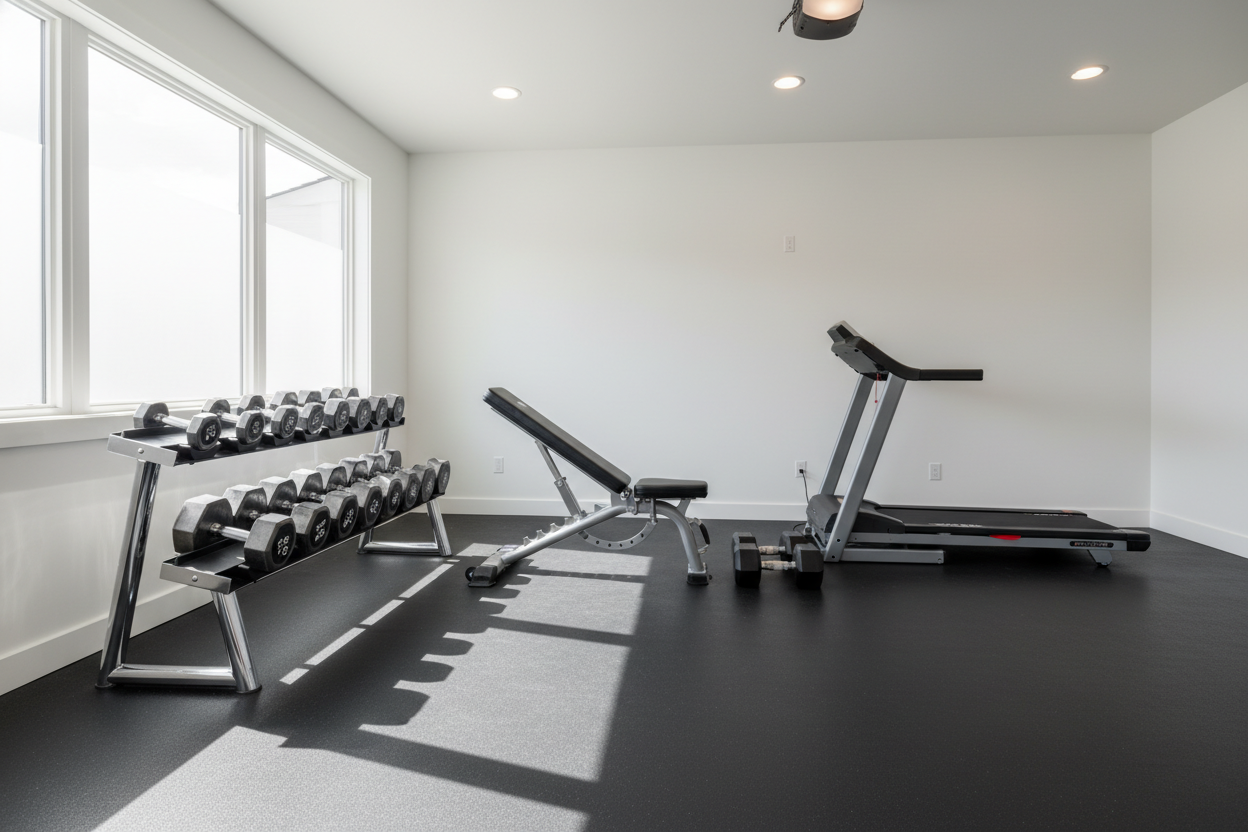
I spent three years fumbling with pins and dials while my heart rate plummeted between sets. Every time I wanted to jump from lateral raises to overhead presses, I had to stop, click, and pray the mechanism didn't jam. Last month, I finally cleared a six-foot stretch of wall and hauled in a dedicated 10-50 lb dumbbell set. My only regret is that I wasted years of training time being 'efficient' with space instead of being efficient with my effort.
- Speed: Zero transition time between sets.
- Durability: No plastic parts to snap when you drop a heavy set of 50s.
- Progression: Perfect 5-lb jumps for steady hypertrophy.
- Floor Care: Rubber hex coating keeps your slab from cracking.
The Hidden Cost of Space-Saving Weights
We all start with the same logic: buy one pair of handles that does it all. It saves space, but it kills your flow. When I was using clunky adjustable dumbbells, I found myself subconsciously avoiding supersets. The friction of clicking a dial back and forth for four rounds of hammer curls and tricep extensions is a mental drain. You end up resting for 90 seconds not because your muscles need it, but because your equipment is tedious.
With a fixed 10-50 dumbbell set, that friction vanishes. You drop the 35s and immediately grab the 20s. Your heart rate stays elevated, your pump stays tight, and you actually finish your workout ten minutes faster. In a garage gym where the temperature is either freezing or boiling, those ten minutes are precious. If you're serious about high-volume bodybuilding work, the 'cost' of space is a bargain compared to the cost of lost momentum.
Why Skip the 5s? The Math Behind the 10-50 lb Range
A lot of people think they need to start a set at 5 lbs. Unless you are doing very specific physical therapy for a rotator cuff, a 5-lb dumbbell is mostly a paperweight. For any intermediate lifter, the real work begins at 10 lbs. By starting your rack at 10, you save money and about 10 inches of horizontal rack space. This 10-50 dumbbell set range gives you nine pairs of weights—10, 15, 20, 25, 30, 35, 40, 45, and 50.
This is the 'Goldilocks' zone for hypertrophy. A 5-lb jump represents a manageable increase in intensity. If you can hit 12 reps with the 30s, you can almost certainly hit 8 reps with the 35s. It’s the most logical path for progressive overload. When you buy a dumbbell set 10 50, you aren't just buying heavy objects; you're buying a roadmap for the next two years of your accessory lifts. You don't need micro-loading for a bicep curl; you need the next pair of bells waiting for you on the rack.
What a 10-50 Dumbbell Set Actually Looks Like in Action
Let’s talk about a standard Push day. I start with a heavy barbell bench, but then I move to the rack. I grab the 50s for incline presses, drop them, and immediately snatch the 30s for flat flyes. There is no clicking, no resetting, and no checking if the plates are secure. The 10-50 dumbbell set allows for a level of intensity that adjustables just can't match. You can't do a proper 'run the rack' drop set when you have to stop and turn a dial every 30 seconds.
On a Pull day, it's even better. I'll go from heavy 50-lb rows right into 25-lb rear delt flyes. The ergonomics of a fixed handle are also superior. Most adjustables have a standard width regardless of the weight, which feels awkward for smaller movements. A fixed 10-lb dumbbell is physically smaller than a 50-lb one, making it much easier to maneuver around your body during lateral raises or concentration curls. Your joints stay warm because you're moving, not tinkering with hardware.
Rubber Hex vs. Bare Iron: Don't Buy the Wrong Material
If you're training in a garage, do not buy bare cast iron. I made that mistake once. Within one winter, the moisture in the air turned my beautiful black weights into orange, flaky messes. Plus, they clank loud enough to wake the neighbors at 6:00 AM. A rubber hex dumbbell set is the only way to go for a home environment. The rubber coating dampens the noise and protects your concrete floor when you inevitably have to ditch a set of overhead presses.
The 'hex' shape is also a safety feature. Round iron dumbbells love to roll away on uneven garage floors. I’ve seen more than one shin bruised because a weight decided to take a trip across the gym. Hex heads stay exactly where you put them. They also provide a stable base for 'man-makers' or renegade rows. Just make sure you get a set with pinned heads so they don't start rattling after a few months of heavy use. Quality rubber shouldn't have that 'toxic' smell for more than a day or two after unboxing.
Will You Actually Outgrow the 50s?
The biggest hesitation people have is the fear of maxing out. They think they'll never need more than 50 pounds, then they worry they'll be too strong in six months. Let's be real: for isolation work, 50-lb dumbbells are plenty for 95% of the population. Even if you're benching 315 on a barbell, doing 15 strict reps of lateral raises or high-rep goblet squats with a 50-lb bell is going to burn. It’s about the quality of the contraction, not just the number on the side of the head.
If you do eventually turn into a monster who needs more weight for rows or presses, you don't need to replace the whole rack. You can just buy a pair of 60s or 70s a la carte. Most racks that hold a 10-50 set have just enough room to squeeze one more heavy pair on the bottom tier. You can always expand into a full range of dumbbells later on, but for the vast majority of us, the 10-50 range is the functional ceiling for high-intensity home training.
How much floor space do I need for a 10-50 set?
Usually, a two-tier or three-tier rack for this set will take up about 4 to 5 feet of horizontal wall space and about 2 feet of depth. It's a small footprint for the amount of utility you get.
Do I need to buy a rack separately?
Most 10-50 sets are sold as a bundle with a rack. If you buy them separately, make sure the rack is rated for at least 600 lbs to safely hold the total weight of the set.
Why are the handles contoured on some sets?
Contoured handles are designed to fit the natural arch of your palm. They generally reduce hand fatigue during heavy presses compared to straight bars, though it comes down to personal preference.
Share:
Is a Smith Rig the Best Exercise Machine for Full Body Workout Plans?
Why Your Aerobic Exercise Machine Is Just an Expensive Coat Rack