
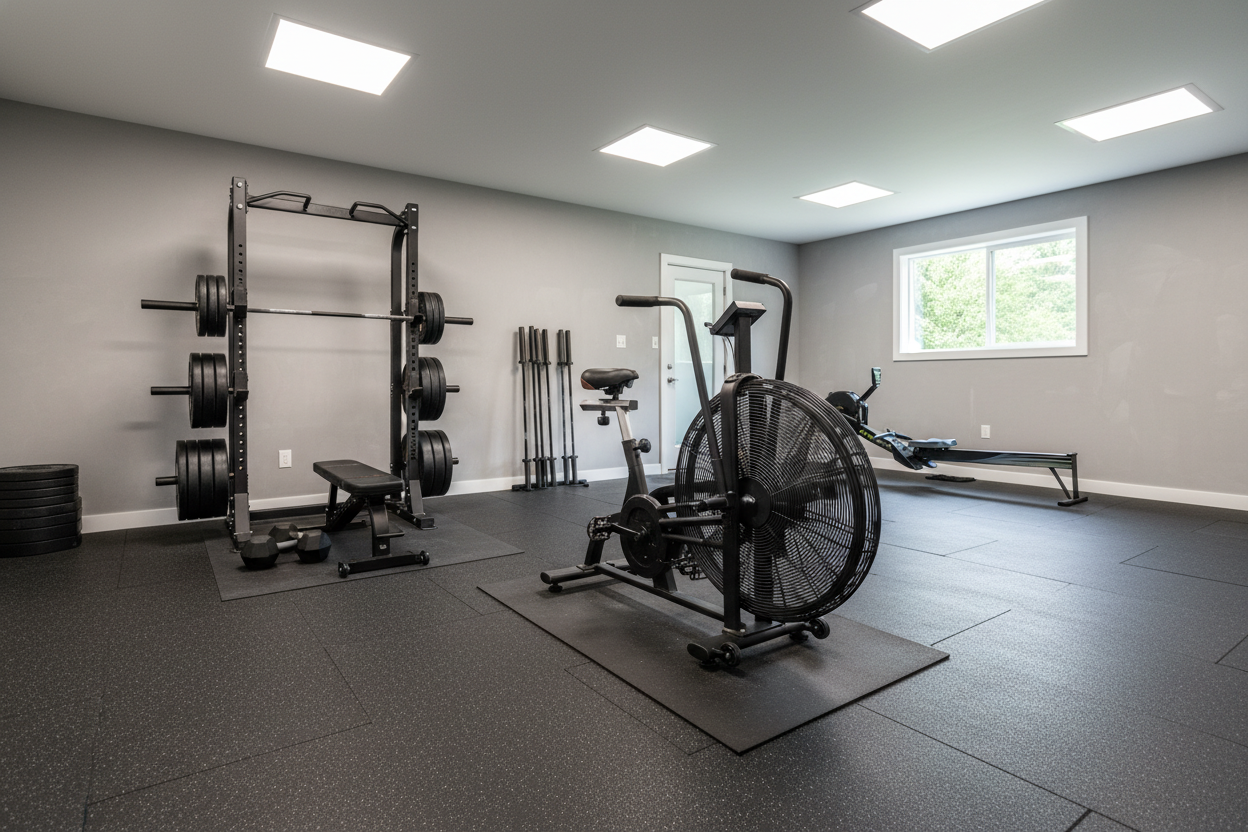
I remember the smell first. It wasn't the usual metallic scent of a garage gym in August; it was the acrid, chemical stench of a $600 treadmill motor giving up the ghost. I was halfway through a 400m interval, trying to force a consumer-grade belt to match my max effort, and it just quit. No warning, no error code—just a puff of gray smoke and a sudden stop that nearly sent me through the drywall.
That was the third 'budget' treadmill I killed in two years. I thought I was being smart by saving money, but I was actually just buying expensive paperweights. If you're serious about high-intensity training, investing in actual crossfit cardio equipment isn't just about performance; it's about buying gear that won't melt when you actually try to use it.
Quick Takeaways
- Standard treadmill motors are designed for steady-state walking, not violent 100% effort sprints.
- Air-resistance machines have no top speed, meaning they scale infinitely with your effort.
- The 'Big Three' (Rower, Bike, Ski) are the gold standard for a reason: they are mechanically simple and nearly indestructible.
- Chalk and sweat are the primary enemies of your equipment's longevity; a 30-second wipe-down is mandatory.
The Day My Box-Store Treadmill Started Smoking
The failure happened during a classic 'run-and-lift' session. I was jumping on the belt for 200-meter sprints at a 12.0 setting, then jumping off to hit heavy power cleans. Most consumer treadmills use small DC motors. These motors hate two things: sudden acceleration and the heavy, rhythmic footfall of a 200-pound person sprinting. Every time my foot hit the deck, it acted like a brake, forcing the motor to work overtime to maintain speed.
By the fourth round, the console flickered. By the sixth, the smell of burning copper filled the room. When the motor finally seized, it wasn't just a mechanical failure; it was a realization. I was trying to use a tool designed for a suburban jogger to do the work of a professional athlete. Functional fitness requires a crossfit cardio machine that uses physics—not electronics—to provide resistance.
Why Traditional Cardio Machines Can't Handle WODs
Most gym equipment you find at a big-box retailer is built for 'steady-state' cardio. The goal is to keep your heart rate at 130 BPM for 45 minutes while you watch Netflix. CrossFit is the exact opposite. We want to go from zero to 800 watts in three seconds, then drop the handles and let the machine coast while we do burpees. Traditional treadmills and elliptical machines have belts, pulleys, and motors that simply aren't geared for that level of torque.
When you look for the best machine for cardio if you actually lift, you need to prioritize machines that offer variable resistance. This means the harder you pull or pedal, the harder the machine pushes back. Air-based systems are the king here. There are no motors to burn out because you are the motor. Whether you're doing a 20-minute EMOM or a 30-second max-wattage sprint, the machine responds to you instantly without any electronic lag or mechanical strain.
The 'Big Three' Pieces of Conditioning Gear You Actually Need
If you walk into any reputable CrossFit affiliate or high-end garage gym, you'll see the same three silhouettes: the rower, the air bike, and the SkiErg. This isn't a coincidence or a fashion statement. These machines are the 'Big Three' because they utilize a flywheel and a damper to create resistance that is virtually impossible to 'outrun.' You can shop for heavy-duty cardio gear all day, but if it doesn't have a fan, it probably won't survive a year of WODs.
The beauty of these machines lies in their simplicity. They use a chain or a cord to spin a fan. The more air the fan has to move, the more resistance you feel. There are no complicated gearboxes or overheating motors. I've seen Rowers with 5 million meters on them that still feel as smooth as the day they were unboxed. They are the workhorses of the functional fitness world, designed to be thrashed, sweated on, and left in a dusty garage without losing a step.
The Air Bike: The Devil's Tricycle
There is no piece of equipment I hate-love more than the air bike. It is arguably the best aerobic exercise machine for people who want maximum results in minimum time. Because it uses both your arms and legs, it demands a massive amount of oxygen. It’s a total-body assault that floods your legs with lactic acid in under sixty seconds.
Unlike a spin bike, there is no 'coasting' on an air bike. The moment you stop pushing, the fan starts to slow down. For a garage gym owner, the air bike is a dream because it's usually built on a heavy steel frame with oversized bolts and a beefy chain or belt drive. It takes up a small 4x2 foot footprint but offers more intensity than a treadmill three times its size. Just be prepared: it will find your weakness and expose it immediately.
The Rower: Your Full-Body Engine Builder
The indoor rower is the ultimate tool for building an 'engine.' It targets about 86% of your muscles in every stroke, focusing heavily on the posterior chain. In a CrossFit context, the rower is used for everything from 500m sprints to 10k marathons. It teaches you pacing and breathing better than any other machine.
One thing I’ve learned: rowers are surprisingly quiet compared to air bikes, making them better for early morning sessions if you have neighbors. The key is the monorail. As long as you keep that stainless steel strip clean, the seat will glide effortlessly. It’s the gold standard for testing your 'pulling' endurance, and because it's low-impact, it’s the first thing I jump on when my knees feel like they're made of glass after a heavy squat day.
Maintenance Realities in a Dirty Garage Gym
I’ll be honest: I’m not great at cleaning my gym. But if you buy high-end conditioning gear, you have to change your habits. Chalk is the silent killer. We use it for pull-ups and barbells, but that fine white dust gets into the fan housings and onto the digital monitors. Over time, it can gum up the sensors that track your calories and distance.
Every month, I take a vacuum to the fan cages to suck out the dust bunnies. If your bike has a chain, it needs a drop of 3-in-1 oil every few months to stay smooth. And for the love of all things holy, wipe the sweat off the rower monorail after every session. If sweat dries on there, it creates 'bumps' that make the seat feel like it's riding over a gravel road. It takes 30 seconds, but it adds years to the life of the machine.
FAQ
Do I need a belt drive or a chain drive air bike?
Chain drives are louder but feel more 'connected' and are easier to repair with basic tools. Belt drives are much quieter and require less maintenance, but they can feel a bit 'spongy' to some high-level athletes. For a garage, I usually recommend a belt drive if you have a family sleeping nearby.
Is the SkiErg worth it if I already have a rower?
Yes, because it’s a completely different stimulus. The rower is a horizontal pull; the SkiErg is a vertical 'crunch' and pull. It targets your triceps, lats, and core in a way the rower doesn't. Plus, it has the smallest footprint of any cardio machine since it mounts to a wall.
Can I use a manual treadmill instead of an electric one?
Absolutely. Manual treadmills (curved treadmills) are actually the preferred choice for CrossFit. Since you are the motor, they are safer for sprints and much more durable. They are expensive, but they are the only treadmills that truly belong in a functional fitness conversation.
Share:
I Swapped Steel for a Wooden Weight Bench (Here's What Happened)
I Abused a CAP 50 lb Dumbbell Set for a Month (Here's the Verdict)