
I remember the exact moment I decided to stop 'renting' my fitness. I was standing in a crowded locker room, waiting for a shower that smelled like industrial-grade bleach, thinking about the $180 that just left my bank account for a life fitness membership. For that price, I could have bought a pair of high-quality competition plates every single month.
- High-end club dues typically range from $160 to $300 per month depending on location.
- Initiation fees can tack on an extra $100 to $500 upfront.
- The break-even point for a premium home gym is often less than 24 months.
- Most 'Life Fitness' searches are actually for Life Time clubs or the brand's digital app.
First, Let's Clear Up the Naming Confusion
Before we talk numbers, we have to address the elephant in the weight room. Most people searching for a 'Life Fitness membership' are actually looking for one of two things: a membership to Life Time (the luxury health club chain) or a subscription to the Life Fitness Digital Coach app. Life Fitness, the company, primarily manufactures the treadmills and racks you see in those clubs; they don't actually own the gyms.
If you are looking for the app to sync with your cardio gear, you are looking at about $15 a month. But if you are looking for the brick-and-mortar experience where you get eucalyptus towels and rows of selectorized machines, you are looking at a premium health club. Understanding this distinction is the first step in realizing where your money is actually going—usually toward the real estate and the pool maintenance, not just the iron.
Breaking Down the Actual Life Fitness Membership Fees
Let's get into the weeds on the life fitness membership fees. If you are joining a club that prides itself on 'Life Fitness' level amenities, you aren't paying Planet Fitness prices. Monthly dues at these premium spots usually start around $170 and can skyrocket to over $300 in cities like New York or Chicago. Then there are the life fitness membership prices for families, which can easily clear $500 a month.
Don't forget the 'enrollment' or 'initiation' fees. These are the most annoying life fitness fees because they provide zero value—it is essentially a 'convenience' fee for them to enter your name into a database. These can range from $100 to $500. When you ask how much is life fitness membership, you have to look at the first-year total. At $200 a month plus a $300 initiation fee, you are out $2,700 before you have even hit your first year of training.
The Break-Even Point of Buying Your Own Gear
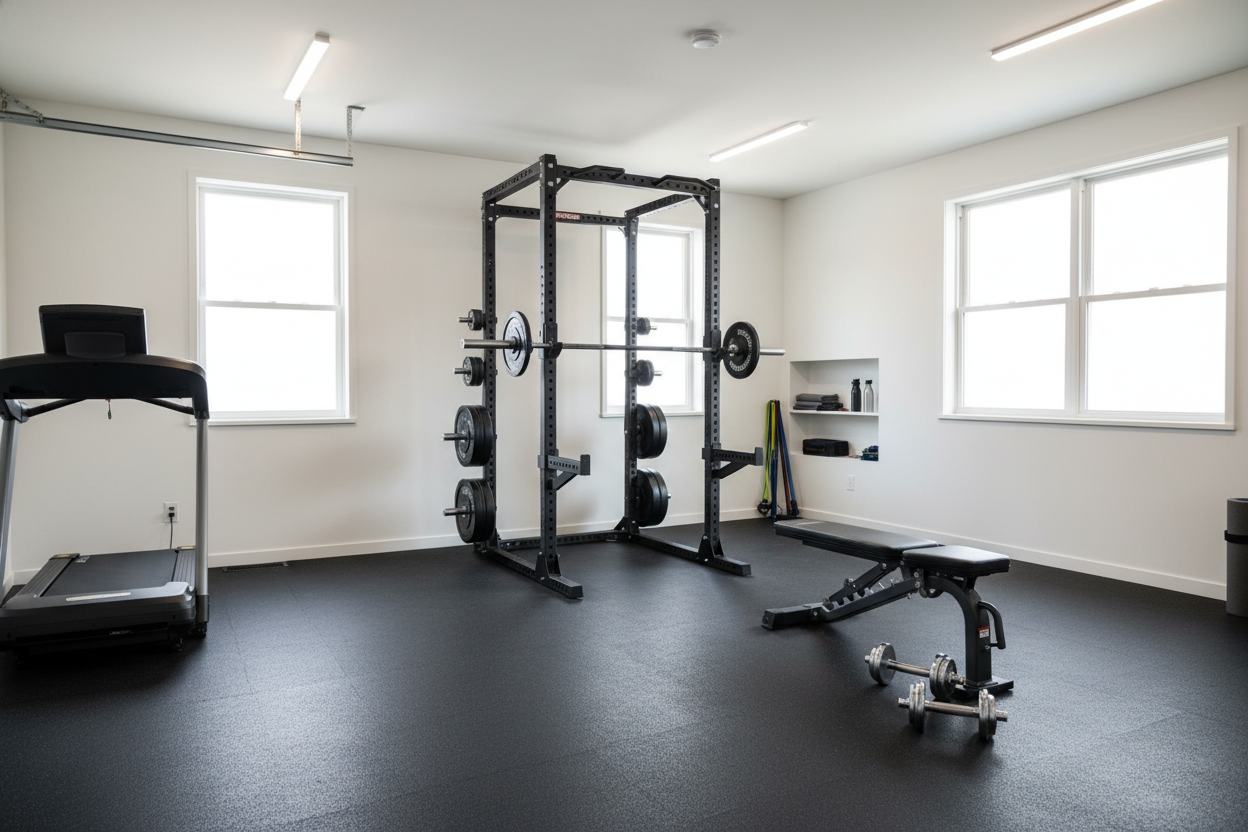
This is where I get nerdy with the spreadsheet. If you take that $2,700 from year one and the $2,400 from year two, you've spent $5,100. For five grand, building a premium home gym isn't just a dream—it is a reality. You can get a 3x3 11-gauge steel power rack, an Ohio bar, 300 lbs of bumper plates, and a solid adjustable bench for significantly less than that two-year burn rate.
The life fitness membership cost is a perpetual tax on your fitness. When you stop paying, you have nothing. When I bought my first rack, I realized that even if I moved and had to sell it, I could recoup 70% of my investment on the used market. Try getting a 70% refund on your gym dues from three years ago. The math shows that by month 22, your home gym is essentially 'free' compared to the club dues.
Do You Actually Need Commercial Machines at Home?
A common mistake I see garage gym newcomers make is trying to buy a real Life Fitness machine for their house. Look, I love a good seated leg press as much as the next guy, but a commercial-grade selectorized unit costs $4,000+ and takes up 30 square feet. Unless you are a professional bodybuilder, that is a massive waste of floor space and budget.
The 'membership' experience sells you on the variety of machines, but 90% of your gains come from the big compound movements. You can replicate almost any Life Fitness cable machine with a high-quality functional trainer or a simple pulley attachment for your rack. Don't let the shiny plastic shrouds of commercial gear trick you into overspending on equipment that only does one thing.
When to Splurge on Premium Free Weights
If you are going to spend 'membership level' money on your home setup, spend it on the things you touch every day. This means your barbell and your dumbbells. Buying Life Fitness dumbbells for a home gym might seem like overkill to some, but if you want that specific urethane feel and the durability that lasts a lifetime, it is a better investment than a fancy cardio console that will be technologically obsolete in three years.
I personally went with urethane-coated dumbbells because I got tired of the smell of cheap rubber hex heads. It was a $1,500 splurge, but every time I pick them up, I feel like I'm in a high-end club without the $200 monthly bill. Invest in the contact points—the knurling on the bar and the grip on the bells.
The Final Verdict: Renting Space vs. Owning Your Iron
At the end of the day, the life fitness cost is about convenience and luxury. If you need a steam room and a juice bar to get motivated, pay the dues. But if you are serious about training, the life gym membership cost is a massive financial leak. I've spent years doing both, and I can tell you that nothing beats walking 20 feet to my garage, playing my own music, and knowing that every piece of steel around me is an asset I own.
Stop worrying about the life fitness membership cost and start looking at your equipment as a long-term investment. You'll save thousands, skip the commute, and never have to wait for a squat rack again. That, to me, is the real luxury.
FAQ
How much is a typical Life Fitness-style gym membership?
Most premium clubs that feature this level of equipment charge between $150 and $250 per month. Expect to pay an initiation fee ranging from $100 to $500 depending on current promotions.
Is the Life Fitness app worth the monthly fee?
If you already own Life Fitness cardio equipment, the $15 monthly fee for the Digital Coach is reasonable for structured programming. However, there are better free or cheaper apps if you just need a basic workout timer.
Can I buy Life Fitness equipment for my home?
Yes, but it is expensive. Their consumer line is high-quality, but you are often paying a premium for the brand name. For a home gym, you can often find better value in brands focused specifically on residential strength equipment.
Share:
I Went Undercover at 5 Exercise Equipment Stores (Here's What I Found)
The Only 3 Pieces of Bodyweight Equipment You Actually Need