
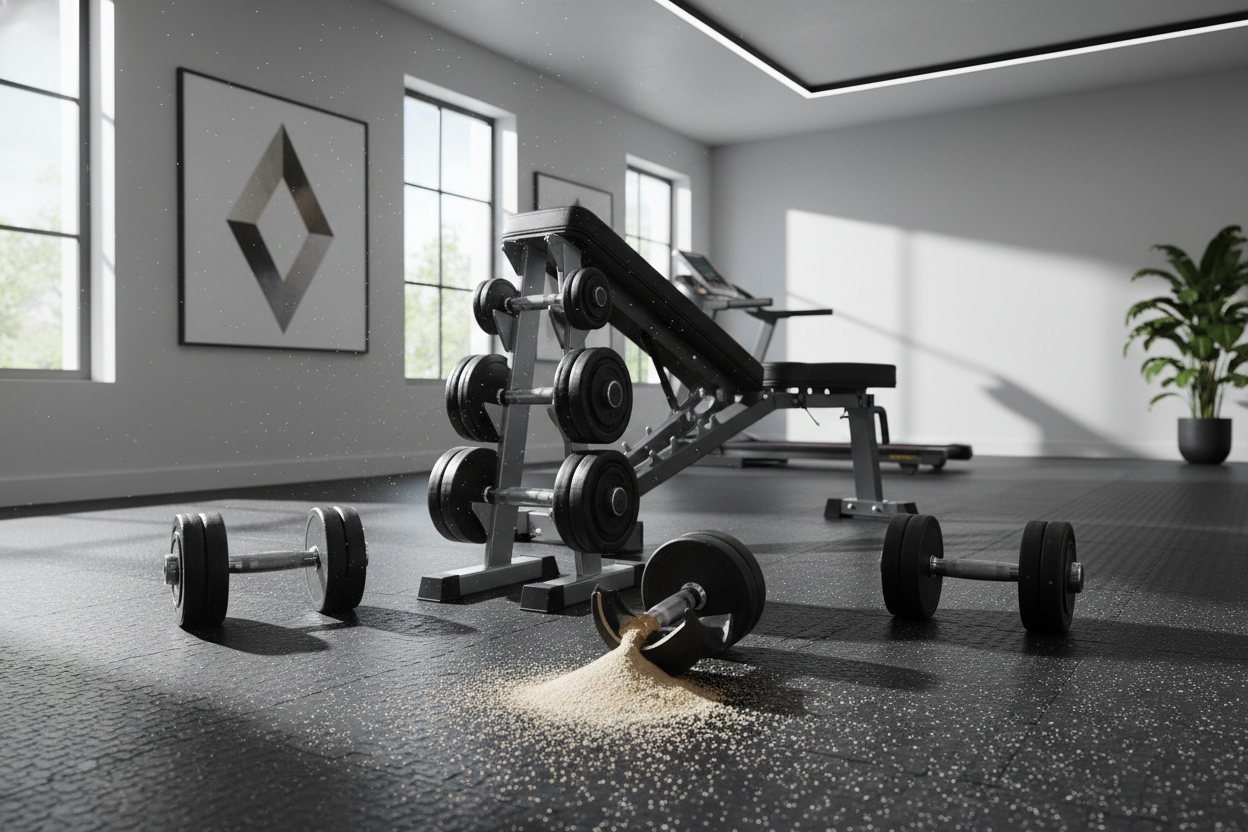
You've seen them at the back of the big-box sporting goods store, usually tucked away near the yoga mats. They’re shiny, black, and incredibly cheap. I’m talking about the dumbbell set plastic shell variety—the kind that promises a full gym experience for the price of a decent steak dinner.
I bought a pair because I wanted to see if they could actually survive a real workout. Most people buy these because the price tag is a low-friction entry point into lifting. But after three weeks in my garage, I can tell you exactly why these belong in the recycling bin, not your squat rack.
- Durability: Extremely low; the plastic seams are a major fail point.
- Filler: Usually sand or low-grade concrete, which shifts during movement.
- Size: Massive footprint compared to iron; makes proper form nearly impossible.
- Resale: Zero value; nobody buys used sand-filled weights.
Why That $30 Plastic Weight Set Is So Tempting
When you’re just starting, spending $300 on a pair of iron adjustables feels like a massive commitment. A 40-lb plastic weight set looks like a steal. It’s clean, it doesn't rust, and it fits the budget of someone who isn't sure they’ll still be lifting in six months.
The marketing works because it targets the 'just get a sweat in' crowd. You think a pound is a pound, right? Whether it’s encased in urethane or a plastic dumbbell shell, the gravity is the same. But the reality of using them is where the frustration starts. They feel like toys, and they perform even worse.
What Are You Actually Lifting? (Hint: It Is Not Solid Iron)
I took a hacksaw to one of these to see what was inside. It wasn't pretty. Instead of a solid core, you’re looking at a slurry of sand and low-density concrete. This creates a massive balance issue. When you’re doing overhead presses, you can actually feel the filler material shifting inside the plastic weight set.
This uneven weight distribution is a recipe for wrist strain. I spent years messing around with gear like this before I finally built a weight and dumbbell set that doesn't suck. If the weight isn't static, your stabilizer muscles are fighting the equipment instead of the load. It’s inefficient and, frankly, annoying.
The Drop Test: Exactly How Fast Plastic Dumbbell Weights Shatter
I decided to simulate a standard 'oops' moment. I dropped a 20-lb plastic dumbbell from waist height onto a standard 3/4-inch horse stall mat. The first drop was fine. The second drop resulted in a dull thud. By the fourth drop, the seam along the side of the bell split wide open.
Within seconds, my garage floor was covered in fine, grey sand. Once these plastic dumbbell weights crack, they are finished. You can't weld plastic back together to hold shifting sand. You’re left with a leaking mess and a weight that now weighs 18.4 pounds instead of 20. It’s the definition of a disposable product in a hobby that should be built on longevity.
The Bulk Problem: Why You Can Not Actually Lift Heavy With Them
Because sand and concrete are far less dense than iron, these things are huge. A 20-lb plastic dumbbell is often the same physical size as a 50-lb pro-style iron dumbbell. This creates a massive range of motion problem. Try doing a close-grip chest press or a goblet squat with these; the bells are so wide they hit your chest or knees before you reach full depth.
If you have a small space, you're much better off with space-saving adjustable dumbbells that use iron plates. The footprint of a full plastic set takes up three times the room for half the actual resistance. You’ll outgrow the physical dimensions of the weights long before you outgrow the actual poundage.
What You Should Actually Buy for Your First Garage Gym
Skip the plastic. If you're on a budget, look for used iron on local marketplaces or invest in a standard rubber hex dumbbell set. Rubber hex is the industry standard for a reason: the heads are pinned, they don't roll away, and they can take a beating for a decade without leaking sand on your shoes.
If you want to do it right the first time, browse some quality dumbbells made of solid steel or iron. You’ll pay more upfront, but you’ll only pay it once. I’ve never seen a piece of iron equipment end up in a landfill because it was dropped, and that’s the kind of reliability you need when you’re training hard.
Are plastic dumbbells okay for light toning?
They work for very light, static movements where you never drop them. But the moment you start progressing to heavier loads or dynamic movements, the bulk and fragility become a liability.
Do plastic weights smell?
Unlike some cheap rubber weights that have a strong chemical 'off-gassing' odor, plastic weights are usually odorless. However, that’s about the only advantage they have over iron or rubber.
Can I fix a leaking plastic dumbbell?
Not really. Duct tape is a temporary fix, but the structural integrity is gone. Once the seam fails, the weight distribution is compromised, and it will eventually leak again.
Share:
Are Weight Benches With Lat Pulldown Actually Worth the Space?
Are Target Adjustable Dumbbells Actually Worth the Cart Space?