
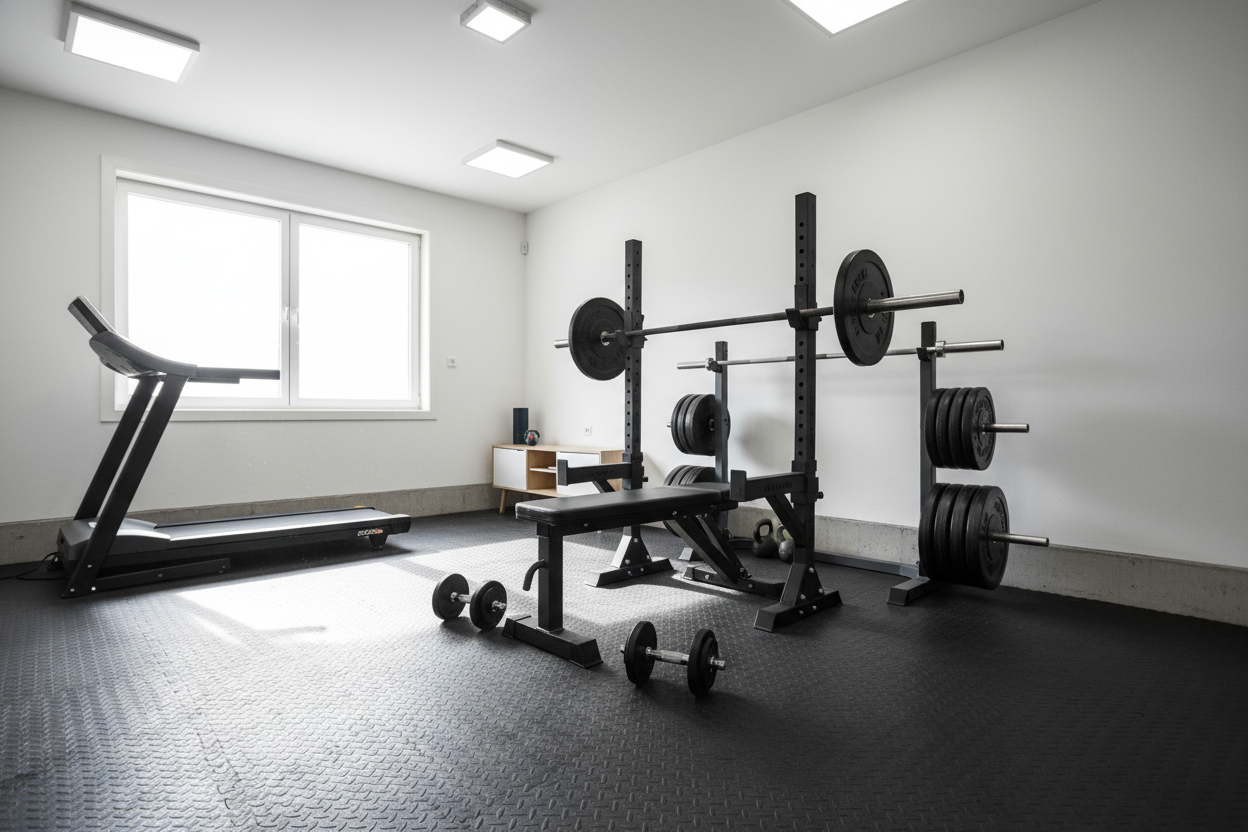
I remember the first time I bought a bench and weights set from a local sporting goods store. I thought I was getting a steal for $150, but the first time I loaded 135 pounds, the uprights started shaking like a leaf in a hurricane. It is a rite of passage for home gym owners, but it is a dangerous one. Most people start their search looking for a shortcut to a chest press with weights, only to end up with a pile of scrap metal in their garage.
Quick Takeaways
- Avoid plastic-coated cement plates; they leak sand and crack under pressure.
- Prioritize 11-gauge steel frames for any bench press set with weights.
- Standard 1-inch bars are a dead end; always go with a 2-inch Olympic setup.
- A pad narrower than 10 inches will kill your shoulder stability.
The Dark Side of the 'All-in-One' Starter Package
Those bundles you see at big-box stores are usually a trap. They advertise a complete workout bench and weight set for a price that seems too good to be true because the materials are bottom-barrel. We are talking about hollow tubes and 'weights' filled with sand or cement. If you drop a cement plate, it is dead. If you load a hollow bar, it stays bent.
Searching for a cheap Amazon weight bench set often leads to units with narrow uprights. These are terrifying because your hands have to grip the bar outside the rack, but inside the plates. It is a recipe for pinched fingers and dropped bars. Buying components separately—even if it takes longer to save up—is the only way to ensure your weight lifting bench set does not collapse mid-set.
Pad Width and Steel Gauge: The Only Specs That Keep You Alive
When you are shopping for a weight bench and weights, ignore the flashy '50-in-1' exercise claims. Look at the steel gauge. 11-gauge steel is the gold standard for a home bench press set. 14-gauge is what you find in the toy section. If the manufacturer does not list the gauge, assume it is thin and move on.
The pad is the next failure point. A cheap weight bench with weights included often comes with a 'tapered' pad that is only 8 or 9 inches wide at the top. You need at least 10 to 12 inches of width to pin your shoulder blades back. Without that support, your shoulders take the brunt of the load. Investing in a dedicated weight bench that stands alone gives you a stable platform that will actually support a 300-lb max capacity without flexing.
Barbells vs. Dumbbells: What Fits Your Floor Plan?
A full barbell bench set requires a footprint of at least 7 feet by 8 feet. An Olympic bar is 7.2 feet long, and you need room to slide plates on and off. If you are crammed into a spare bedroom, a weight bench dumbbell setup might be more realistic. But if you have the space, nothing beats the progressive overload of a 45-lb bar.
Speaking of bars, do not guess the numbers. When you are calculating your bench press bar weight, remember that a standard Olympic bar is 45 lbs (20kg), while those 'standard' 1-inch bars are usually a flimsy 15 to 25 lbs. The 1-inch bars have a much lower weight limit and will not fit the high-quality plates you will want to buy later.
When Does a Multi-Station Actually Make Sense?
I usually tell people to stay away from 'franken-benches,' but there are exceptions. If you are tight on space and cannot fit a full power cage, a bench with a barbell rack that includes a leg developer can work. Just make sure the rack is wide enough for a standard grip. If it is too narrow, you will be doing 'close grip' presses forever, which limits your chest development.
For those who train alone in a garage without a spotter, a chest press machine or a bench with independent arms can be a safer alternative to free weights. It allows you to push to failure without the fear of the bar pinning your neck. It is not quite the same as a raw barbell bench press, but the safety trade-off is often worth it for solo lifters.
My Blueprint for a Rock-Solid $500 Pressing Station
You do not need to spend thousands on a weights bench and weights setup. Start with a high-capacity flat bench. Look for one rated for at least 600 lbs—remember, that includes your body weight. Next, hunt for used cast iron plates on the secondary market. Iron is iron; it does not matter if it has a little surface rust.
Pair that with a decent entry-level Olympic bar. This setup will last you a decade, whereas a cheap 'all-in-one' weight bench set with weights included will likely end up at the dump in six months. Buy once, cry once. Your chest gains (and your safety) depend on it.
FAQ
Is a 300-lb weight capacity enough for a bench?
Usually, no. That 300-lb limit includes the weight of the lifter. If you weigh 200 lbs, you can only safely bench 100 lbs. Look for a bench with at least a 600-lb total capacity.
What is the difference between standard and Olympic weights?
Standard plates have a 1-inch hole; Olympic plates have a 2-inch hole. Olympic gear is the industry standard, much more durable, and has a higher weight capacity for your bench and barbell set.
Can I use a bench press bar for squats?
If you have a weight bench with a barbell rack that is adjustable in height, yes. However, most combo benches have fixed racks that are too low for safe squatting. You are better off with a standalone rack.
Share:
Are $50 Benches for Working Out Actually Safe?
I Fixed My Depressing Basement Gym Decor (Without Cheesy Posters)