
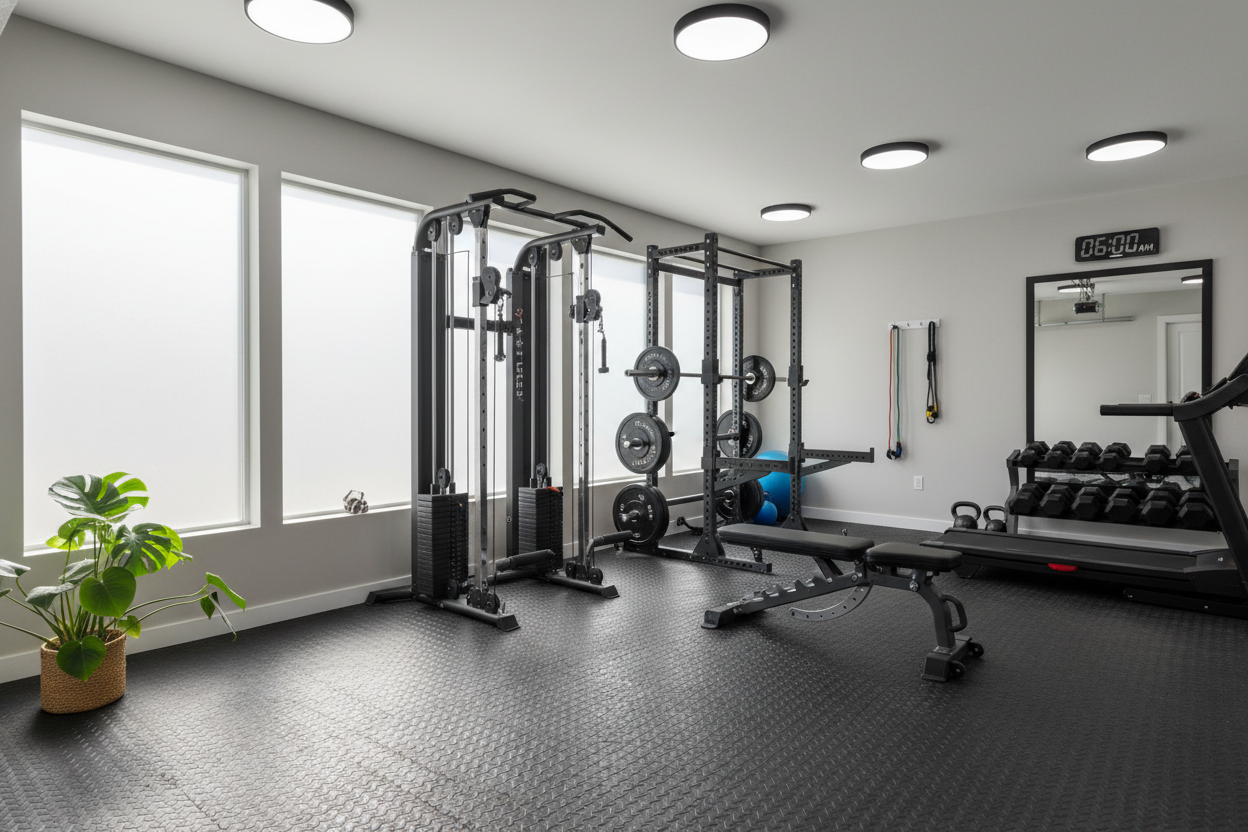
Walking into a big-box gym for the first time feels like being a tourist in a city where you do not speak the language. You see rows of iron, pulleys, and weird padded seats, and you just want to know what the fitness machine types actually do without looking like a total amateur. I have spent a decade in commercial dungeons and garage gyms, and I can tell you that about 60% of what you see on the floor is filler designed to make the gym membership look 'premium.'
Quick Takeaways
- Cables are the most versatile machines you can use.
- Plate-loaded machines are better for heavy, progressive overload.
- The Smith Machine is actually great for hypertrophy, despite what the purists say.
- Skip the single-use ab machines; they are a waste of floor space.
The Sea of Steel: Why the Gym Floor is So Confusing
The first time I walked into a Gold’s, I stood there for five minutes just trying to figure out what are the machines called at the gym. It is overwhelming. You have rows of different exercise machines that all look like they do the same thing, but some have pins, some have pegs for plates, and some use weird hydraulic pistons.
The confusion is intentional. Manufacturers want to sell 'variety' to gym owners. But for you, the trainee, you only need to understand the mechanics. Most different types of machines at the gym are just variations of a press, a pull, or an extension. Once you realize a 'chest press' is just a seated version of a bench press, the 'sea of steel' starts to make sense. You stop looking at the brand name and start looking at the pivot point.
Plate-Loaded vs. Selectorized (The Two Main Categories)
When you are looking at different kinds of exercise machines, they usually fall into two buckets: selectorized and plate-loaded. Selectorized machines are the ones with the weight stack and the little magnetic pin. They are built for speed and convenience. You can change the weight in two seconds, which is great for dropsets, but the weight usually caps out at around 200 or 250 pounds.
Plate-loaded machines require you to manually slide Olympic plates onto pegs. These are the workhorses. Because there are no cables or pulleys to snap, these machines feel more 'raw' and can handle significantly more weight. If you are training for raw strength, these are the types of workout machines you want to live on. The downside? You have to strip the plates when you are done, which is basically a workout in itself.
The Heavy Hitters: Gear You Should Actually Use
Not all types of machine in gym settings are created equal. I have seen people spend 45 minutes on a hip adductor machine while the power rack sits empty. If your goal is to actually change how your body looks or performs, you need to prioritize machines that allow for heavy loading and a deep range of motion.
Cable Crossovers and Functional Trainers
Cables are the king of the gym floor. Unlike dumbbells, where the tension drops off at the top of the movement, cables provide constant tension throughout the entire rep. Because the pulleys are adjustable, you can hit your chest, back, shoulders, and even legs from every conceivable angle. If I could only have one machine, this would be it.
The Smith Machine (Stop Hating on It)
Free-weight snobs love to trash the Smith machine because the bar path is fixed. They say it doesn't 'use your stabilizer muscles.' While that is technically true, it is also exactly why it is awesome. When you don't have to worry about balancing the bar, you can push your muscles to absolute failure safely. Using a Smith Machine Home Gym Station is one of the most effective ways to build quad and chest volume without needing a spotter.
The 'Fringe' Gear: Pilates, Cardio, and Specialty Units
Then you have the different kinds of exercise machines that don't fit the 'meathead' mold. I used to think Pilates was just for stretching until I actually tried a reformer. It’s a different kind of resistance—linear and controlled. A 3 In 1 Foldable Pilates Reformer Machine Pf05 is a solid example of how you can bridge the gap between traditional strength and core stability without needing a 400-pound stack of iron.
Specialty units like hack squats or pit sharks are also worth your time. They take the load off your spine and put it directly on the target muscle. If your gym has a hack squat, use it. Your legs will hate you, but they will actually grow.
Which Types of Workout Machines Belong in a Garage?
Transitioning from a commercial space to a Home Gym is where things get tricky. In a commercial gym, floor space isn't your problem. In a garage, every square inch is a premium. I have made the mistake of buying single-use machines that ended up as expensive clothes racks. If you are building a space, you need multi-functional units.
A power rack with a lat pulldown attachment is a better investment than a standalone lat machine. I actually wrote a piece about how I Regret Buying Most Of My Gym Machines At Home Except This One because I got lured in by 'cool' looking gear that only did one thing. Stick to the basics: a rack, a bench, and maybe a functional trainer if you have the budget.
The Final Verdict on Navigating the Equipment Floor
Don't let the rows of chrome and plastic intimidate you. Most of the different exercise machines you see are just fancy ways to move a weight from point A to point B. Pick 3-4 'heavy hitters'—like a leg press, a cable row, and a chest press—and get really strong on them. The rest is just noise. If a machine feels clunky or hurts your joints, skip it. There is always another way to hit that muscle.
FAQ
What are the best machines for beginners?
Stick to selectorized machines (the ones with pins) for the first few weeks. They have a fixed path of motion, which helps you learn the movement patterns without the risk of dropping a heavy barbell on your face.
Are machines better than free weights?
Neither is 'better.' Free weights build stability and coordination, while machines allow for better isolation and safety at high intensities. A good program uses both.
How do I know which machine hits which muscle?
Look for the small diagram usually printed on the frame. If it’s missing, look at the movement: if you are pushing away from your body, it’s usually chest or shoulders. If you are pulling toward you, it’s back.
Share:
I Ordered From a German Fitnessgeräte Store (And Paid For It)
I Was Wrong About the Smith's Machine (And You Are Too)