
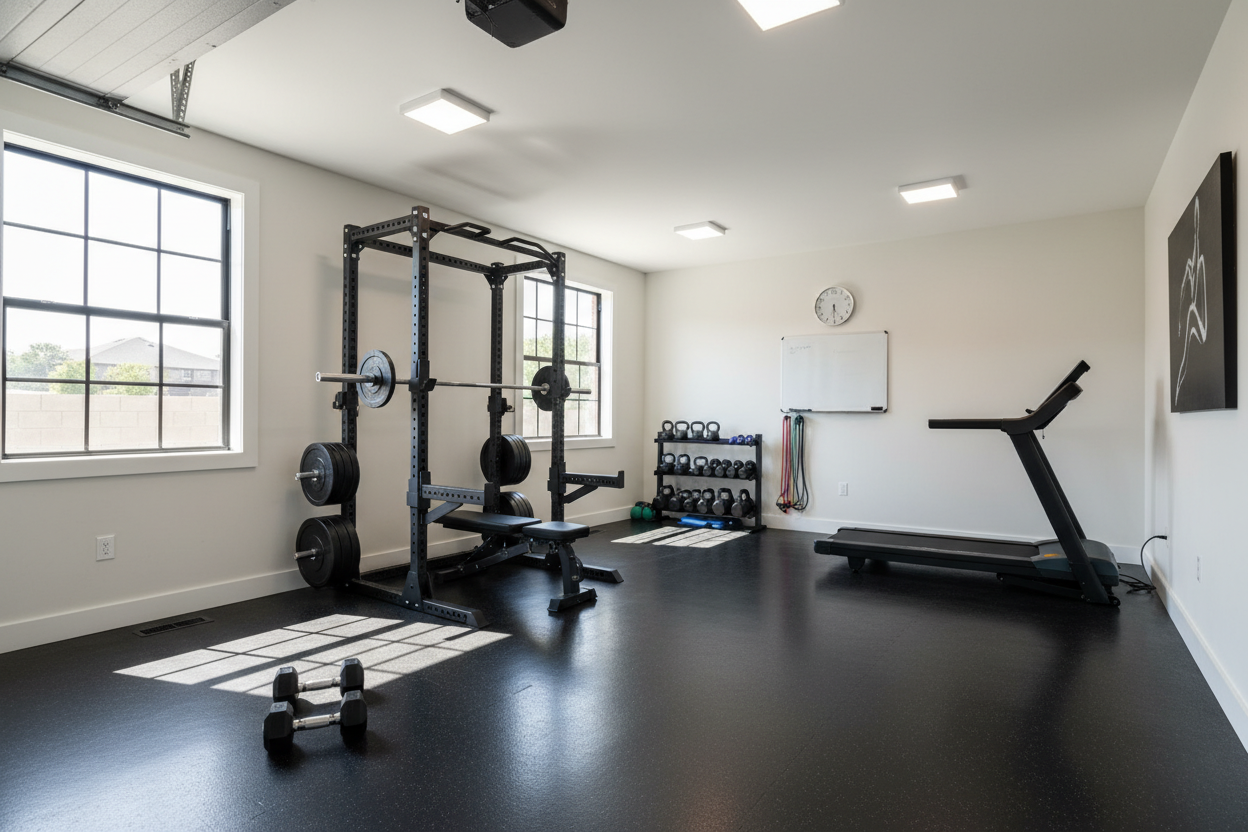
I still remember the smell of the first 'gym' I built. It was a mix of cheap off-gassing rubber and regret. I spent three grand on a multi-station machine that promised everything but delivered a cramped, awkward range of motion that felt nothing like the iron I was used to at the local powerhouse.
Building garage home gyms isn't about buying the most expensive gear; it's about not making the same stupid mistakes I did. I've since torn down and rebuilt my space three times, finally landing on a garage gym setup that actually makes me want to train at 5 AM when it's thirty degrees outside.
Quick Takeaways
- Horse stall mats are the only acceptable flooring. Skip the foam puzzle pieces.
- Prioritize a rack with a small footprint but high versatility.
- Vertical storage is the difference between a gym and a cluttered storage unit.
- Climate control is more important for consistency than a fancy barbell.
The Trap of the Commercial Mindset
The biggest mistake people make with a home gym garage is trying to turn a 20x20 space into a mini Gold's Gym. You don't need a dedicated leg press, a cable crossover, and a standing calf raise machine. Those take up massive real estate and usually end up as expensive coat racks. When you try to replicate a commercial space, you end up with zero floor room to actually move.
I once fell for the 'all-in-one' marketing hype. I Tried Replacing My Garage Setup With A Marcy At Home Gym, and while it saved space, the lack of a free-weight barbell felt like a massive step backward for my squat numbers. In the best garage gym setups, every square inch has to earn its keep through multi-functionality.
Flooring First (The Step Everyone Skips)
Do not buy those colorful foam puzzle mats from the big box store. They are fine for a playroom, but the second you try to squat 315 lbs on them, they will compress, slide, and leave you feeling like you're standing on a bowl of marshmallows. It's dangerous and cheap.
A proper gym setup in garage environments requires 3/4-inch rubber horse stall mats. They are heavy, they stay put, and they protect your concrete from cracking when you're pulling deadlifts. Yes, they smell like a tire shop for a week, but they last a lifetime and provide the stable base you need for heavy triples.
The Core Four: Where Your Budget Actually Belongs
If you're looking for the best garage gym setup, stop looking at accessories and focus on the 'Core Four': a power rack, a barbell, plates, and an adjustable bench. This is 90% of your progress. I wasted months playing with resistance bands and adjustable kettlebells when I should have just bought a high-quality 20kg bar with decent knurling.
For plates, don't get fancy. Iron is iron. Unless you are doing Olympic lifts and dropping weights from overhead, basic steel plates are better for a garage workout setup because they take up less room on the bar than bulky bumpers.
Picking a Centerpiece That Does Double Duty
In a small garage gym setup, you need a rack that does more than just hold a bar. I eventually switched to a unit that included a pull-up bar and a plate-loaded pulley system. This allows me to hit lat pulldowns and tricep extensions without needing another machine.
If you're training solo and want that extra layer of safety without a human spotter, a Smith Machine Home Gym Station can be a lifesaver. It provides the guided path for heavy presses while often integrating cable attachments that maximize your home garage gym setup without eating the entire floor plan.
Surviving the Elements: Climate Control
The hardest part of an at home garage gym isn't the workout; it's the environment. In July, my garage hit 95 degrees with 80% humidity. In January, the barbell was so cold it felt like it was burning my skin. If you don't address this, you won't use the gym.
Get a high-velocity floor fan for the summer and a basic propane or infrared heater for the winter. Also, keep a bottle of 3-in-1 oil handy. Humidity in a gym garage setup will rust a cheap chrome barbell in weeks if you don't wipe it down regularly. Maintenance is part of the lifestyle.
Keeping the Clutter Off the Floor
A messy gym is a gym you'll eventually stop using because it's too much work to clear a path. Vertical storage is your best friend. Get your plates off the floor and onto the rack or a wall-mounted tree. Hang your jump ropes, bands, and belts on the wall.
When you're building out your Home Gym, think about the 'flow' of your workout. If you have to move three things just to get to your dumbbells, you're doing it wrong. A clean floor makes a small space feel twice as large and significantly more professional.
My Biggest Mistake
The worst thing I ever did was buy a 'cheap' barbell off a secondary marketplace for $40. It looked fine, but the first time I loaded it with 225 lbs, it developed a permanent bend. It wasn't even rated for the weight I was lifting. I learned the hard way that you never, ever cheap out on the things that connect you to the weight. Buy once, cry once.
FAQ
How much space do I really need for a garage gym?
You can fit a full setup in an 8x8 foot area if you're smart. A standard Olympic bar is 7.2 feet long, so you need at least 9 or 10 feet of width to comfortably load plates without hitting the wall or your car.
Is concrete flooring okay to lift on?
Raw concrete will eventually crack under the impact of heavy weights, and it's brutal on your joints. Always use at least 3/4-inch rubber mats to distribute the force and protect your foundation.
Will a garage gym lower my home's value?
Not if you keep it organized. Most buyers love seeing a functional space. Stick to floor mats that aren't glued down and wall-mounted racks that can be removed, and you're actually adding a 'lifestyle' feature to the home.
Share:
The Mistakes I Made Buying a Leg Press Machine for Beginners
Why 90% of Home Workout Machines Feel Like Pulling Through Sand