
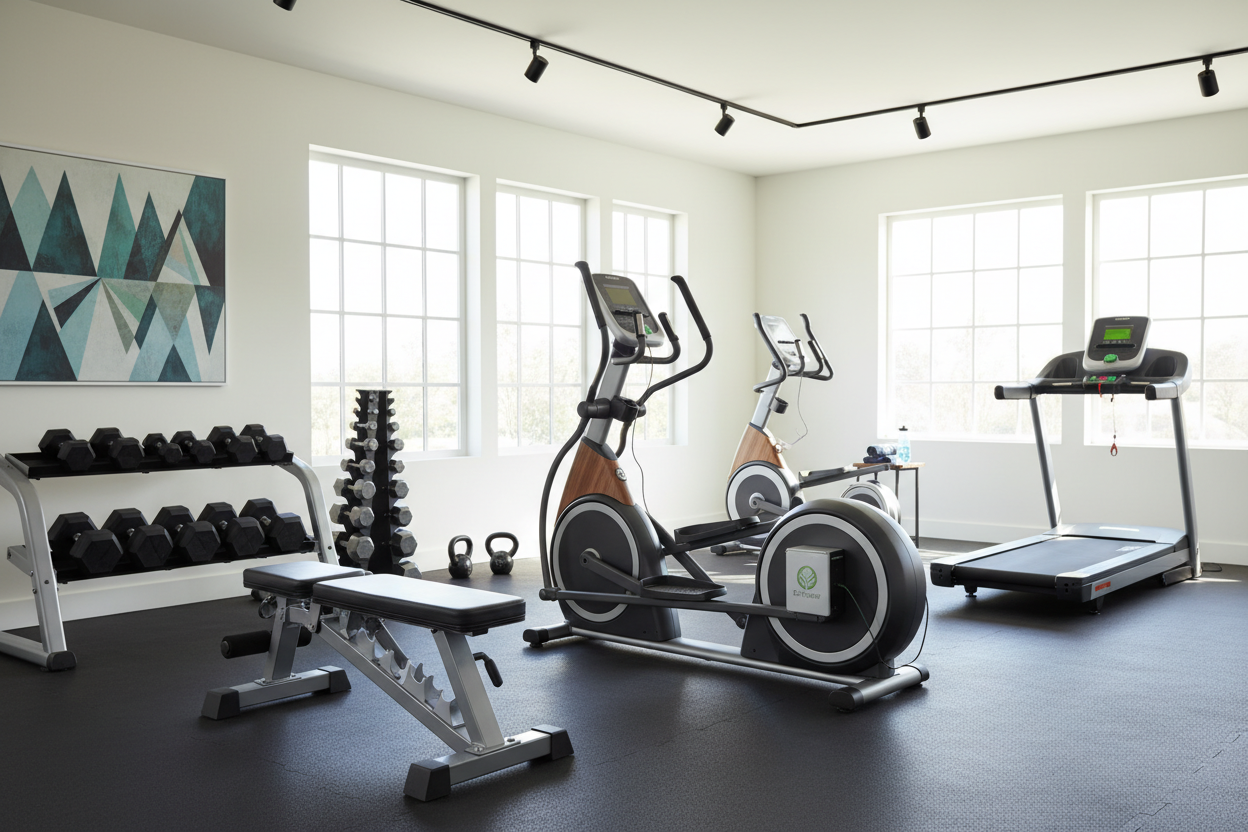
I remember looking at my utility bill last July and thinking there had to be a better way than just handing my paycheck to the power company. I was midway through a heavy squat session in my garage, sweat dripping onto the rubber mats, and it hit me: all this effort is just vanishing into the air as heat. That's when I went down the rabbit hole of electric generating exercise equipment to see if I could actually turn my morning cardio into something useful.
- Human power output is surprisingly low, usually averaging 100-200 watts.
- Financial ROI is almost non-existent for home users.
- The gear is significantly more expensive than standard non-generating alternatives.
- Best used for off-grid motivation or commercial LEED certification.
The Green Gym Dream: Marketing Hype vs. Actual Physics
Companies love to show a group of people in a green energy gym supposedly powering a whole building. It's mostly theater. The harsh reality of generating electricity from gym equipment is that humans are pretty inefficient batteries. A professional cyclist might sustain 400 watts for a short burst, but the average person is going to hover between 100 and 150 watts during a steady-state session.
To put that in perspective, a standard toaster needs about 1,200 watts to brown your bread. You would need a literal squad of Olympic athletes pedaling at max effort just to make breakfast. When you see ads for exercise equipment that produces electricity, they often gloss over the fact that a brutal hour-long session might generate enough juice to run a single LED lightbulb for an evening. It's a cool concept, but the physics don't lie.
How This Gear Actually Captures Your Sweat Equity
The mechanics behind power generating gym equipment are actually pretty clever. Most systems use a permanent magnet generator attached to the flywheel. As you pedal, you create kinetic energy that the generator converts into DC power. From there, it either goes into a battery or through an inverter to become AC power that your house can use.
There's a big split in the tech: grid-tied vs. standalone. Grid-tied machines feed power directly back into your home's electrical system through a wall outlet. When building out a home gym, keep in mind that these grid-tied setups often require a cleaner electrical signal and sometimes a professional check-up to ensure you aren't creating a hazard. Standalone exercise machines that generate electricity are simpler; they usually just have a USB port or a 12V plug to charge a phone or a small battery pack.
I Did the Math on 'Free' Electricity (It's Bleak)
Let's talk numbers, because this is where the energy efficient gym equipment dream usually dies. A high-end power generating exercise bike can easily cost $2,000. A standard, high-quality foldable upright exercise bike might only cost a few hundred. You are paying a massive premium for the generator tech.
If you generate 150 watts for an hour, you've produced 0.15 kWh. At an average US electricity price of 16 cents per kWh, you just saved about 2.4 cents. To make back a $1,000 price difference between a regular bike and a workout equipment that generates electricity model, you would need to ride for over 41,000 hours. That is nearly five years of non-stop, 24/7 pedaling. Buying electricity generating gym equipment for sale strictly to save money is like buying a Ferrari to save on bus fare.
Who Actually Benefits from a Green Energy Gym?
So, is exercise electricity a total scam? Not necessarily. It has a place in a gym that generates electricity for the public. In a commercial setting, 20 bikes running for 12 hours a day can actually take a small bite out of the lighting bill. Plus, it's a massive marketing win for 'green' branding.
For the home user, the benefit is almost entirely psychological. I've found that the novelty of charging a tablet while pedaling can be highly motivating when looking for the best exercise equipment for elderly family members. There is something satisfying about seeing a physical representation of your work. If 'earning' your Netflix time by powering the screen is the only way you'll get on the bike, then the energy producing gym equipment is worth every penny.
Should You Upgrade Your Garage Setup Just to Go Green?
My honest take? Don't buy electric gym equipment because you want to save the planet or your wallet. Buy it if you love the data and the 'off-grid' vibe. If your goal is strictly fitness, your money is better spent elsewhere. A high-quality rack or a smith machine home gym station will do far more for your body composition and long-term health than a bike that saves you three cents a day.
I once spent two hours on an exercise machine generate electricity prototype trying to charge my dead phone during a power outage. My legs were absolute jelly, I was drenched in sweat, and I'd only gained about 15% battery life. It was a humbling reminder that I am a much better athlete than I am a power plant. Focus on the work, not the wattage.
Is there a treadmill that generates electricity?
Yes, but they are usually non-motorized curved treadmills. Instead of a motor consuming power to turn the belt, your movement turns a generator. They are incredibly difficult to run on and generate more power than bikes because you're moving more mass, but they are also very expensive.
Can I power my whole house with an exercise bike?
No. Even a world-class athlete couldn't power a modern refrigerator for long. You might be able to keep a few LED bulbs and a phone charged, but for appliances, you need solar or wind.
Does the resistance feel different on power-generating gear?
It can. Cheaper energy generating exercise equipment can feel 'notchy' or inconsistent because the resistance is tied to the electrical load. High-end models use sophisticated electronics to make it feel as smooth as a standard magnetic bike.
Share:
Stop Paying for Screens: The Best Treadmills for Home Gym Use
I Finally Figured Out the Freemotion Smith Machine Bar Weight