
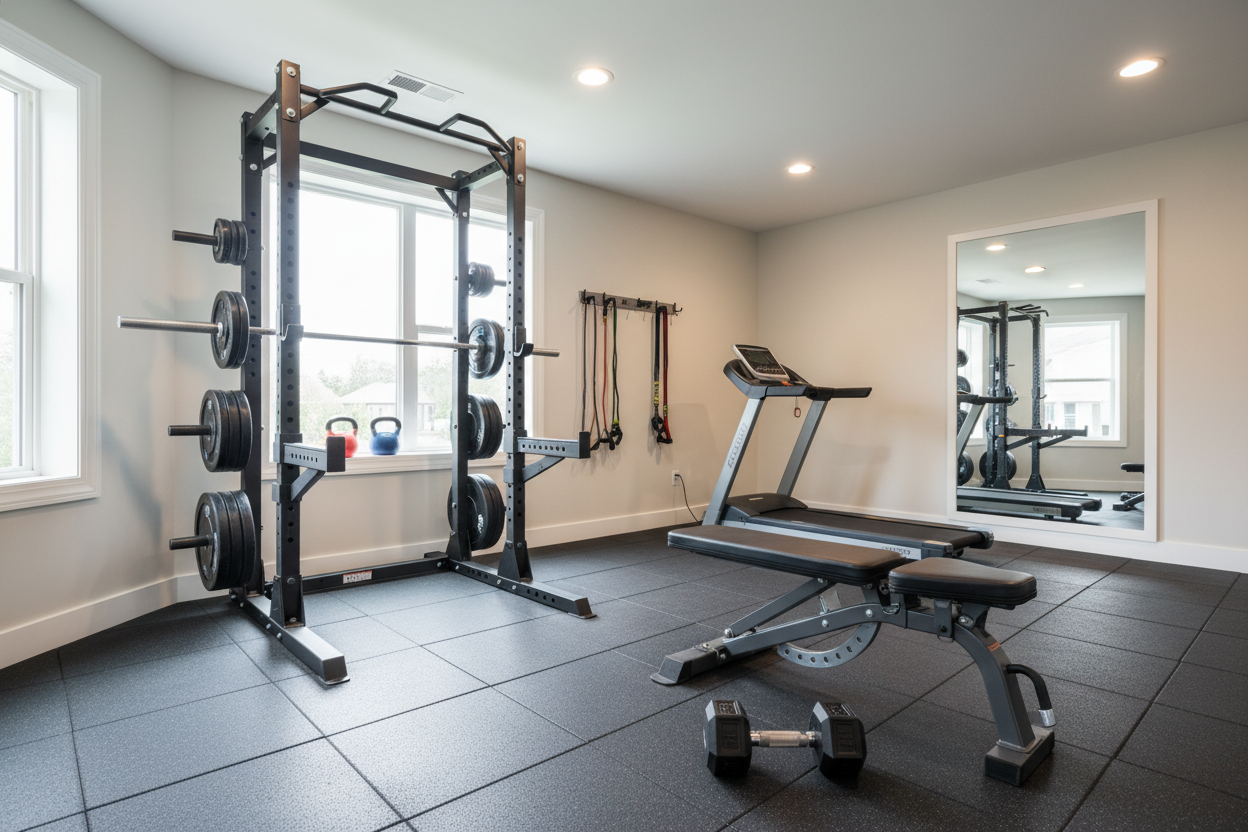
I walked into a local weight machine shop last January and almost choked on my pre-workout. The sticker price for a basic functional trainer was higher than my first car’s resale value. I decided then to log every price change, shipping quote, and spec sheet for twelve months to find the actual cost of weight machine gear that doesn’t suck.
Quick Takeaways
- Budget machines under $500 usually have 1:1 cable ratios that feel jerky and use 14-gauge steel.
- The mid-range sweet spot ($1,200–$2,200) offers the best balance of 11-gauge steel and smooth linear bearings.
- LTL freight shipping can add $250 to $500 to your total if you aren't careful about 'free shipping' thresholds.
- Commercial gear is often overkill for one person; you're paying for a 400-lb weight stack you’ll never max out.
Why I Started Watching the Market So Closely
The home gym market is a wild west of fluctuating steel prices and predatory shipping fees. I’ve spent a decade building out my garage, and I’ve seen the same weight machine cost double in six months just because a brand changed the paint color. I started tracking these numbers because I was tired of seeing people buy 'pro-sumer' rigs that are really just glorified clothes hangers.
Over the last year, I’ve logged data on everything from Smith machines to cable crossovers. I wanted to see where the diminishing returns kick in. Is a $4,000 lat pulldown really four times better than a $1,000 one? Usually, the answer is no, but the difference between a $300 machine and a $1,200 one is the difference between a smooth rep and a cable snapping mid-set.
The Budget Tier: Wobbles, Sticky Cables, and Regret
When you look at a weight machines price tag under $500, you need to be skeptical. These units are almost always made with 2-inch by 2-inch, 14-gauge steel. If you’re a grown adult pulling 200 pounds on a cable, that frame is going to flex. The pulleys are usually cheap nylon with plastic bushings instead of sealed bearings, meaning the 'resistance' feels like dragging a brick through sand.
In this price bracket, you are almost always better off skipping the multi-station machine entirely. Spend that money on a high-quality adjustable weight bench OWB01 and a pair of heavy dumbbells. You’ll get a better workout and won’t have a 200-pound paperweight taking up half your garage when the tension rod snaps. If the machine weighs less than you do, don't buy it.
The Mid-Range Sweet Spot for Garage Gyms
This is where the price for weight machine equipment finally starts to make sense for a serious lifter. Between $1,000 and $2,500, you start seeing 11-gauge steel (the gold standard) and 3-inch by 3-inch uprights. This is the zone where you get real linear bearings on Smith machines and dual-pulley systems that don't bind up when you do a high-to-low fly.
I spent three months testing if the is the Valor Fitness Smith machine actually smooth under heavy weight, and it’s a perfect example of this tier. It handles 400+ pounds without that 'stuttering' feeling you get on budget rods. In this range, you’re paying for the quality of the cables—usually 2,000-lb rated aircraft grade—and the smoothness of the travel. This is where I put my own money.
Premium and Commercial: Are You Just Paying for the Name?
Once the weight machine cost climbs over $3,000, you’re entering the realm of commercial-grade equipment. These are built to survive 18 hours of daily abuse from people who don't care about the gear. For a solo lifter in a garage, this is often overkill. You’re paying for 7-gauge steel and massive weight stacks that take up way too much square footage.
However, there are quirks to this gear that are nice. For example, I finally figured out the Freemotion Smith machine bar weight is often counterbalanced to zero, which is great for rehab or high-volume accessory work. But instead of a $7,000 all-in-one, I'd rather buy a targeted standalone unit like the Weight Bench Chest Press Machine Independent Arms Z1 Pro. It gives you independent arm movement that mimics a dumbbell press but with the stability of a machine, which is far more valuable for hypertrophy than a shiny nameplate.
The Hidden Freight Fees They Don't Warn You About
The weight machines price you see on the product page is rarely what hits your credit card. These things are heavy, often shipping in three or four boxes on a wooden pallet. That means LTL (Less Than Truckload) freight. If you live in a residential neighborhood, you’re looking at a 'residential delivery fee' and a 'liftgate fee' because the truck driver isn't going to hand-bomb a 600-pound crate off the back of a semi.
I’ve seen 'free shipping' deals that actually baked a $300 premium into the base price. Always check the checkout screen before you get excited. Also, remember that if a machine arrives damaged—which happens often with heavy steel—returning a freight item is a nightmare. Keep the pallet. If you throw it away, most companies won't take the return because they can't pick it up.
Final Verdict: What Should You Actually Spend?
If you are serious about training, aim to spend between $1,500 and $2,000 for a primary weight machine. This ensures you get a 2:1 or 1:1 ratio that actually feels consistent and a frame that won't walk across the floor when you're using it. Don't forget to factor in the cost of a solid weight bench to pair with your cable or Smith setup; using a cheap, wobbly bench with a $2,000 machine is like putting budget tires on a Porsche.
Personal Experience: My $600 Mistake
Early in my journey, I bought a 'deal' on a plate-loaded lat pulldown for $400. On paper, it looked great. In reality, the guide rods were slightly bowed. Every time I pulled more than 150 pounds, the carriage would catch and then 'jump' two inches. It ruined my mind-muscle connection and eventually, the friction frayed the cable. I ended up selling it for $100 on Marketplace and buying a mid-range unit. Buy once, cry once.
FAQ
Is a plate-loaded machine cheaper than a weight stack?
Yes, significantly. You can save $500–$1,000 by using your own Olympic plates. The downside is the footprint and the time spent loading/unloading, but the 'feel' is often just as good if the bearings are quality.
Does 11-gauge steel really matter for a home gym?
Absolutely. It’s not just about weight capacity; it’s about rigidity. Thinner steel vibrates and flexes, which causes the cables to misalign over time and increases wear on the pulleys.
How much should I budget for shipping?
If it isn't explicitly 'free shipping,' budget 15-20% of the machine's cost for freight. Always ask if the liftgate service is included, or you'll be stuck trying to slide a crate off a truck bed yourself.
Share:
Why the Best Home Gym All-In-One Needs a Built-In Smith Rack
I Tracked 'Muscle Per Dollar' to Find the Best Home Gyms for the Money