
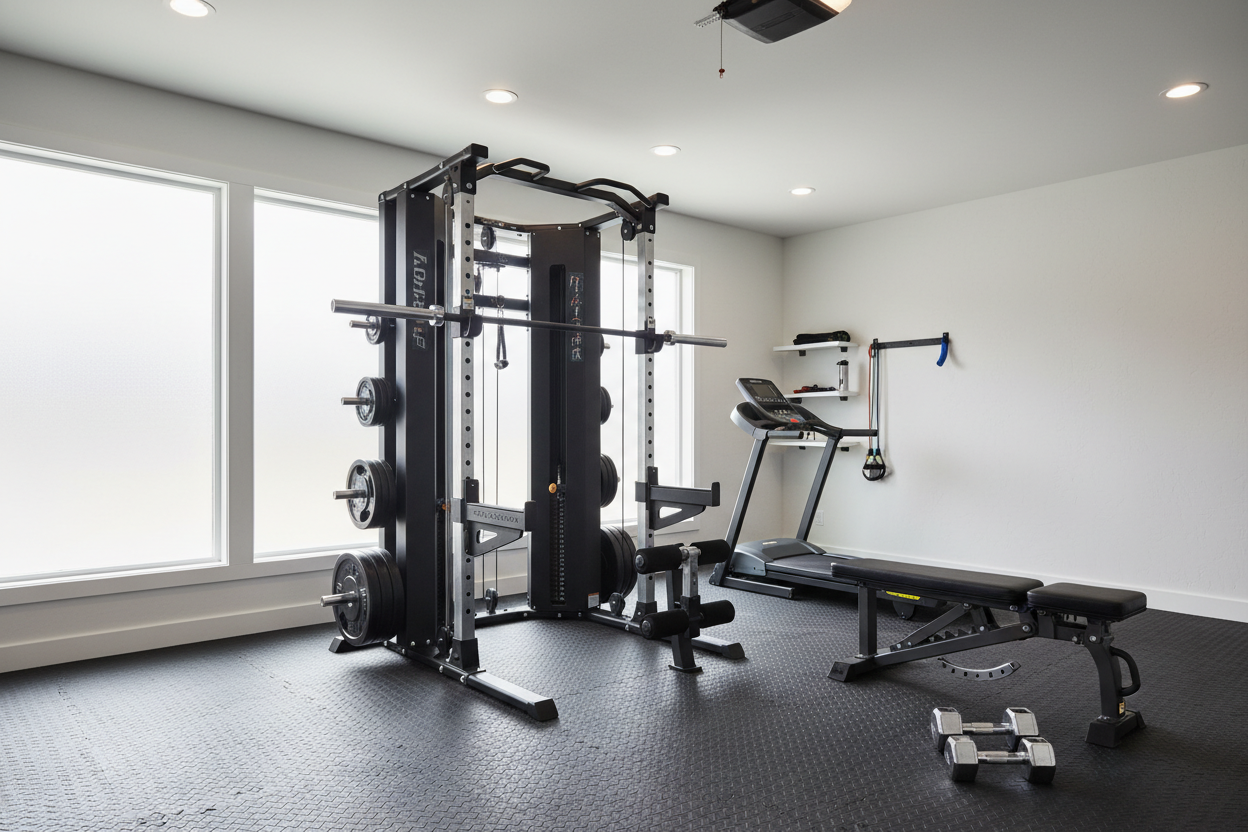
I spent a decade calling anything with a weight stack a 'toy' for people who weren't serious about moving heavy iron. My garage was a fortress of rusted plates and a power rack that took up half the floor space. But eventually, the clutter won. I spent more time moving a bench to get to my barbell than I did actually lifting. I finally broke down and bought an all in one exercise machine, and honestly? It was the best ego-check I've ever had.
Quick Takeaways
- Modern all in one workout equipment uses 11-gauge steel, making them as stable as any commercial rack.
- Switching to a gym machine all in one can save over 30 square feet of floor space.
- Cable systems offer constant tension that a barbell simply cannot replicate for hypertrophy.
- Dual weight stacks allow for functional training and explosive movements without plate-loading hassle.
The Free Weight Purist Problem
For years, I lived by the 'barbell only' creed. If it didn't involve a 7-foot piece of steel and the risk of being pinned under it, I didn't think it was worth doing. My garage was packed with a squat rack, a separate lat pulldown, a leg extension machine I found on Craigslist, and three different bars. It looked like a fitness equipment all in one graveyard.
The problem wasn't the gear; it was the friction. To switch from squats to rows, I had to unload 315 pounds, strip the bar, move the safety pins, and then navigate a minefield of loose plates. My workouts were taking 90 minutes, and 30 of those minutes were just logistics. I was losing my motivation to train because the setup was such a chore. I realized that a workout all in one machine wasn't a compromise—it was an efficiency upgrade.
I finally realized that my stubbornness was holding back my progress. I was skipping accessory work because setting up the pulleys was a pain. I was avoiding high-volume legs because the squat rack was buried under a pile of boxes. The transition to an all in one fitness equipment setup wasn't about getting soft; it was about getting smart with my time and my space.
Why Modern Multi-Gyms Aren't What You Think
If you're picturing those flimsy 1990s infomercial machines made of thin plastic and airplane cables, you're living in the past. The modern exercise machines all in one category has undergone a massive engineering overhaul. We are now seeing 3x3-inch, 11-gauge steel uprights—the same stuff used in professional strength facilities—integrated into these rigs.
The old machines felt 'mushy' because of cheap plastic pulleys and thin cables that stretched under load. Today's all in 1 gym machine options use aluminum pulleys and high-tensile strength cables rated for thousands of pounds. When you pull on the handle, the weight moves instantly. There is no slack, no friction, and no wobble. It feels like a commercial-grade unit because, in many cases, it is.
Furthermore, the versatility of an all in one home gym machine has exploded. We aren't just talking about a chest press and a leg curl anymore. These rigs now incorporate functional trainers, Smith machines, power racks, and even leg presses into a single footprint. You can go from a heavy set of rack pulls to a cable fly without taking a single step. That kind of flow is impossible with a piecemeal gym setup.
The Features You Actually Need (And What to Ignore)
When shopping for all in one exercise equipment, it is easy to get distracted by flashy attachments. You'll see things like 'vertical knee raise' stations or 'twister' plates that just take up space and add points of failure. Focus on the core components: the frame, the pulleys, and the guide rods. If those aren't solid, the rest is junk.
Look for an all in one machine gym that features laser-cut holes and high-quality knurling on the bars. You want a frame that doesn't rock when you're doing pull-ups. Ignore the machines that try to include twenty different handles you'll never use. Instead, look for a setup that prioritizes the quality of the primary movements like the press, the row, and the squat.
Don't Compromise on the Cable System
The heart of any all-in one fitness machine is the cable system. If the pulleys are plastic, they will eventually flat-spot and feel 'crunchy.' Aluminum pulleys are the standard for anyone serious about their training. They provide a smooth, consistent travel that makes a huge difference when you're working near failure.
You also need to pay attention to the pulley ratio. A 2:1 ratio is common in an all in one machine workout rig, meaning 100 pounds on the stack feels like 50 pounds of resistance. This is ideal for functional movements and high-rep isolation work because it gives you more cable travel. If you're a heavy hitter, you might want a 1:1 ratio for your primary lifts, but for most home gym owners, the 2:1 ratio offers the best versatility for all in one home exercise equipment.
The Smith Machine Isn't Cheating
I used to be an ego-lifter who thought the Smith machine was for people who couldn't balance a bar. I was wrong. After integrating a Smith machine home gym station into my routine, my hypertrophy has actually improved. Why? Because I can push my muscles to absolute failure without worrying about the bar crushing my windpipe.
A fixed barbell path allows you to isolate specific muscle groups like the quads or the upper pecs with surgical precision. It’s an incredible tool for Bulgarian split squats, shrugs, and close-grip presses. In a workout equipment all in one setup, the Smith machine provides a layer of safety that allows you to train intensely even when you don't have a spotter. It is a tool, not a crutch, and it’s one of the most valuable parts of an all in one at home gym.
Will It Actually Save You Space and Money?
Let's do the math. A quality power rack costs about $800. A functional trainer is another $1,500. A Smith machine is $1,000. A leg press machine is $1,200. By the time you buy all these pieces individually, you've spent over $4,500 and taken up 200 square feet of your garage. An all-in-one home gyms setup usually costs between $2,500 and $4,000 and fits into a 5x7 foot area.
From a financial perspective, gym equipment all in one is almost always the better deal. You’re paying for one frame instead of four. You’re paying for one shipping fee instead of five. And perhaps most importantly, you’re gaining back your floor space. Having a complete gym for home that leaves enough room to actually park a car or store your lawnmower is a massive win for your quality of life.
I also found that I saved money on accessories. Most all-in-one weight machine packages include the landmine attachment, the dip bars, and the various cable handles that you would otherwise have to buy separately. When you add up the 'hidden' costs of a traditional gym—shipping, multiple benches, and specialized attachments—the all in one home fitness equipment route is the clear winner for the budget-conscious lifter.
My Final Verdict After 6 Months of Lifting
After half a year of training exclusively on an all in 1 workout machine, I'm not going back. My garage is clean, my workouts are faster, and I'm actually doing the accessory work I used to skip. The convenience of being able to superset a heavy bench press with a cable row in the same 4-foot radius is a total shift in how I approach my training volume.
If you have the budget and the space, I highly recommend a heavy-duty all in one Smith machine with dual weight stacks. It bridges the gap between old-school strength and modern hypertrophy training. While I still love the feel of a raw barbell for deadlifts, the sheer versatility of an all in 1 gym set for everything else is undeniable. If you want to stop managing your gym and start actually training, this is the way to do it.
FAQ
Is an all in one machine gym as sturdy as a power rack?
Yes, provided you buy one made with 11-gauge steel. Look for a unit that weighs at least 400-500 pounds without the weight stacks. That mass ensures the machine won't shift or wobble when you're doing heavy pull-ups or dips.
Can I do heavy squats on an all in one exercise machine?
Absolutely. Most of these machines include J-cups on the front uprights, allowing you to use them just like a traditional power rack. You get the best of both worlds: free weight squatting and the safety of the Smith machine or cables for other movements.
How much ceiling height do I need?
Most all in one workout machines for home are between 80 and 84 inches tall. I recommend having at least 90 inches of clearance so you can perform pull-ups without hitting your head on the ceiling. Always measure twice before you order.
Share:
Stop Pointing at Gear: Every Back Workout Machine Name Explained
I Sold Half My Gear: The Most Important Gym Equipment That Survived