
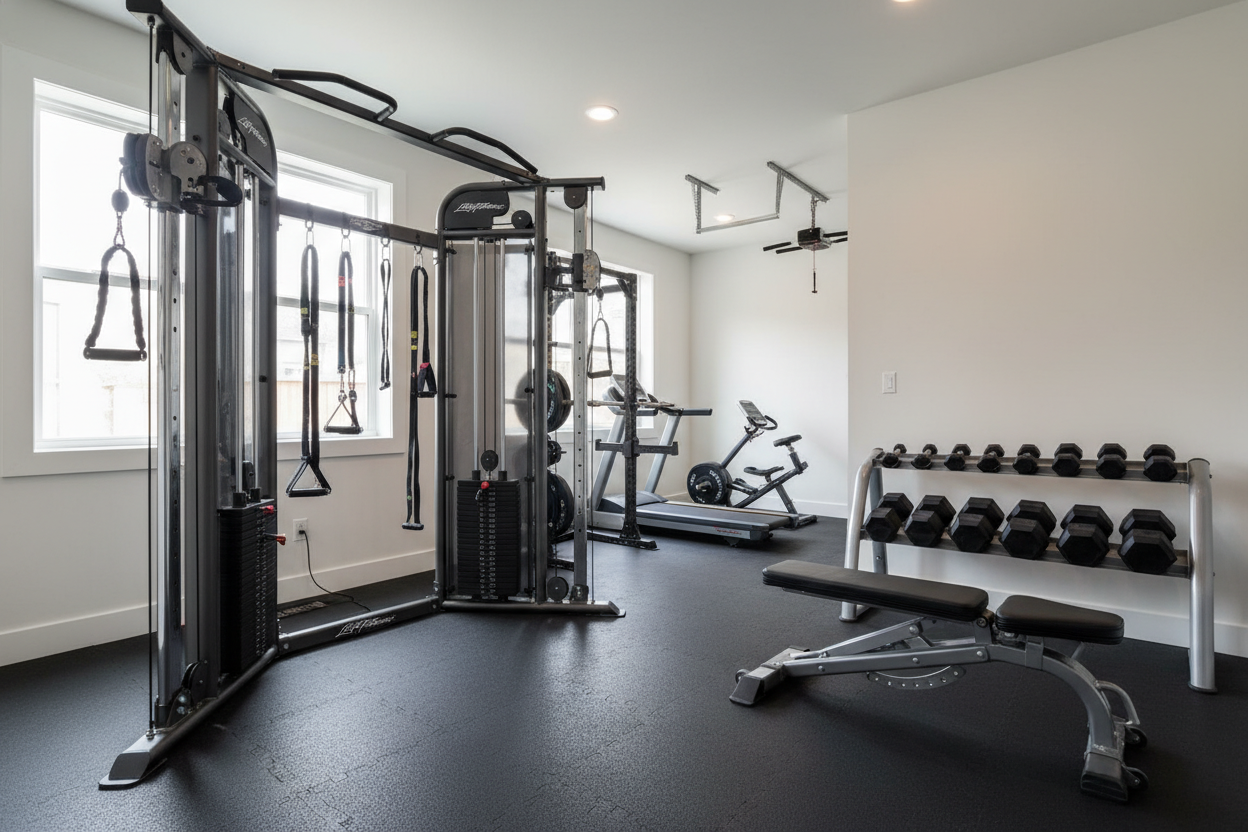
I spent a decade training at big box clubs before I finally built my own space. The one thing I missed most? That buttery smooth life fitness functional trainer that lived in the corner of the turf area. You know the one—the cables feel like they're gliding on ice, and the frame is built like a tank.
When I started hunting for my own, I realized the 'health club' experience comes with a heavy tax. I’m not just talking about the price tag, though that’s enough to make your eyes water. I’m talking about the logistical nightmare of putting commercial-grade steel into a residential footprint.
Quick Takeaways
- Commercial units are usually too tall for standard 8-foot garage ceilings.
- The price for a new Life Fitness unit can easily clear $5,000.
- Moving an 800-pound machine requires professional help or a dozen very strong friends.
- Rack-mounted alternatives often provide the same utility for a third of the cost.
The Allure of the Commercial Cable Setup
There is a reason why every high-end club has a lifetime fitness functional trainer on the floor. These machines are designed to withstand 24/7 abuse from people who treat equipment like it’s stolen. The pulleys are massive, the cables are thick, and the weight stacks usually top out at a level that actually challenges a grown adult.
In my old gym, that machine was the centerpiece. Whether I was hitting face pulls, cable crossovers, or wood chops, the resistance was constant. There are no 'dead spots' in the travel of a high-end commercial machine. When you’re trying to isolate a muscle or work through a rehab movement, that consistency is worth its weight in gold.
The Brutal Math of Commercial Cables in a House
Then I looked at the specs. A true commercial life fitness functional trainer often stands over 90 inches tall. If you’re in a basement with 7-foot ceilings or a garage with a low-hanging door track, you are out of luck before you even start. You can't exactly 'trim' a commercial weight stack to make it fit.
Then there’s the weight. These units often arrive fully assembled or in massive sub-components weighing 800 to 1,000 pounds. My driveway is steep, and the thought of trying to navigate a pallet jack with a $6,000 machine into my garage was a recipe for a broken toe or a cracked slab. Unless you have a forklift and a loading dock, the 'white glove' delivery fee is mandatory, not optional.
Do You Actually Need Cables for 'Functional' Work?
Barbell purists will tell you that cables aren't 'functional.' They’re wrong. While I love a heavy squat, cables allow for constant tension and planes of motion that a piece of iron simply can't replicate. You can't do a standing cable fly with a pair of 45-pound plates without gravity ruining the resistance curve.
I’ve found that high-rep accessory work is where my joints actually get healthy. If you think machines are just for bodybuilders, you might be wrong about exercise on machines and missing out on significant hypertrophy and stability gains. The cable machine is the ultimate tool for those 'in-between' movements that keep your shoulders from screaming during bench press.
Why Home-Specific Dual Pulleys Make More Sense
After measuring my garage three times, I realized a standalone Life Fitness unit would eat up nearly 25% of my usable floor space. For a commercial gym, that’s fine. For me, that meant losing my deadlift platform. That is a trade-off I wasn't willing to make.
The better move for most of us is a dual pulley power rack functional trainer. These systems integrate directly into your existing rack. You get the same dual-stack functionality and the 2:1 pull ratio, but it occupies the same footprint your rack already does. Plus, you’re looking at a fraction of the cost, leaving you enough budget to actually buy some high-quality urethane plates.
The Final Verdict on Health Club Steel at Home
I love the feel of a lifetime fitness functional trainer, but I don't love it enough to renovate my garage. Unless you have a massive dedicated space and a surplus of cash, commercial units are overkill. They are built for a volume of use that a single person—or even a family—will never reach.
Stick to modular, rack-mounted systems. You get the same 'functional' benefits, the same smooth travel, and you can still park your car in the garage when you're done. Save the commercial gear for the days you decide to drop in at the local club.
FAQ
Will a commercial functional trainer fit in a standard garage?
Usually, no. Most commercial units are 90-95 inches tall. Standard garage doors and some ceilings are only 84-96 inches. Always measure your lowest point, including garage door openers and tracks, before ordering.
Why are Life Fitness machines so expensive?
You are paying for 7-gauge steel, commercial warranties, and a brand name that holds its resale value. They are built to survive 100 people using them every single day for a decade.
Is a 2:1 ratio better than a 1:1 ratio?
For a functional trainer, yes. A 2:1 ratio means 100 lbs feels like 50 lbs, but you get twice the cable travel. This is essential for explosive movements and long-reach exercises like lunges or sprints.
Share:
I Ignored the Top Exercise Equipment Lists (And Built This)
Why I Finally Caved and Bought Atlas Gym Equipment