
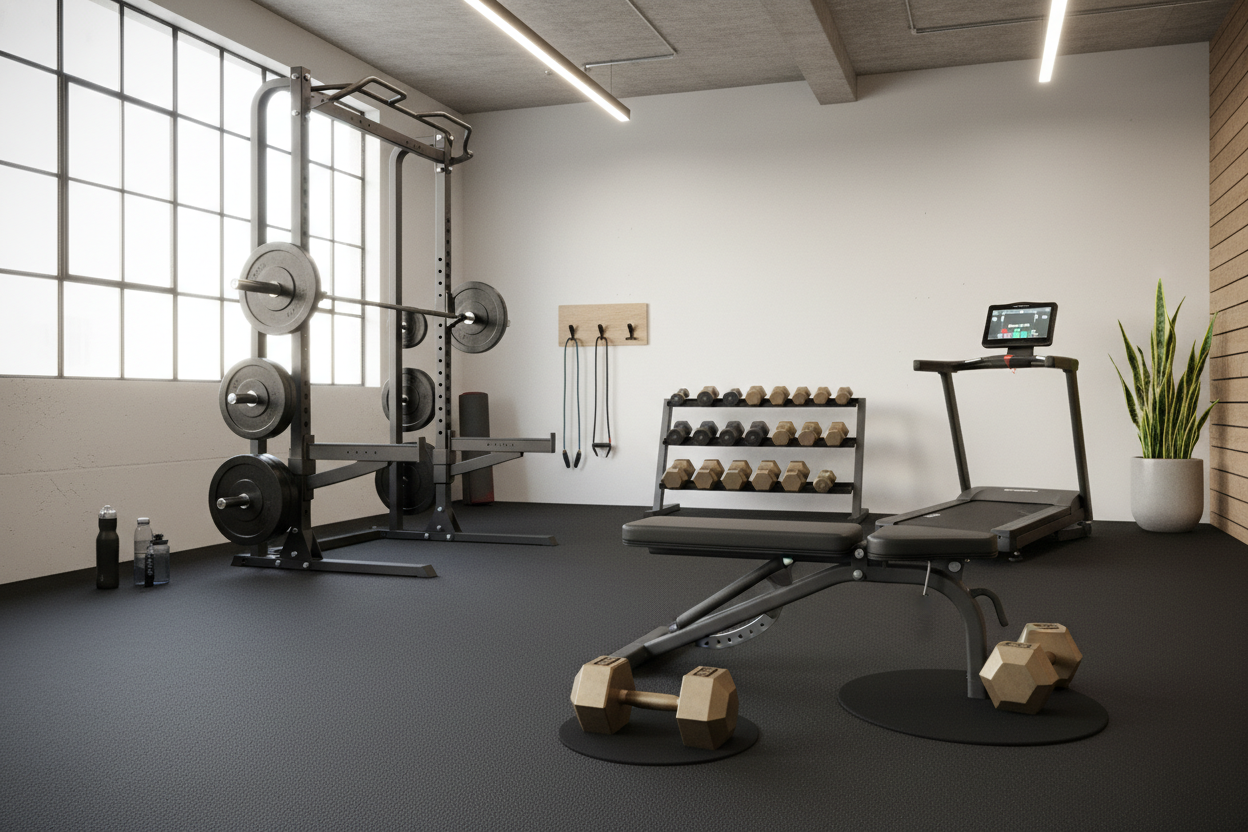
My garage gym is a sanctuary of rust, chalk, and horse stall mats that still smell like a tire fire. It is not 'aesthetic.' So, when my feed started blowing up with ads for matte-finish, pill-shaped design dumbbells that look more like high-end decor than strength equipment, I was skeptical. I’ve spent a decade throwing around iron, so the idea of 'living-room-friendly' weights felt like a personal affront to my calluses.
I decided to put my prejudices aside and swapped my trusty 25-pounders for a set of these hyper-styled weights for a full month. I wanted to see if the ergonomic claims held water or if this was just another case of fashion over function. Spoiler alert: my floor survived, but my workout quality took a massive hit.
Quick Takeaways
- Aesthetic coatings become incredibly slippery once you actually start sweating.
- The weight distribution on 'sculptural' weights is often wider and more awkward than standard gear.
- Durability is a major concern; silicone and soft-touch plastics scuff and tear easily.
- You are paying a 200% markup for the way the equipment looks on a shelf.
The Instagramification of Home Gym Weights
We are living through a weird era where fitness equipment is being designed to blend into a Scandinavian-style nursery rather than a gym. These boutique weights prioritize soft pastel colors—think sage green, dusty rose, and 'clay'—and seamless shapes. The goal is clear: make people feel less intimidated by strength training by making the tools look like lifestyle accessories. It’s a smart marketing move, but it ignores the fundamental mechanics of how a human hand interacts with a heavy object.
When you look at these weights, you’ll notice a lack of visible bolts or hardware. They are often one solid piece of cast iron encased in a thick layer of medical-grade silicone. While that sounds great for protecting your hardwood floors, it creates a massive disconnect during a lift. A dumbbell shouldn't be 'soft.' It should be stable. By trying to make weights 'friendly,' designers have stripped away the tactile feedback that tells your brain exactly where the center of mass is located.
Form Over Function: Where Aesthetic Weights Fail
The first thing I noticed during a set of high-rep goblet squats was the balance. Because these weights are often elongated to look 'sleek,' the center of gravity feels stretched out. It’s a subtle difference, but when you’re used to traditional dumbbell sets, the extra inch of width on each side changes the torque on your wrists. It felt less like I was holding a tool and more like I was balancing a heavy rolling pin.
Then there is the heat issue. Silicone is a great insulator, which means these weights don't feel cold in the winter—a plus for some, I guess. But that same material traps the heat from your palms. Ten minutes into a HIIT session, the handles felt gummy. On overhead presses, I found myself gripping twice as hard just to keep the weight from rotating in my hand. That extra grip strain led to early forearm fatigue, which meant I had to cut my sets short. That is the literal opposite of what good gear should do.
The Handle Problem: Why Knurling Actually Matters
Let’s talk about knurling. That cross-hatched pattern on steel bars isn't there to look tough; it’s there to create friction. These design weights almost always opt for a smooth, contoured handle. It looks beautiful on a marble countertop, but it’s a disaster in a real-world training environment. As soon as a drop of sweat hit the handle, the dumbbell became a liability. I actually had to stop and dry my hands between every single set of rows.
I’ve seen some brands claim their 'ergonomic curves' replace the need for knurling. That’s marketing nonsense. A curved handle actually reduces the surface area contact between your palm and the weight. In my experience, this led to hotspots and cramping in my thumb pad. If you’re doing anything more intense than a slow bicep curl while watching TV, you need a handle that bites back just a little bit. Without that friction, you’re fighting the equipment instead of the weight.
Can They Replace Your Trusty Rubber Hex Set?
Durability is where the 'design' element really falls apart. I’m not saying I treat my gear like trash, but in a home gym, things get bumped. I accidentally clinked these boutique weights together at the top of a chest press, and the 'premium' silicone casing immediately showed a white stress mark. On another occasion, I set them down a bit too hard on the concrete, and the finish picked up a permanent scuff that no amount of scrubbing could fix.
Compare that to classic rubber hex dumbbells which are the gold standard for a reason. You can drop them, clank them, and throw them in the back of a truck, and they’ll look exactly the same five years later. The hex shape also prevents them from rolling away—a feature some design weights sacrifice for 'organic' rounded edges. I spent half my rest periods chasing a rolling 25-lb 'sculpture' across my garage floor. It’s annoying, and in a tight space, it’s actually a trip hazard.
The Verdict: Keep Your Ugly Weights
If you are looking for something to use for five minutes of light mobility work while you wait for your coffee to brew, sure, buy the pretty weights. They look great. But if your goal is to actually get stronger, these are a waste of money. You are paying for an aesthetic that actively hinders your performance. I ended my month-long experiment with a newfound appreciation for my chipped, ugly, reliable iron.
For anyone who actually cares about their progress but is worried about space or 'clutter,' there are much better options. Instead of buying a rack of pastel weights that you’ll outgrow in three months, invest in heavy-duty adjustable dumbbells. They offer the same space-saving benefits without the slippery handles or the 'lifestyle' markup. Stick to gear that’s built for the work, not for the 'gram.
FAQ
Do design dumbbells ever have knurling?
Rarely. Most prioritize a smooth, 'clean' look. If you find a set that claims to be high-design but features actual steel knurling, it might be worth a look, but 90% of what you see on social media is smooth silicone or plastic.
Can I use chalk on silicone-coated weights?
You can, but it’s a mess. Chalk doesn't stick to silicone the same way it sticks to steel. It ends up clumping and making the grip feel even more inconsistent. Plus, it ruins the 'aesthetic' you paid so much for.
Are these weights safe for beginners?
They are safe in the sense that they won't explode, but the lack of grip can be dangerous for someone who hasn't developed strong hand stability yet. I'd always recommend a standard rubber hex set for a first-timer.
Share:
What Actually Happens in Fitness Equipment Manufacturing
Stop Hauling Plates: Why I Bought a Leg Press Machine Weight Stack