
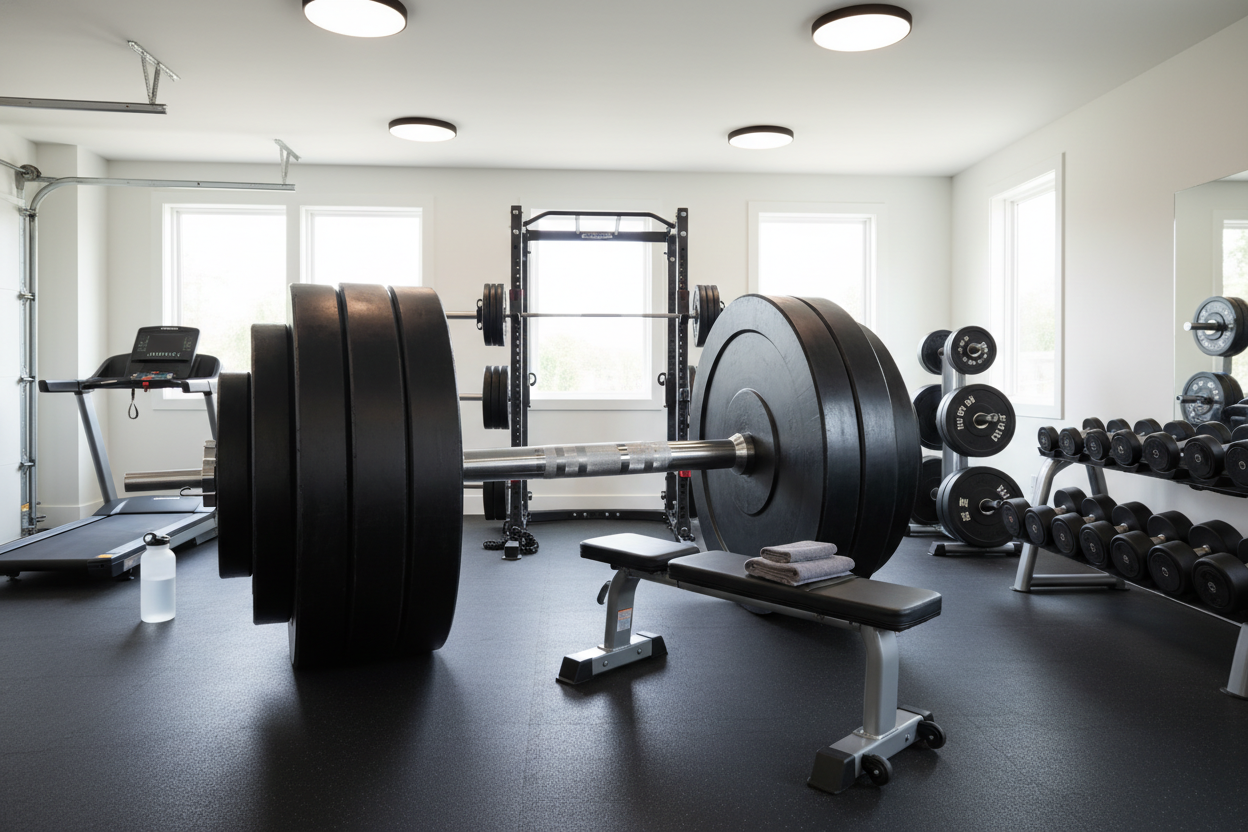
I was scrolling through some old strongman archives at 2 AM, the kind of grainy footage where guys are lifting stones that look like they belong in a medieval quarry. It got me thinking about the absolute limits of human strength and the hardware required to test it. I’ve got a pair of 100s in my garage that make me question my life choices every time I row them, but the internet has a weird, recurring obsession with the mythical 1000 lb dumbbell.
You’ve probably seen the clickbait thumbnails or the grainy photos of giant iron blocks that look like they were forged in the heart of a dying star. But does a 1000 pound dumbbell actually exist in a way that’s useful for training? Or is it just a massive, half-ton paperweight designed for viral stunts? I decided to dig into the logistics of extreme custom weights to see what happens when standard gym equipment hits its literal breaking point.
- A single 1000 lb dumbbell is a custom-fabricated novelty, not a production item you can actually buy.
- Most lifters searching for this are actually looking for a 1000 lb total set to fill a commercial-grade rack.
- The physics of a half-ton hand weight make it nearly impossible to grip, balance, or move without a forklift.
- Loadable Olympic handles and heavy-duty adjustables are the real-world solution for elite strength levels.
The Viral Obsession With Unliftable Weights
There is something primitive about seeing a weight that no human can move. We love the spectacle of the impossible. Strongman competitions have popularized the 'Circus Dumbbell,' those massive, hollow-looking globes that pros press overhead with one hand. Even in those elite circles, the weights 'only' clock in around 200 to 300 pounds. That is a far cry from a half-ton of iron, yet the search for a 1000 pound dumbbell persists.
This fascination comes from the same place as the quest for the 1000 lb deadlift. It is the ultimate psychological barrier. In the world of social media stunts, 'unliftable' weights are the ultimate currency. But a dumbbell that heavy isn't a training tool; it’s an engineering challenge. It has more in common with bridge building or heavy machinery manufacturing than it does with bodybuilding. When you see a video of a '1000 lb' weight, you're usually looking at a hollow shell or a clever camera trick.
The Physics of a Literal 1000 Pound Dumbbell
Let’s talk specs. If you tried to weld together a 1000 pound dumbbell, the handle would be your first point of failure. A standard 1-inch or even 2-inch steel handle would likely shear or bend under that kind of concentrated stress if you actually tried to hoist it. To keep the bar from snapping, you’d need a handle so thick your hand wouldn't even wrap halfway around it, effectively turning every lift into a struggle of grip strength over actual muscle recruitment.
Then there’s the issue of balance. A dumbbell is meant to be stabilized by the small muscles in your wrist and shoulder. Balancing 500 pounds on either side of a single hand is a recipe for a snapped radius. Even if you had the raw strength of a silverback gorilla, the sheer volume of the iron would prevent you from getting it into a starting position. You couldn't clear your knees for a row, and you certainly couldn't kick it up into position for a chest press without a hydraulic lift system.
Wait, Did You Actually Mean a 1000 Lb Set?
If you're looking to kit out a serious garage gym, you’re likely not looking for one giant weight, but a total volume of 1000 pounds. A standard 5-50 lb set of Rubber Hex Dumbbell Set Ds01 is the perfect foundation for most people, but it only totals about 550 pounds. To hit that 1000 lb mark, you’re looking at adding pairs that go all the way up to the 100s or 120s. That’s when things get complicated for the average home owner.
Once you cross that 1000 lb threshold in your gym, you have to think about your floor. Standard residential concrete slabs can crack under the focused pressure of a heavy rack. I always recommend 3/4-inch horse stall mats as a bare minimum to distribute that load. You’ll also need a triple-tier commercial rack. A cheap A-frame or a thin-gauge steel rack will literally buckle under a half-ton of iron. You aren't just buying weights at that point; you're managing a structural load.
What You Actually Need When 100-Pounders Feel Light
So, you’ve maxed out the 100s and you’re starting to feel like the standard rack is too easy. Instead of hunting for custom circus weights, look at Adjustable Dumbbells Ab01. While these are incredible for saving space in a 6x8 corner, the real heavy-hitters often move toward loadable Olympic dumbbell handles. These let you slap 10lb or 25lb plates onto a handle that can technically hold hundreds of pounds.
I’ve used loadable handles for Kroc rows, and while they are bulky and can be awkward to start, they are the only way to get to 150+ pounds without spending five figures on a custom run of fixed dumbbells. Just make sure you invest in high-quality collars. Having a 25lb plate slide off the end while you’re mid-rep is a fast track to a broken foot or a hole in your drywall. The goal is heavy lifting, not dangerous lifting.
How to Keep Progressing Without Buying Circus Equipment
Progressive overload doesn’t always mean adding more iron to the bar. If you’ve got a solid collection of Dumbbells, you can increase intensity through tempo changes. Try a 4-second eccentric (lowering phase) on your dumbbell presses. I guarantee those 80s will feel like 120s by the time you hit your third set. You don't need a 1000 lb dumbbell when you haven't mastered the ones you already own.
Unilateral training is another way to make 'light' weights feel incredibly heavy. Bulgarian split squats with a pair of 50s will wreck most lifters more than a heavy barbell squat ever could. Focus on the quality of the contraction and the range of motion. Chasing novelty weights is fun for a YouTube thumbnail, but building real-world strength happens when you use the right tools with the right technique.
I once bought a pair of 120-lb cast iron dumbbells from a guy on Craigslist who looked like he wrestled bears for a living.
The knurling was so worn down it felt like holding a wet bar of soap. On my first set of heavy rows, my grip gave out before my back even woke up. I ended up dropping the weight directly onto my toe—thank God I was wearing boots. It taught me that once you go heavy, the quality of the handle and the grip texture matters more than the number stamped on the side. Don't buy cheap iron when you're moving big weight.
Does anyone actually make a 1000 lb dumbbell?
No major manufacturer produces a single 1000 lb dumbbell. Any you see online are custom fabrications made for marketing stunts or strongman exhibitions. They are not practical for any form of standard training.
What is the heaviest dumbbell ever lifted?
In professional strongman, the 'Cyr Dumbbell' or heavy circus dumbbells used in competition usually range from 280 to 330 pounds. Lifting 1000 pounds with one hand is physically impossible for the human skeletal structure.
How much space does a 1000 lb dumbbell set take up?
A full set from 5 to 100 lbs requires at least a 6-foot wide, three-tier rack. You'll need about 15 square feet of dedicated floor space and reinforced flooring to handle the concentrated weight.
Share:
How to Spot Compact Home Fitness Equipment That Won't Kill You
Why Your Heaviest Lifts Should Be Machine Compound Exercises