
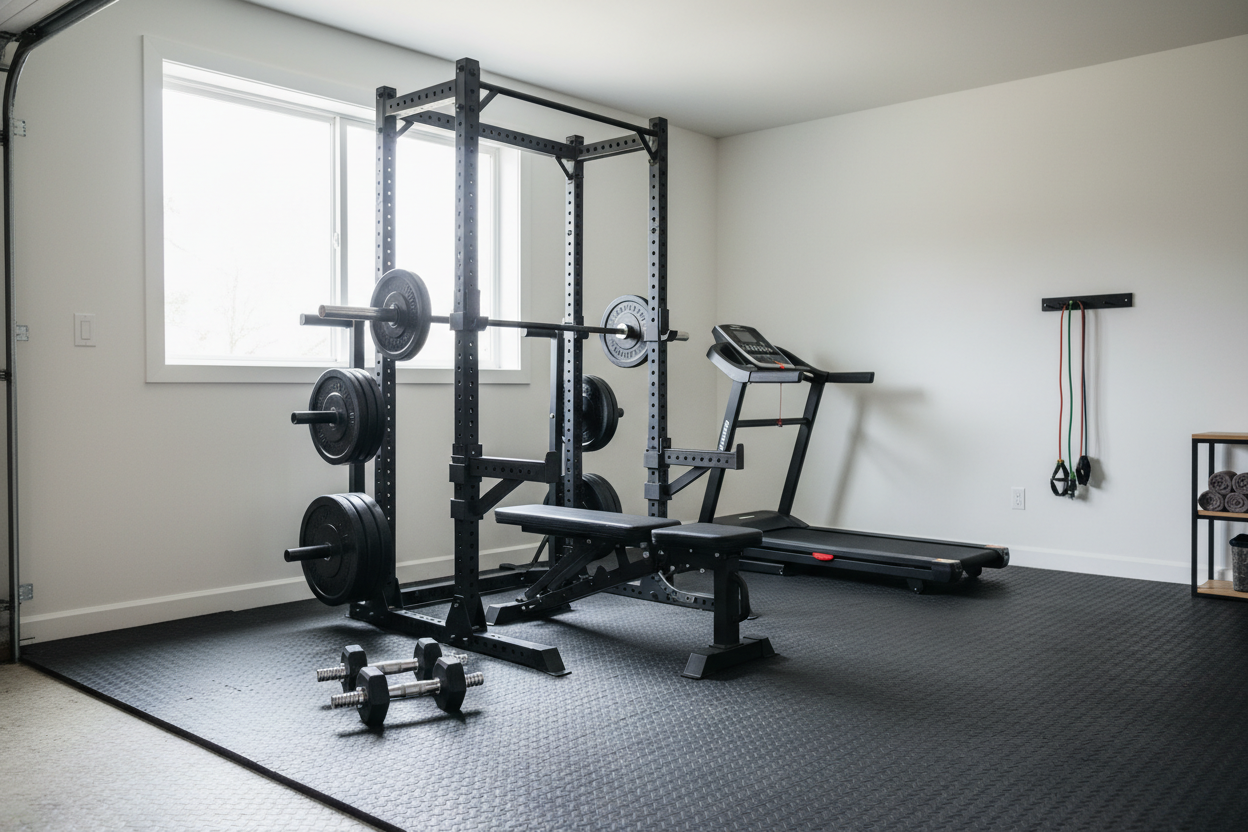
I remember the exact moment I realized I had failed. I was halfway through a set of squats on a $150 Amazon rack when the uprights started to sway like a palm tree in a hurricane. I had 225 pounds on my back, and suddenly, my 'savings' felt like a death trap. I spent the next year replacing every single piece of bargain-bin gear I’d bought, effectively paying for my gym twice.
If you are looking into building a home gym on a budget, learn from my stupidity. You don't need a $5,000 rig, but you do need gear that won't give up on you when you're grinding out a PR. It’s about being a sniper with your spending—hitting the essentials hard and ignoring the fluff.
Quick Takeaways for Budget Lifters
- Prioritize the 'Big Three': A solid rack, a high-quality barbell, and heavy plates.
- Skip the 'all-in-one' cable machines early on; they usually do ten things poorly.
- Used iron is the ultimate cheat code for saving 50-70% on weight.
- Invest in a barbell with at least 190,000 PSI tensile strength so it doesn't permanent-bend.
Why Buying 'Cheap' Equipment Actually Costs You Double
I see the same mistake every week in my DMs. Someone wants to know how to build a cheap home gym, so they buy a rack made of 14-gauge steel with 1-inch holes. It looks fine in the glossy product photos, but the first time you rack a heavy bar, the whole thing groans. You’ll hate using it, you’ll stop training, or you’ll end up buying a better one in six months. That is the 'cheap tax.'
Real budget training isn't about the lowest price; it's about the best ROI. A rack made of 11-gauge or 12-gauge steel with 2x3 or 3x3 tubing is the standard for a reason. It stays put. When you try to figure out how to build a cheap home gym by cutting corners on structural integrity, you aren't saving money—you're just delaying the purchase of actual quality gear.
I wasted money on a bench that wobbled every time I pressed over 135. I wasted money on a barbell that had the knurling of a smooth pebble. By the time I sold that junk for pennies on the dollar to buy the stuff I should have started with, I was out two grand. Buy once, cry once. It’s a cliché because it’s true.
The Holy Trinity of Bare-Bones Lifting
If you have a rack, a bar, and plates, you have a world-class training facility. Everything else is just seasoning. This is the core of any functional home gym. You can build 99% of your strength and muscle mass with these three items. When you're figuring out how to make a cheap home gym, spend 80% of your budget here.
The rack is your safety net. Look for something with adjustable J-cups and safety pipe-and-pin or strap spotters. If you're tight on space, a folding wall-mount rack can save you a ton of floor real estate without sacrificing the ability to squat and press. Just make sure you're bolting it into studs, not just drywall and a prayer.
Don't get distracted by plate-loaded lat pulldowns or fancy dip attachments yet. Those are 'Phase 2' purchases. Right now, you need a cage that can hold your heaviest set and a floor that can take a drop. Get the basics right, and the rest of your training falls into place.
Don't Skimp on the Barbell (Seriously)
The barbell is the only piece of equipment you actually touch during a lift. If the knurling is bad, your grip fails. If the steel is soft, the bar stays bent after a heavy deadlift. I once bought a 'house bar' for $60 that felt like it was made of recycled soda cans. It had zero whip and the sleeves barely spun.
Spend the extra $100 here. You want a multi-purpose bar with decent spin—look for bronze bushings if you’re doing powerlifting or bearings if you’re into cleans and snatches. A bar with a 28.5mm or 29mm diameter is the sweet spot for most hands. If you take care of it with a little 3-in-1 oil once a month, a good bar will outlive your lifting career.
Iron is Iron: Buy Your Plates Used
This is the secret to how to build a home gym for cheap. A 45-pound plate made in 1975 weighs exactly the same as a brand-new, laser-etched urethane plate that costs $4 per pound. Weight is weight. Gravity doesn't care about the brand name stamped on the side of the iron.
Check Facebook Marketplace, Craigslist, and local garage sales every morning. You can often find old York or Cap plates for $0.50 to $0.80 per pound. They might be covered in surface rust, but a quick soak in a white vinegar bath and a hit of matte black spray paint will make them look brand new. I once scored 300 pounds of iron and a rusty rack for $100 because the owner just wanted it out of his garage. That’s how you win the budget game.
Dodging the Freight Shipping Trap
Shipping is the silent killer of the home gym budget. You find a 'cheap' rack for $300, but then you hit the checkout button and see a $250 freight charge because it weighs 200 pounds and has to ship on a pallet. Suddenly, your budget build is the same price as a premium one.
To solve this when you're figuring out how to create a home gym on a budget, look for companies that offer free shipping over a certain threshold or flat-rate deals. Another pro tip: see if the manufacturer allows for 'terminal pickup.' If you have a truck and can drive to the local shipping hub, you can often shave $100 off the delivery fee. It’s a bit of a workout just getting the boxes home, but that’s money you can put back into more plates.
The Slow Build: Adding Specialty Gear Later
You don't need a finished gym on day one. In fact, it’s better if you don't. Start with the essentials and see what your training actually calls for. After six months of heavy barbell work, you might realize you really want a dedicated station for accessory work. That’s when you look into something like a Smith machine or a functional trainer to round out your hypertrophy days.
I waited two years before adding any cable machines. By then, I knew exactly how much space I had left and what movements I was missing. Building in phases prevents you from cluttering your garage with gear you never use. It also keeps the financial sting manageable. Buying one 'luxury' item per year feels a lot better than dropping five figures at once and eating ramen for six months.
The Payoff: Lifting Heavy Without the Commercial Commute
The best part of a budget home gym isn't just the money you save on monthly dues. It's the time. No more waiting for the one squat rack in the gym while some guy scrolls TikTok. No more 20-minute drives in traffic. You walk into your garage, turn on your music, and get to work.
The initial investment is real, but if you follow this blueprint, the gear will pay for itself in less than two years. Plus, there is a certain pride in lifting on a rack you bolted down yourself and using iron you restored with your own hands. If you're ready to make the jump, check out my story on why I Ditched My Membership to Build a Real Gym at Home to see the long-term benefits.
Home Gym Budget FAQ
How much space do I really need?
You can fit a full power rack and a 7-foot barbell in a 10x10 foot area. If you're really cramped, a 6x8 foot corner can work with a short bar and a folding rack, but you'll have to be careful with your plate loading.
Are concrete floors okay for dropping weights?
Only if you have protection. At a minimum, get 3/4-inch stall mats. Dropping heavy deadlifts directly onto concrete will eventually crack the slab and ruin your plates. Spend the $50 on a mat; your foundation will thank you.
Is used equipment safe?
For plates and dumbbells, absolutely. For racks and bars, inspect them for cracks in the welds or deep structural rust. A little surface rust is fine, but if the steel is pitting or the bar is visibly bent, walk away.
Share:
Decoding Exercise Machine Names for Legs (So You Stop Pointing)
Don't Scrape the Rafters: The Best Smith Machine for Low Ceilings