
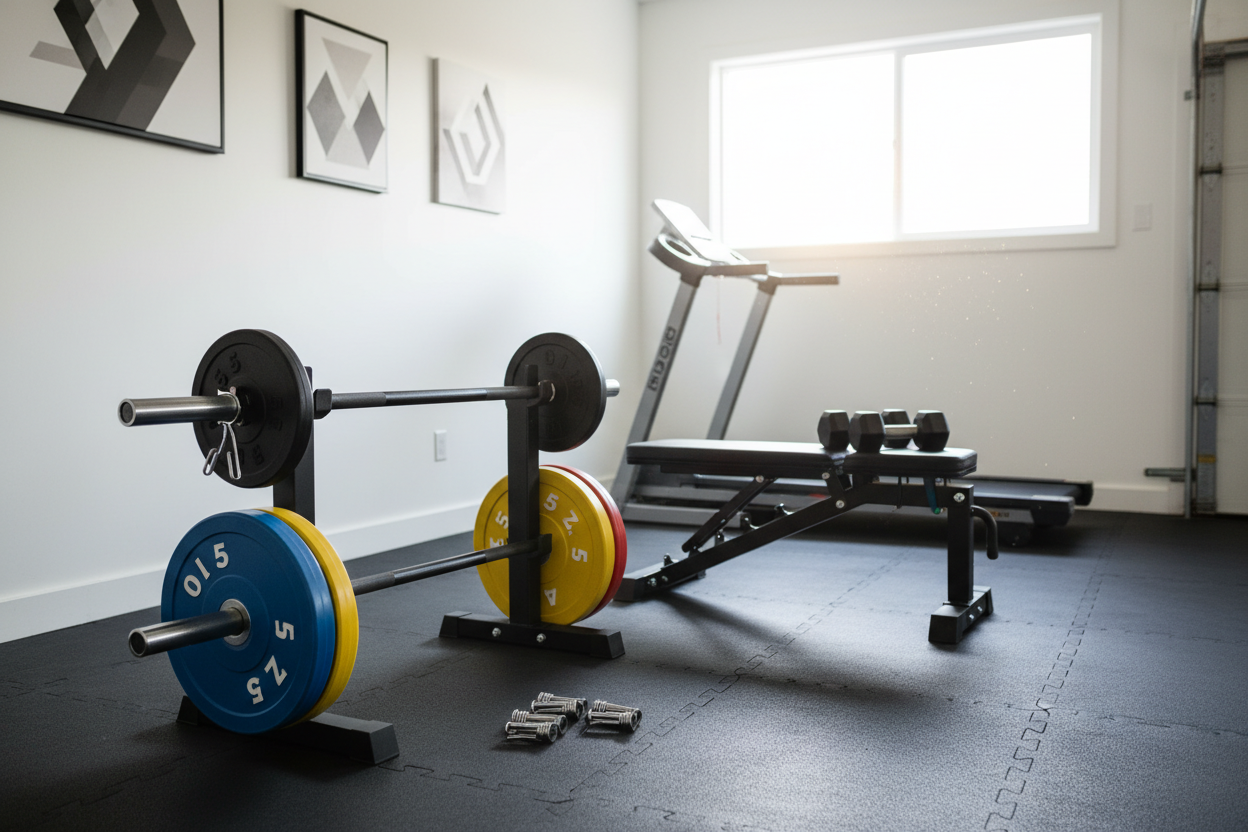
I remember the day the delivery truck dropped off that massive, beat-up cardboard box in my driveway. I thought I was being a genius, saving a few hundred bucks on a 'complete' home gym bundle I found online. Instead, I bought a pile of scrap metal and plastic that ended up on Facebook Marketplace for pennies on the dollar just three months later. Buying a generic barbell starter set is the most common financial trap I see new lifters walk into, and it is a mistake that costs you twice: once when you buy it, and again when you realize it is garbage and have to buy real gear.
- Skip 1-inch 'standard' bars; they are weak and won't fit any high-quality plates.
- Vinyl-coated plates leak sand and crack the second you drop them.
- Invest in a 20kg Olympic bar first; it is the absolute foundation of your gym.
- Buy plates in pairs as you need them rather than a massive, low-quality bundle.
The All-in-One Box Trap (And Why I Fell for It)
I walked into a big-box sporting goods store with $400 and a dream of getting jacked in my garage. I left with a box containing a '110-lb set' that looked shiny in the photos but felt like a toy in my hands. The bar was a three-piece bolt-together nightmare that flexed visibly with just 135 lbs on it. The plates were those classic 100 lb vinyl weight set varieties filled with sand or concrete. Within weeks, the plastic casing on the 25s started cracking at the seams.
Every time I set the bar down, it sounded like a bag of gravel hitting the floor. The weights rattled, the collars never stayed tight, and the bar diameter was so small it dug into my back during squats. It felt like a toy, not a tool for building strength. I was constantly worried the bar would snap during a bench press. That 'deal' ended up costing me more in the long run because I couldn't sell it for more than $40 when I finally upgraded. It was a painful lesson in the high cost of cheap gear.
Why You Should Skip the Lightweight Barbell Set
Marketing teams love the term lightweight barbell set. They pitch it as 'beginner-friendly' or 'perfect for cardio.' Here is the reality: if a bar weighs 10 or 15 lbs and has a 1-inch diameter, you have already hit its ceiling before you even start. A lightweight barbell set usually tops out at a weight capacity that most healthy adults will outgrow within their first month of deadlifting. You are essentially buying a product with a built-in expiration date.
You cannot perform progressive overload if your equipment is literally bending under the weight of your progress. Plus, finding 1-inch plates is a total hassle, and they have zero resale value in the lifting community. Most light barbell set options also use cheap, passive knurling that feels like smooth plastic the moment your hands start to sweat. If you want to actually get strong, you need a bar that can handle the weight you will be lifting a year from now, not just what you can handle on day one. A flimsy bar also vibrates weirdly when you move, which is a great way to develop tendonitis in your elbows.
Anatomy of a Free Weight Barbell Set That Actually Lasts
If you want a free weight barbell set that your grandkids might actually use, you need to look at specs, not just the price tag. The gold standard is a 2-inch sleeve diameter—the 'Olympic' standard. This allows you to use high-quality plates and ensures the bar can actually hold a load without snapping. A quality Olympic barbell will have a 28mm to 28.5mm shaft diameter and a tensile strength of at least 150,000 PSI. This is the difference between a bar that stays straight and one that looks like a noodle after a month of use.
Don't worry about the engineering jargon; just know that a real bar won't permanently bend the first time you drop a heavy set of squats. Pair that with iron or rubber bumper plates, and you have a setup that grows with you. Real iron plates are cast to tighter tolerances, meaning a 45-lb plate actually weighs 45 lbs, not 41 or 48. This consistency is vital when you start tracking your lifts seriously. Iron plates also take up less room on the sleeves, allowing you to load more weight as you get stronger, whereas those plastic-coated 'starter' plates are so thick you run out of room at 225 lbs.
My Exact Blueprint for Your First Setup
Stop looking for the 'everything included' box. Here is exactly what I would buy if I were starting over today with a modest budget. Start with a solid 20kg Olympic barbell. This is the heart of your gym. It should have a decent spin in the sleeves (look for bronze bushings) and knurling that grips without drawing blood. Next, grab a pair of 45-lb iron plates, a pair of 25s, and two pairs of 10s. You can skip the 35s—they are just 25s and 10s in a different shape and they just take up rack space.
Skip the flimsy bench-and-rack combos that wobble when you breathe. Buy a standalone squat stand or a half-rack. It takes up less space and won't collapse if you miss a rep. This setup is modular, indestructible, and actually feels like a real gym. You can always add a pair of 45s later for a hundred bucks, but you cannot fix a cheap bar once it is bent. This blueprint ensures every dollar you spend goes toward gear that will still be in your gym a decade from now.
When Less Gear Actually Equals More Gains
There is a weird psychological trap in home gym building where we think more pieces of equipment equals more progress. It is the opposite. I eventually got tired of the clutter and kept just a barbell and weight set for a six-month experiment. My numbers actually went up because I stopped messing around with low-impact accessory machines and focused on the big, heavy compound lifts that actually drive muscle growth.
A high-quality bar and a stack of iron are all you need to get brutally strong. Everything else is just expensive decoration for your garage floor. When you buy quality first, you only buy it once. Focus on the movements—squats, presses, deadlifts—and let the quality of your gear give you the confidence to push harder every session. You don't need a room full of machines; you just need a bar you can trust when the weight gets heavy.
What is the difference between a 1-inch and 2-inch bar?
1-inch bars are 'standard' bars usually found in cheap box sets. They have low weight capacities (often under 200 lbs) and use different plates. 2-inch bars are 'Olympic' bars, which are the industry standard for strength training and fit all high-quality weight plates.
Do I need bumper plates or iron plates?
If you plan on doing Olympic lifts like cleans or snatches, or if you are deadlifting on a concrete floor without a platform, get bumpers. If you are mostly doing squats and bench presses, iron plates are cheaper and take up less space on the bar sleeves.
Is a 300-lb set too much for a beginner?
No. Most people will hit a 200-lb deadlift within their first few months of consistent training. Buying a 300-lb set upfront is usually much cheaper than buying a small set and having to pay for shipping on extra pairs of plates every few months as you get stronger.
Share:
Why Commercial Weight Room Designs Ruin Home Gym Setups
A Real Lifter's Guide to Gym Equipment and What They Do