
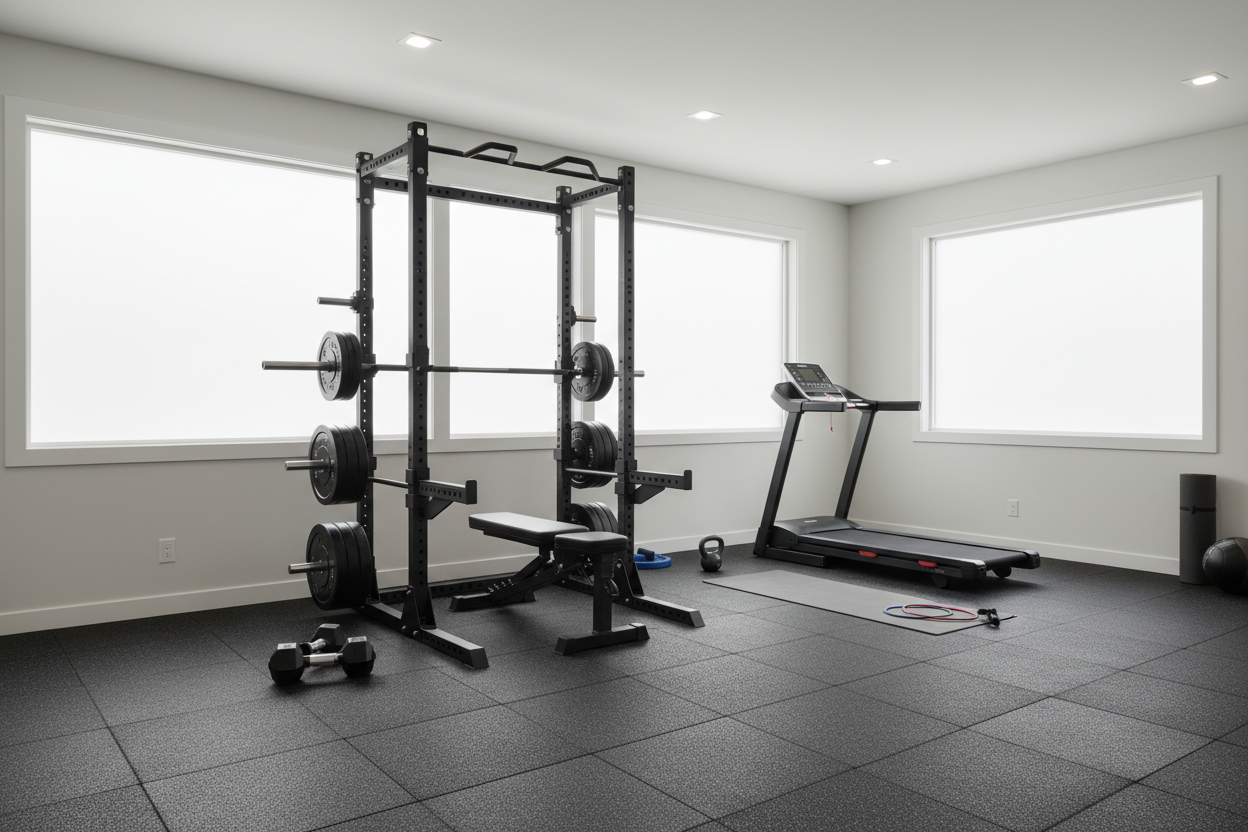
I remember scrolling through my feed at 11 PM, watching a guy in a $50,000 'wellness sanctuary' lift marble-patterned kettlebells under custom neon lighting. It made me look at my garage—with its cracked concrete and smell of old rubber—and feel like I was doing it wrong. But here is the truth: my 300-lb total went up faster in that drafty garage than it ever did in a commercial gym. If you are looking for the things you need to workout at home, you have to ignore the aesthetic. You need gear that survives a drop, not gear that looks good in a selfie.
- Skip the Screen: Avoid equipment that locks you into a $40/month subscription just to see your stats.
- Prioritize Steel: Look for 11-gauge or 14-gauge steel for racks and benches; it won't wobble when you're under load.
- Floor First: Get 3/4-inch stall mats before you buy a single plate to save your foundation.
- Adjustability is King: If it doesn't fold, slide, or change weight, it's taking up too much space.
Stop Letting Instagram Dictate Your Setup
Most people asking 'what do I need to workout at home' get buried in ads for smart mirrors and boutique yoga mats that cost more than my first car. You do not need a 4K screen to do a squat. You need gravity and a way to hold onto it safely. The fitness industry wants you to believe that 'advanced' means 'expensive,' but the strongest people I know train in spaces that look like scrapyards.
Strip away the LED strips and the 'curated' color palettes. A real gym is built on pure functionality. If a piece of equipment doesn't help you move more weight or move your body faster, it is just expensive furniture. Focus on the basics that allow for progressive overload—that is the only way you actually see results.
The 'Big Three' Non-Negotiables for Real Results
If you want to get strong, you need to push, pull, and stay stable. That is the entire game. Stop looking at those 'all-in-one' plastic machines that feel like they will snap if you lift more than 50 pounds. You are better off building a heavy-duty home gym by picking individual pieces that can take a beating.
A solid power rack is the heart of your training. It is your spotter when you are alone and your storage for your plates. If your rack shakes when you re-rack a moderate weight, it is a glorified clothing hanger. Look for something with at least a 1,000-lb weight capacity even if you only lift 100 lbs right now. You want gear you can grow into, not gear you'll break in six months.
You Need Free Weights (But Not All of Them)
Don't buy a full 5-50lb dumbbell rack unless you are training in a warehouse. It is a massive waste of money and precious square footage. A pair of heavy-duty adjustable dumbbells—the kind that goes up to 80 or 90 lbs per handle—replaces an entire wall of iron. For the price of a few boutique kettlebells, you can get a barbell and 300 lbs of iron plates, which are the ultimate things needed for exercise if your goal is raw strength.
A Surface That Doesn't Ruin Your Spine
I have seen guys benching on wooden crates or thin, $50 Amazon benches that flex under a 200-lb load. It is terrifying. You need a high-weight-capacity adjustable bench with thick padding that won't bottom out. A solid bench allows you to hit inclines, declines, and seated presses without wondering if today is the day the frame welds give up.
Cardio Without the Monthly Subscription Fee
When you are deciding 'what do you need to workout at home' for cardio, stop buying tablets with pedals attached. Those screens are obsolete in two years and the software lock-ins are a total scam. I would much rather have a foldable upright exercise bike that I can roll into a corner when I'm done.
I personally refuse to pay extra for an at home workout screen when I already own an iPad and a TV. Use your own tech. Mount a cheap TV on the wall or prop up your phone. Keep your monthly budget for things that actually matter, like better food or more weight plates. Cardio is about heart rate, not high-definition pixels.
When Is It Actually Time to Buy a Machine?
Once you have mastered the barbell and dumbbells, you might find yourself wanting to isolate specific muscles without the stability tax of free weights. This is when you should pick an at home workout machine that complements your existing iron. For the solo lifter who wants to push to absolute failure safely, a Smith machine home gym station is the ultimate upgrade. It allows you to grind out those last few reps on chest or quads without worrying about getting pinned under a bar.
FAQ
How much space do I really need?
A 6x8 foot area is the bare minimum for a rack and a barbell. If you have a standard one-car garage, you have more than enough room for a world-class setup.
Is rubber flooring really necessary?
Yes. Concrete is surprisingly fragile. Dropping a 45-lb plate just once can crack your foundation. Get 3/4-inch horse stall mats; they are the cheapest and toughest option available.
Can I get fit with just bodyweight?
For a few weeks, sure. But once your body adapts, you need resistance. Gravity is free, but adding iron is the only way to keep the progress needle moving forward.
Share:
How to Buy a Barbell Nearby Without Getting Ripped Off
Why a Big Barbell Is the Only Fix for a Terrifying Heavy Squat