
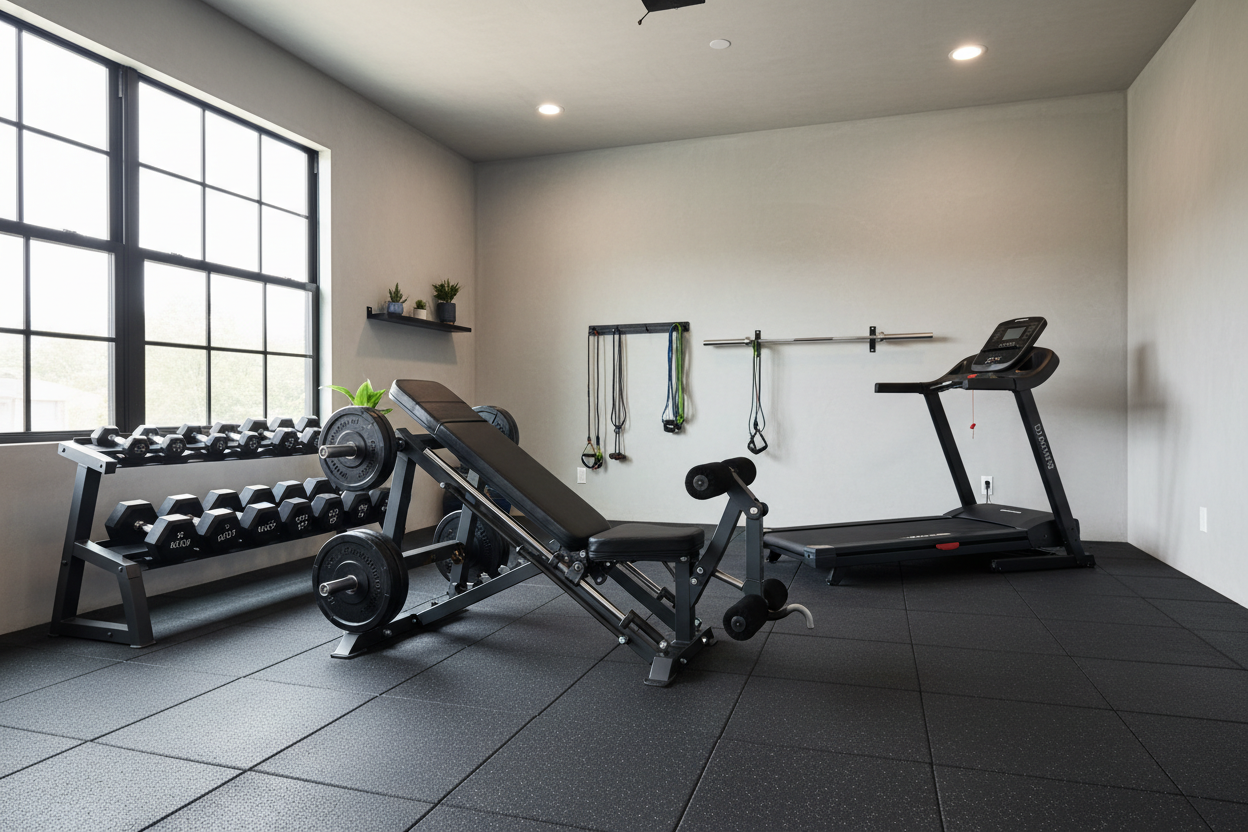
I remember staring at my cramped one-car garage, trying to figure out how to fit a squat rack, a bench, and a leg press into a 10x10 space. Like most people, I looked at a leg press weight bench and thought I’d found the ultimate hack. Why buy three machines when one can do it all? It’s a tempting thought when floor space is more valuable than gold.
But after years of testing frames that creaked under moderate loads and pivot points that felt like they were filled with gravel, I’ve learned that combo gear is a minefield. If you don't know what specs to look for, you're just buying a very expensive, very shaky clothes rack. Here is the reality of trying to train legs on an upper-body frame.
Quick Takeaways
- Most budget combo units use 14-gauge steel, which is too thin for heavy leg work.
- Range of motion is the biggest killer; many benches don't allow for a full deep stretch.
- Standard 1-inch plate pegs are prone to bending; look for Olympic-sized sleeves if possible.
- Stability is key—if the bench doesn't have a wide rear stabilizer, it will tip.
The Brutal Reality of Combo Equipment
The engineering challenge of a bench with leg press features is that it’s trying to handle two different force vectors. A bench press needs to be stable vertically. A leg press, however, creates massive lateral leverage. When you push against those footpads, you’re essentially trying to tip the bench over backward.
Most manufacturers solve this by making the frame lightweight so it's easy to ship, which is exactly what you don't want. I’ve seen guys try to load three 45-pound plates onto a flimsy attachment only to have the front feet of the bench lift off the ground. It’s not just annoying; it’s a trip to the ER waiting to happen.
Why Most Leg Attachments Are Complete Garbage
The biomechanics on cheap combo units are usually an afterthought. They take a standard frame and slap a pivot arm on the end. The result? A workout bench with leg press capabilities that feels clunky and unnatural. If the pivot point is too high, you’re pushing the weight in a weird arc rather than a linear path.
If you’re serious about strength, you’ll quickly realize that a dedicated heavy-duty flat or adjustable weight bench is superior for chest day. Trying to force a leg developer to act like a $2,000 commercial leg press usually leads to frustration. The friction in the bushings on cheap units is so high that you’re fighting the machine more than the weight.
The Range of Motion Problem
Here is the dirty secret: most of these benches are too short. If the seat is only 18 inches off the ground, the leg developer hits the floor before your quads are fully stretched. You end up doing these pathetic half-reps that do nothing for muscle growth. I once tested a unit where I had to put the bench on wooden blocks just to get enough clearance for a full rep. That's a massive safety red flag.
Fake Weight Capacities and Snapped Pegs
Don't trust the '700 lb total capacity' stickers. Usually, that includes the user's body weight. When you start calculating your true lifting weight, you'll see that the actual leg attachment is only rated for 150 or 200 lbs. I’ve seen 1-inch steel pegs start to sag after just a few months of consistent use with iron plates. If you're planning on moving real weight, you need a frame that won't buckle under the pressure.
What to Look For If You Actually Want to Move Weight
If you're dead set on a combo unit, look at the steel gauge. You want 11 or 12-gauge steel. It’s thicker, heavier, and won't flex when you're grinding out that last rep. Check the footprint, too. A solid leg press weight bench should have a base that extends well past the seat to prevent tipping.
Look for a solid weight bench with leg press that features ball bearings at the pivot point instead of just a bolt and a plastic washer. It makes a world of difference in how smooth the movement feels. If it feels like it's catching or stuttering, your muscles aren't getting the consistent tension they need to grow.
Should You Just Buy a Dedicated Setup?
If you have the room, a dedicated leg press sled or a hack squat machine is always going to win. However, for a high-rep hypertrophy day in a small apartment, a versatile multi function bench press set can be a lifesaver. It allows you to hit accessories like leg extensions and curls without needing a 5,000-square-foot facility.
Just be honest about your goals. If you're trying to build 30-inch quads, a bench attachment isn't going to get you there. But if you're looking for a convenient way to add some volume to your leg day after your heavy squats, it’s a viable tool—provided you buy a unit that isn't built like a toy.
Personal Experience: My First Combo Fail
Years ago, I bought a budget combo bench because the Amazon photos looked great. The first time I tried to do heavy leg extensions, the foam rollers were so cheap they actually compressed down to the metal tube, bruising my shins. I ended up having to duct-tape pool noodles over them just to finish my workout. Lesson learned: the details like foam density and steel thickness matter more than the price tag.
FAQ
Can I use Olympic plates on a standard leg attachment?
Most come with 1-inch pegs, but many include an adapter sleeve for 2-inch Olympic plates. Just check the weight rating of the sleeve itself so you don't snap the bolt.
Are these benches good for tall lifters?
Usually, no. If you're over 6'2", you'll likely find the leg developer sits too high, making the range of motion awkward. Look for benches with adjustable height settings for the leg attachment.
Does the leg press attachment interfere with benching?
On some models, yes. You might find your shins hitting the footplate when you're trying to set your feet for a bench press. Look for a removable attachment if you want the best of both worlds.
Share:
Are Reebok Dumbbells Actually Tough Enough for a Home Gym?
I Built 5 Homemade Gym Machines (And 3 Almost Killed Me)