
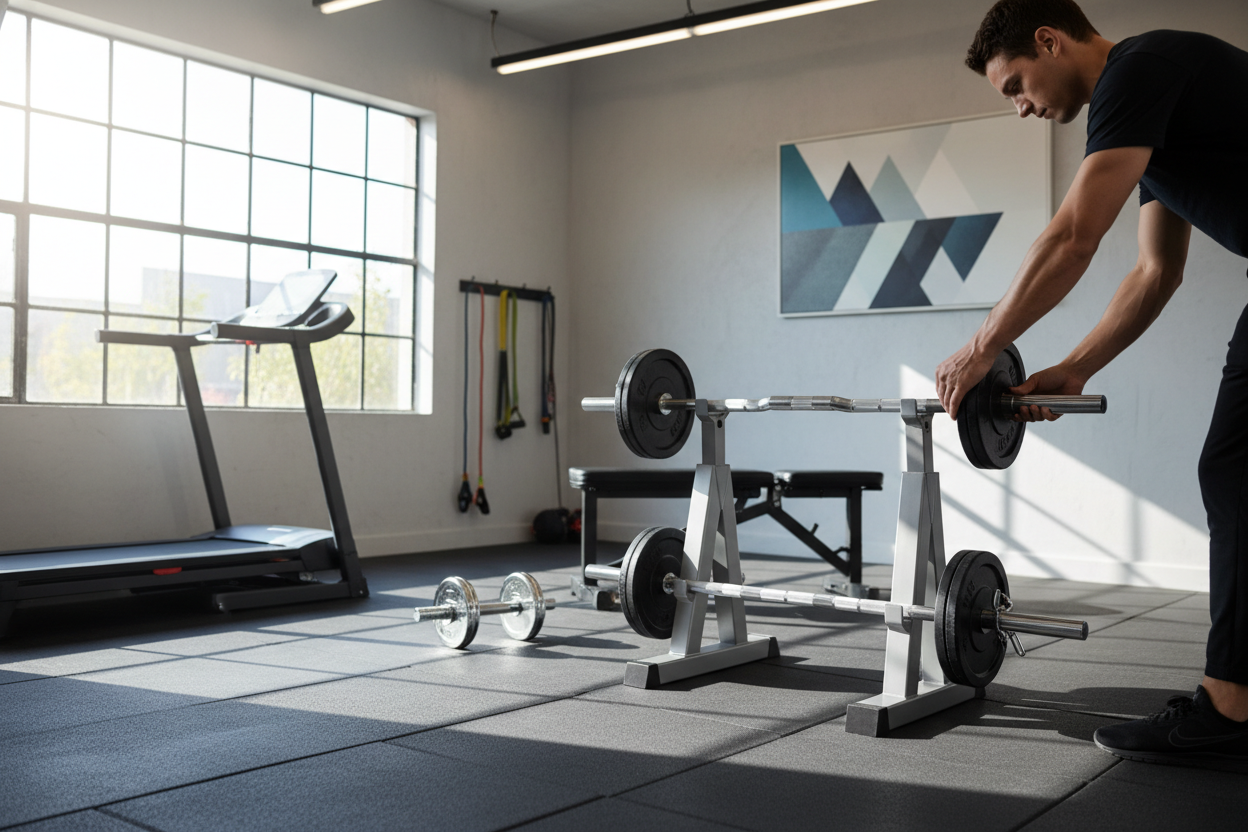
I have checked into too many hotels where the 'fitness center' is just a humid closet containing a broken elliptical and a single 15-pound kettlebell. It is the ultimate motivation killer. You spend months building a solid routine in your garage, only to have a three-day business trip reset your momentum because you can not find a piece of steel heavier than a gallon of milk. This frustration is exactly why the portable barbell has started popping up in my social media feeds.
Quick Takeaways
- Most travel barbells are designed for resistance bands, not iron plates.
- Threaded joints are the weak point; never expect the structural integrity of a solid piece of steel.
- A good portable setup fits in a standard carry-on and weighs under 10 pounds.
- If you are looking to pull 400 pounds, stay in your garage.
The Brutal Reality of Hotel Gyms
We have all been there. You pack your lifting belt and your shoes, thinking you will get a quick session in before your morning meetings. Then you see the rack—or lack thereof. Most hotel gyms stop their dumbbell sets at 30 or 50 pounds, which makes heavy compound movements nearly impossible.
The dream is to maintain your strength without having to lug a heavy-duty 20kg Olympic barbell in the back of your car. Dragging a seven-foot piece of steel through a lobby is a great way to get banned from the Marriott. Travelers need something that collapses, but for a long time, the options were either 'toy' or 'non-existent.'
What Actually Makes a Bar 'Portable'?
There are two main camps in the world of portable barbells. First, you have the hollow, screw-together shafts. These are usually lightweight aluminum or thin-walled steel designed specifically to anchor heavy resistance bands. They are great for high-rep hypertrophy work but do not expect them to feel like the traditional Olympic barbells you use at home.
The second camp is the heavy-duty collapsible bar. These usually break down into three pieces and feature loadable sleeves that can actually hold standard or Olympic plates. However, even the best 'loadable' travel bars usually cap out around 300 pounds. The knurling on these is often hit-or-miss—sometimes it is as passive as a kitchen grater, which is a nightmare when your hands start sweating in a poorly ventilated hotel room.
The Wobble Test: Can a Travel Barbell Handle Real Tension?
The biggest concern with any multi-piece bar is the joint. In my testing, the 'wobble' is real. When you screw two or three pieces of steel together, there is a micro-amount of play in the threads. When you are doing slow, controlled overhead presses, it is manageable. But the moment you try to move fast—think cleans or snatches—that play becomes a jarring vibration that feels like the bar is about to snap.
Tensile strength is another issue. A solid bar is rated for 190,000 PSI or more. A threaded joint is only as strong as the depth of those threads. I have seen cheap portable barbells start to 'smile' (permanent deformation) with just 150 pounds on the bar. If you are a serious lifter, you have to adjust your expectations. You are not training for a total; you are training for maintenance.
Bands vs. Plates: How You Should Actually Use This Setup
Let's be honest: hauling 45-pound iron plates in your suitcase is insane. Your luggage fees would cost more than a year-long gym membership. This is where the travel barbell actually shines—when it is paired with heavy-duty loop resistance bands. By using a bar instead of just holding the bands, you get a much better simulation of the mechanics of a deadlift or a back squat.
I actually traded my barbell for a portable gym setup during a three-week road trip last summer. I found that while I missed the tactile feel of iron, the constant tension of the bands attached to a solid bar kept my stabilizers firing. It is a different kind of burn, but it beats doing 100 air squats in your hotel room while staring at the mini-fridge.
The Final Verdict: Worth the Luggage Space?
Is it a gimmick? Mostly, yes—if you think it replaces a real rack. But if you view it as a specialized tool for the frequent traveler, it is a solid investment. If you are an RV owner with limited space or a business traveler who spends 15 nights a month in a hotel, a high-quality portable barbell is a lifesaver.
If you only travel once a year, just do some pushups and enjoy your vacation. But for the rest of us who get twitchy when we go three days without a bar in our hands, these collapsible options are finally getting 'good enough' to earn a spot in the suitcase. Just keep the weights reasonable and the expectations realistic.
FAQ
Can I drop a portable barbell?
Absolutely not. These are not built for Olympic weightlifting drops. The threaded joints will likely deform or snap if dropped from overhead, even with bumper plates.
Do they fit in carry-on luggage?
Most 3-piece models break down to about 18-22 inches per segment, which fits diagonally in a standard 22-inch carry-on bag. Always check the specs before buying.
Can I use my regular Olympic plates?
Only if the bar has 2-inch sleeves. Many cheaper portable bars use 1-inch standard sleeves, so make sure the bar matches the plates you intend to use.
Share:
I Tested Every Workout Bench Portable Enough to Fit Under a Bed
I Maxed Out the REP Fitness Smith Machine (And Found Its Limits)