
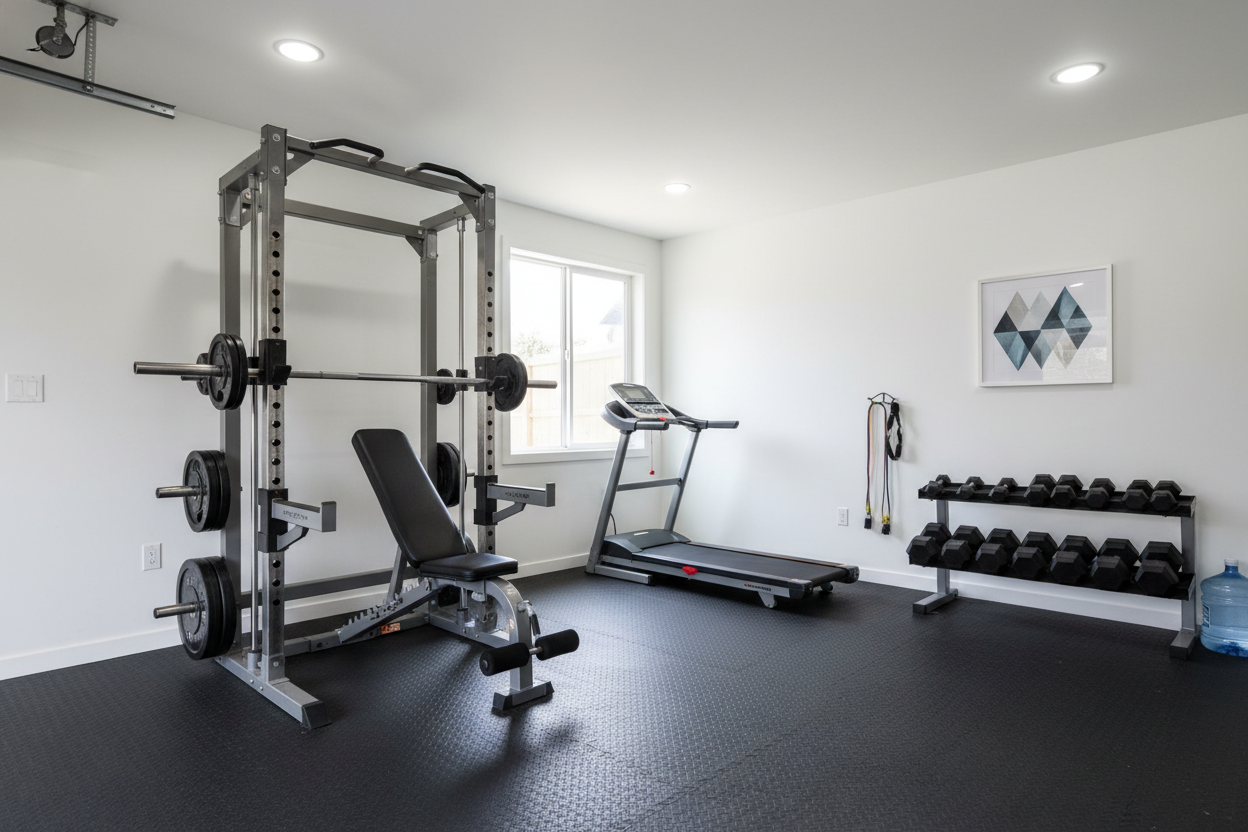
You know the drill. You are scrolling through Facebook Marketplace at 11:00 PM, trying to find a deal that makes your home gym dreams a reality without draining your savings. Then you see it: a massive, slightly dusty impex smith machine for a price that seems too good to be true. It looks sturdy enough in the photos, and the seller swears it was only used for laundry duty for the last five years.
I have spent more time than I care to admit hauling these oversized rigs out of damp basements and cramped garages. I have felt the grit in the bushings and the sketchy flex of the uprights under a heavy load. Before you borrow a truck and recruit a buddy to help you move 400 pounds of steel, let’s talk about whether that aging Impex unit is a diamond in the rough or just a headache waiting to happen.
- Budget Reality: Don't pay more than $200 for a basic model; they were entry-level when new.
- Maintenance Debt: Expect to spend $50+ on silicone spray and potential cable replacements immediately.
- Footprint: These things are massive—measure your ceiling height and floor space twice.
- Safety Check: Inspect the welds and cable crimps before ever getting under a loaded bar.
Why These Rigs Flood the Secondhand Market
Impex is the parent company behind brands like Marcy and Competitor. Back in the early 2000s, they dominated the 'big box' fitness scene. If you walked into a Sears or a Dick’s Sporting Goods fifteen years ago, you were likely looking at an Impex-made rig. They were the go-to for the casual lifter who wanted a 'complete' gym in a single footprint. Because they sold thousands of these units, they are everywhere on the used market today.
Most people bought them with the best intentions, but the sheer size of an Impex Smith machine often leads to 'buyer's remorse' when it takes up half the garage. They are frequently sold by people moving houses or clearing out 'the kid’s old stuff.' This means you can find them cheap, but it also means they haven't been maintained. A machine that has sat in a humid garage for a decade is going to have rusted bolts and frayed internal cable cores that you can't see from the outside.
Decoding the Impex Powerhouse Smith 3000 Price
Let’s get real about the money. When you see an impex powerhouse smith 3000 price listed for $500 on Craigslist, walk away. Sellers often remember what they paid at retail in 2008 and try to recoup half of it. In reality, a used PH3000 is a $150 to $250 item at most. If it includes a full set of plates, maybe you go higher, but the frame itself has depreciated significantly.
The value isn't just in the steel; it’s in the condition of the guide rods. If those rods are pitted or rusted, the Smith bar will catch and stutter, which is a recipe for a shoulder injury. When I tested an old Powerhouse Smith 3000, I found that the 'all-in-one' nature of the machine meant that if the cable system failed, the whole unit became a very large, very expensive squat rack with terrible ergonomics. Check the pulley wheels—if they are plastic and cracked, that’s another $40 you’ll have to spend on replacements.
Will the Bearings and Frame Survive Real Garage Lifting?
Most Impex Smith machines use 2-inch or 2.5-inch square tubular steel. It is usually 14-gauge, which is fine for the average Joe but noticeably thinner than the 11-gauge steel you find in modern power racks. If you are planning on squatting 400 pounds, this is not the machine for you. The frame will sway, and the safety catches are often just thin tabs of metal that don't inspire confidence.
The biggest technical drawback is the use of nylon bushings instead of linear ball bearings. Higher-end Smith machines use bearings that glide effortlessly. Impex rigs usually rely on plastic sleeves sliding over steel rods. Even with heavy lubrication, there is a distinct 'drag' to the movement. When you ask yourself does a Powerhouse Smith machine still hold up against modern gear, the answer is usually 'barely.' The fixed plane of motion combined with that friction can make exercises like the bench press feel unnatural and clunky compared to a modern bearing-driven system.
The Nightmare of Hunting Down Replacement Cables
The hidden cost of buying an old Impex unit is the lack of proprietary parts. Impex has discontinued many of these older models, meaning you can't just call up a warehouse and order a new cable for the lat pulldown attachment. You will likely have to go to a custom cable shop or DIY your own using aircraft cable and swaging tools. I have spent hours trying to find the exact length of a cable for a 15-year-old Marcy unit, and it is a massive time sink.
It isn't just the cables, either. The weight sleeves are often plastic covers over standard 1-inch pegs. If those plastic sleeves crack—and they do—your Olympic plates will wobble and clank every time you move the bar. If the pulleys start to squeak or the bearings inside them seize, you are looking at a full hardware store run to find something that 'mostly' fits. If you aren't handy with a wrench and a tape measure, a used Impex can quickly become a permanent lawn ornament.
When You Should Just Buy a Modern Rig Instead
If you have $300 and just want something to move weight, a used Impex is better than nothing. But if your budget can stretch, the industry has moved light-years ahead of where Impex was in 2005. Today’s modern Smith machine setups offer 11-gauge steel, integrated functional trainers, and—most importantly—linear ball bearings that actually feel smooth.
Investing in a new all-in-one Smith machine with cable crossover gives you a warranty and parts support that you simply won't get with a 'Marketplace special.' You get a machine designed for modern plates, with better safety mechanisms and a much higher weight capacity. If you are serious about your training and plan on lifting for the next decade, the frustration of a sticky, aging Impex rig will eventually outweigh the $200 you saved on the initial purchase.
My Personal Experience with Impex
I once picked up an Impex Smith machine for $100 from a guy who just wanted it out of his basement. I thought I got the deal of the century. Three weeks later, the cable for the low row snapped while I was doing upright rows. Because the machine used a weird, proprietary 'teardrop' end fitting, I couldn't find a replacement anywhere. I ended up having to rig a series of carabiners and clamps just to make it functional again. It worked, but it felt janky, and I never trusted it with heavy weight again. I ended up giving it away for free just to reclaim the floor space.
Frequently Asked Questions
What is the weight capacity of an Impex Smith machine?
Most older Impex models are rated for a 300-pound maximum on the Smith bar and about 200 pounds on the cable system. I wouldn't recommend pushing these limits, as the frame starts to flex significantly under heavy loads.
Can I use Olympic plates on an Impex Smith machine?
Yes, most come with Olympic sleeve adapters. However, underneath those sleeves are usually standard 1-inch pegs. If the plastic adapters are missing, your 2-inch hole plates will not fit securely.
How do I make the Smith bar slide smoother?
Clean the guide rods with a degreaser first to remove old, gunked-up oil. Then, apply a dry silicone spray. Never use WD-40 or heavy grease, as they will attract dust and make the friction worse over time.
Share:
Is That Cheap Smith Machine Walmart Deal Actually Safe?
Is a Body Solid Smith Machine Actually Worth Your Floor Space?