
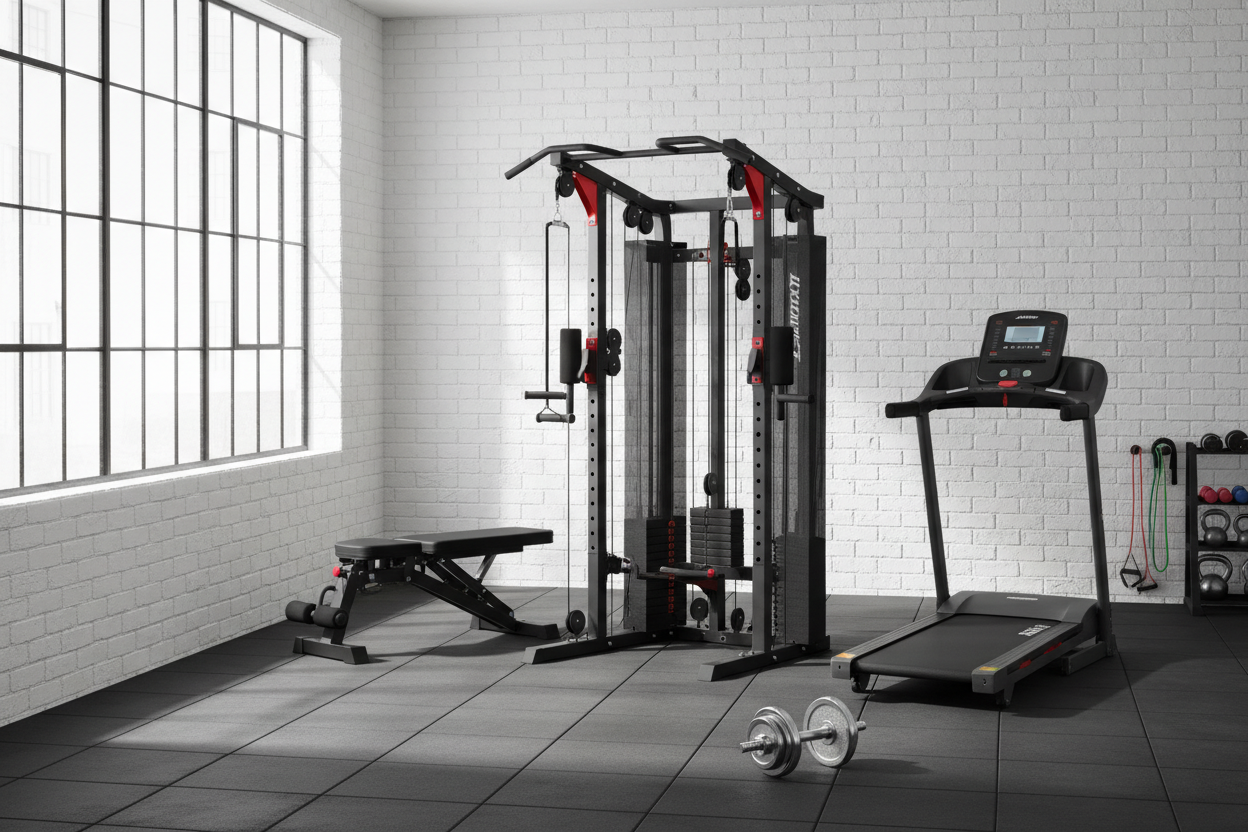
I spent years building what I called a 'Franken-gym.' It was a mess of mismatched plates, a power rack that wobbled if I breathed too hard, and a standalone cable machine that took up enough floor space to park a Vespa. Eventually, the clutter won. I couldn't even reach my bench without parkouring over a pile of hex dumbbells. That is when I started looking seriously at all-in-one exercise equipment for home use.
The skepticism is real. We have all seen those late-night infomercials for folding plastic contraptions that promise a Greek god physique in six minutes a day. But the market has shifted. Now, we are seeing 11-gauge steel rigs that combine a squat rack, a functional trainer, and a smith machine into a single footprint. I wanted to know if these beasts actually hold up under a 400-pound squat or if they are just expensive clothes hangers.
Quick Takeaways
- Steel quality matters more than the number of attachments; look for at least 14-gauge, but 11-gauge is the gold standard.
- Pulley ratios (2:1 vs 1:1) change how the weight feels—2:1 is smoother for isolation, while 1:1 is better for heavy pulls.
- Always measure your 'working space,' not just the machine footprint; you need room to load plates and move your arms.
- A high-quality smith machine should use linear bearings, not plastic bushings, for a smooth travel.
The Trap of the 'Do-It-All' Fitness Gadget
Most 'all-in-one' gear is trash. There, I said it. If it arrives in a box the size of a microwave and uses tension bands instead of actual iron, you are buying a toy, not a tool. These gadgets prey on the idea that fitness should be 'convenient' and 'hidden' under a bed. Real training is loud, heavy, and requires structural integrity.
The difference between a gimmick and a serious all-in one workout system is the material. If the frame is made of thin, bolted-together aluminum, it will rattle the first time you rack a heavy barbell. A real rig uses heavy-duty steel tubing and oversized hardware. It should feel like it is anchored to the earth, even if you haven't bolted it down yet. I look for weight capacities that exceed my goals by at least 200 pounds because I want that safety margin when I'm grinding out a final rep.
What Makes a Legit All-in One Workout System?
When you are evaluating a potential at home gym all in one, you have to look past the shiny paint job. The backbone of these units is often the carriage system. If you are looking for a Smith Machine Home Gym Station, the rail quality is everything. Cheap units use plastic rollers that get 'sticky' over time. You want chrome-plated guide rods and linear bearings that glide without that stuttering feeling that ruins your mind-muscle connection.
Then there is the cable system. A legit all-in one workout system needs adjustable pulleys that move easily up and down the uprights. Check the cable rating; most commercial-grade units use aircraft-grade cables rated for 2,000 pounds. Also, pay attention to the pulley material. Aluminum pulleys are superior to nylon because they don't warp or develop flat spots over years of heavy use. If the manufacturer doesn't list the steel gauge or the bearing type, they are probably hiding something.
The Footprint Problem: Managing Your Floor Space
The biggest lie in home fitness is that you can fit a full gym in a 4x4 corner. While an exercise all in one machine saves massive amounts of space compared to buying five separate stations, it still needs its own zip code. You have to account for plate loading. If the weight pegs are on the sides, you need at least two feet of clearance on either side of the machine just to slide a 45-pound plate on without punching a hole in your drywall.
Ceiling height is the other silent killer. Most serious rigs sit between 82 and 92 inches tall. If you are in a basement with low-hanging HVAC ducts, you might find yourself unable to do a full-range pull-up. Before you drop three grand, read The Hidden Math Behind an All In One Home Gym System to understand how to map out your floor plan. I once bought a beautiful lat pulldown attachment only to realize I couldn't fully extend my arms because of a low-hanging joist. Don't be like me.
Putting It to the Test: Heavy Lifting on a Single Rig
I put the All In One Smith Machine With Cable Crossover S1 V4 through a brutal month of high-volume training. On leg day, I loaded the Smith bar with 315 pounds. There was zero flex in the frame. The transition from a heavy compound lift to cable flyes took about thirty seconds—just pop the pins and move the handles. That is where these machines shine. You aren't walking across the gym or waiting for some guy to finish his phone call on the cable machine.
The cable crossover felt remarkably fluid. Some combo units suffer from 'cable drag' where the weight feels heavier on the way down than the way up due to friction. This unit didn't have that. However, I did find that the built-in plate storage can get crowded if you own fat bumper plates. If you are using iron plates, it is a non-issue, but if you have a collection of thick 45-pound bumpers, you might need an external toast rack for your extra iron.
Final Verdict: Should You Consolidate Your Iron?
If you are tired of tripping over gear and want a streamlined home gym, consolidation is the way to go. You lose the 'cool' factor of having ten different machines, but you gain the ability to actually use your garage for something other than storage. For most lifters—unless you are a competitive strongman moving 800-pound loads—a high-end combo unit provides more than enough utility.
Stop buying cheap individual benches and wobbly squat stands that you'll just end up replacing in a year. Invest in a solid foundation. If you are ready to stop making excuses about space and start actually training, head over to our Home Gym collection and pick a rig that matches your ambition. Your floor space (and your spouse) will thank you.
FAQ
Can I perform squats safely on an all-in-one machine?
Yes, provided it has integrated J-cups or a high-quality Smith bar. Look for units with adjustable safety spotter arms if you plan on squatting outside the Smith machine. Safety should always be the priority when lifting solo at home.
Is a 2:1 or 1:1 pulley ratio better?
A 2:1 ratio means 100 pounds on the stack feels like 50 pounds. This is ideal for functional movements and isolation work because it allows for more cable travel and finer weight increments. A 1:1 ratio is better for heavy movements like lat pulldowns or low rows where you want the full weight of the stack.
How hard are these to assemble?
Expect to spend 4 to 8 hours on assembly. These are complex machines with lots of moving parts and cables. I highly recommend having a second person to help hold the uprights while you bolt them into the base. Use your own socket wrench set; the 'free' tools included in the box are usually garbage.
Share:
Why Running Machines in Gym Chains Ruin You for Home Cardio
Saving Your Shoulders: Smith Machine Press Mistakes to Avoid