
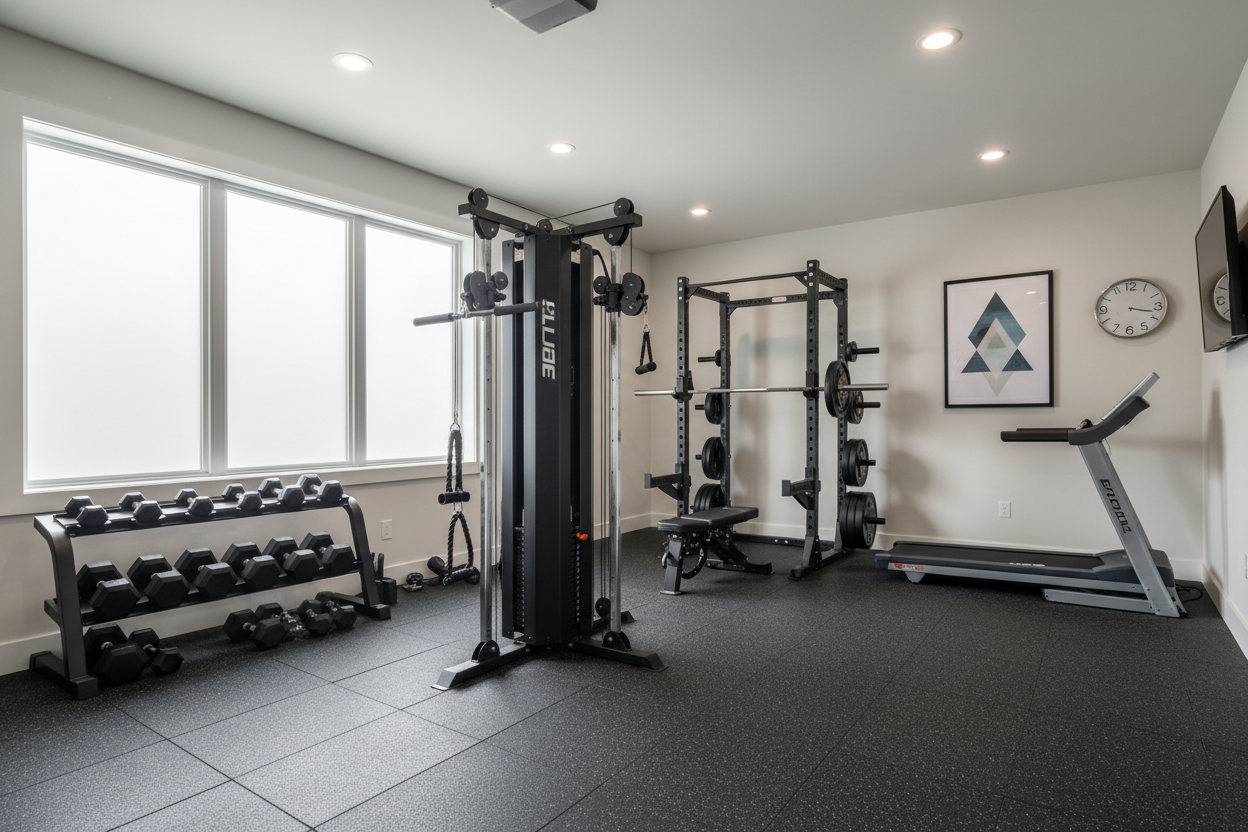
I remember staring at my garage floor, calculating the square footage of a power rack versus a functional trainer and realizing I didn't have enough room for both unless I wanted to park my car on the lawn. My wife was already annoyed by the chalk dust, so that wasn't an option. That is usually when people start hunting for the best all-in-one gym machine to save their space and their sanity.
The promise is seductive: one rig that handles your heavy squats, your cable flyes, and your Smith machine bench press. But after years of testing these beasts, I’ve learned that most of them are glorified clothes hangers. You’re either getting a decent rack with terrible cables, or a smooth trainer that shakes like a leaf when you try to re-rack 300 pounds.
Quick Takeaways
- Steel Matters: Never buy anything less than 11-gauge steel if you plan on lifting heavy.
- Pulley Ratio: A 2:1 ratio is standard for functional movements, giving you more cable travel.
- Bearings vs. Bushings: If the Smith machine doesn't use linear bearings, it will eventually catch and ruin your sets.
- Footprint: Expect to sacrifice about 30-40 square feet for a high-quality unit.
The Jack-of-All-Trades Trap (Why Most Multi-Trainers Fail)
We’ve all seen the late-night infomercials for those plastic-heavy 'total gyms' that look like they’d snap if you breathed on them too hard. The market used to be flooded with this junk. They promised 50 exercises, but in reality, they gave you 50 ways to get a mediocre pump while fighting against friction and bad ergonomics.
If the engineering is flawed, you end up with a machine that does nothing well. I am tired of wobbly rigs that make a simple pull-up feel like a survival stunt. A real best multi home gym needs to feel like it's bolted into the bedrock of your house. If it shakes when you’re doing dips, it’s a hard pass from me.
What Actually Makes a Do-It-All Rig Worth the Floor Space?
When you’re building a complete home gym, you have to look past the shiny paint and check the specs. I look for 3x3 inch or 2x3 inch steel uprights. This isn't just about weight capacity; it's about the 'sway factor.' You want a rig that stays dead still when you’re slamming weights around.
The pulley system is the heart of the best multi gyms. Most people don't realize that a 1:1 ratio means 100 lbs feels like 100 lbs, which is great for lat pulldowns. However, a 2:1 ratio—where 100 lbs feels like 50 lbs—is often better for the best all-in-one trainer because it allows for longer cable travel and smoother movements during shadow boxing or crossovers.
The Smith Machine Glide Test
If you’re going to use a smith machine home gym station, the bar path has to be buttery. Cheap machines use plastic bushings that slide on the rails. They feel okay for a week, then they start to 'chatter' or catch mid-rep. I only recommend units with high-quality linear bearings. If I’m grinding out a heavy incline press alone, the last thing I want is the bar sticking because the manufacturer saved $20 on parts.
Cables That Don't Feel Like Dragging Sandbags
I’ve used machines where the '100 lb' setting felt like 150 lbs because the friction in the pulleys was so bad. You want aluminum pulleys over nylon ones whenever possible. Aluminum doesn't warp under heat or heavy loads, and when paired with aircraft-grade cables, the resistance stays consistent from the start of the rep to the peak contraction.
Can It Actually Survive a Heavy Leg Day?
This is where the best multi function home gym separates itself from the toys. I’ve tested rigs where the J-hooks felt like they were made of tin. If you're squatting 400 pounds, you need to trust that the rack isn't going to tip or fold. Check the length of the spotter arms—if they’re only 12 inches long, you have zero margin for error.
I once tested a unit that claimed a 1,000-lb capacity, but the moment I put 315 on the bar, the uprights started to bow inward. Always look for reinforced joints and oversized bolts. A true heavy-duty rig should weigh at least 300 to 500 lbs on its own before you even add plates.
The Verdict: Who Should Actually Drop the Cash on These?
If you are a competitive powerlifter who only cares about the 'Big Three,' just buy a dedicated power rack. But if you're like me—someone who wants to hit heavy triples on squats and then immediately jump into high-rep cable crossovers and face pulls—these machines are the best home gyms for the money. They save you from buying four separate pieces of equipment.
I’ve found that a full-body multi training station is the sweet spot for most garage gym owners. It gives you the safety of a Smith machine, the freedom of a rack, and the versatility of a functional trainer without requiring a 2,000-square-foot commercial space. Just don't cheap out on the pulleys, or you'll regret it every time you train back.
FAQ
Are all-in-one machines better than free weights?
They aren't 'better,' they are different. A good one includes a rack for free weights, so you get the best of both worlds: the stabilization challenge of a barbell and the constant tension of cables.
How much ceiling height do I need?
Most quality rigs stand between 80 and 84 inches tall. Always measure your ceiling and factor in another 6-10 inches if you plan on doing pull-ups, so you don't smash your head on the drywall.
Is a 2:1 pulley ratio better than 1:1?
For functional training and isolation work, yes. It makes the weight stack feel lighter but gives you double the cable length, which is essential for lunging movements or wide flyes.
Share:
The Only 4 Gym Equipment Categories You Actually Need to Care About
Why Your Next Olympic Bar and Bench Set Should Be Your Last