
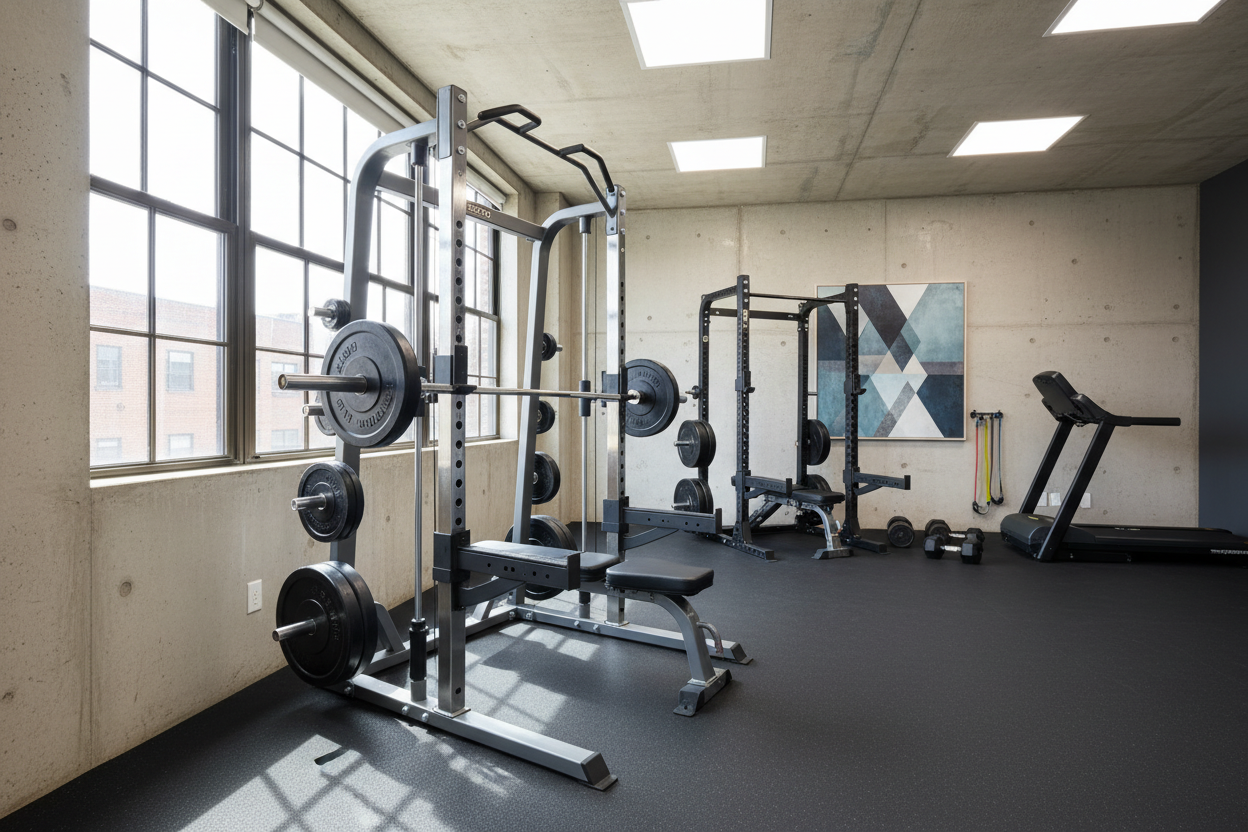
You just finished a heavy set of barbell bench presses and feel like a beast. You walk over to the Smith machine to polish off your chest with some high-rep isolation, load up what should be a 'light' weight, and suddenly you're pinned. Your ego takes a hit, and you're left wondering why does smith machine feel heavier than the free-floating bar you just mastered.
Quick Takeaways
- Friction from linear bearings adds mechanical resistance that free weights don't have.
- The fixed bar path prevents you from using natural 'cheats' or momentum.
- Incorrect plate math often happens because lifters ignore the starting weight of the counterbalanced (or non-counterbalanced) bar.
- Dry, ungreased guide rods can add 10-15 lbs of literal drag to every rep.
The Free Weight Ego Check
I've been there. I once spent six months strictly training with a 7-foot Olympic bar in my garage, only to hop on a Smith machine at a commercial gym and get humbled by two plates. It’s a common frustration that makes people think they're getting weaker, but the reality is that the machine is just a different animal.
A Smith machine is designed to provide safety and stability, but 'stable' doesn't mean 'easy.' When you remove your ability to use stabilizer muscles to balance the load, you'd think the lift would get lighter. Instead, the machine forces you into a rigid path that offers zero forgiveness for poor positioning or fatigue.
The Physics of Why Does Smith Machine Feel Heavier
The primary reason why do smith machine feel heavier comes down to the lack of horizontal movement. On a standard bench press, the bar travels in a slight 'J' curve. Your body naturally finds the most efficient path to bypass sticking points by shifting the bar slightly over your face or toward your sternum.
The Smith machine kills that efficiency. You are locked into a vertical or slightly slanted track. If your setup is off by even an inch, you're fighting the machine's steel frame rather than just the gravity of the plates. This is why many lifters blame the smith machine angle when they can't hit their usual numbers; the forced path simply doesn't align with their natural mechanics.
Friction is a Vicious Spotter
Unlike a barbell that moves freely through the air, a Smith machine bar is attached to carriages that slide on guide rods. These carriages use linear bearings—small steel balls that roll inside a housing. If those bearings are cheap, dirty, or dry, they create mechanical drag.
When you press, you aren't just lifting the iron; you're overcoming the friction of the system. If you push slightly forward or backward against the bar (which we all do when struggling), the bearings 'bite' into the rods. This mechanical binding is a massive reason why the bar weight feels heavier than normal on certain commercial rigs that haven't seen a drop of oil since the gym opened.
The Counterbalance Mind Game
Plate math is the silent killer. Most Olympic bars are 45 lbs, but Smith machine bars vary wildly. Some are counterbalanced with internal weights and cables to feel like 0 lbs or 15 lbs. Others are massive, solid steel units that start at 60 lbs before you even add a plate.
If you assume every bar is 45 lbs, you’re probably miscalculating your total load. I've seen guys load three plates on a non-counterbalanced machine thinking they're hitting 315, only to realize the heavy-duty carriage makes the starting weight closer to 330. That 15-lb discrepancy is enough to ruin a peak set.
How to Stop Fighting Your Equipment
If you're training at home and your smith machine feels heavier than it should, check your maintenance. I once thought my bearings were shot, but it turns out the guide rods were just coated in a layer of dust and old sweat. A quick wipe-down and a spray of high-quality silicone lubricant made the bar feel 20 pounds lighter instantly.
For those looking to avoid this headache entirely, investing in a high-end all-in-one smith machine with commercial-grade linear bearings is the move. These units use hardened steel rods and precision bearings that minimize drag, making the movement feel as close to free weights as possible while keeping the safety of a fixed path.
Should You Just Stick to Free Weights?
Don't let the 'heavier' feel scare you off. The added resistance from friction and the strict path are actually great for hypertrophy. Because you can't use momentum or 'body English' to swing the weight, your target muscles stay under constant tension. Embrace the friction, adjust your ego, and use the smith machine as a tool for high-volume growth rather than a 1RM ego boost.
Personal Experience: My 'Sticky' Lesson
A few years back, I bought a used Smith machine for my garage. I loaded up 225 for some slow-tempo squats and almost got buried. I couldn't figure out why I was struggling with a weight I usually repped for 12. I realized the previous owner had used WD-40 on the rails. WD-40 isn't a lubricant; it's a degreaser that eventually turns into a sticky glue. After scrubbing the rails with mineral spirits and applying dry silicone, the 'weight' of the machine dropped significantly. Maintenance matters.
FAQ
Does a Smith machine bar weigh 45 lbs?
Rarely. Most counterbalanced machines have a starting weight of 15 to 25 lbs, while non-counterbalanced commercial machines can weigh 55 to 65 lbs including the carriage.
Is 225 on Smith machine the same as 225 on barbell?
Physically, yes, but practically, no. The Smith machine usually feels harder due to friction and a fixed bar path, though some find it easier because they don't have to balance the weight.
Why does my Smith machine feel 'clunky'?
Your guide rods are likely dry or misaligned. Clean them with a microfiber cloth and apply a silicone-based lubricant. Never use grease or WD-40, as they attract dust and create more drag over time.
Share:
The Foot Placement Secret to the Smith Machine Squat for Quads
What the Best Home Gym Under $300 Actually Looks Like