
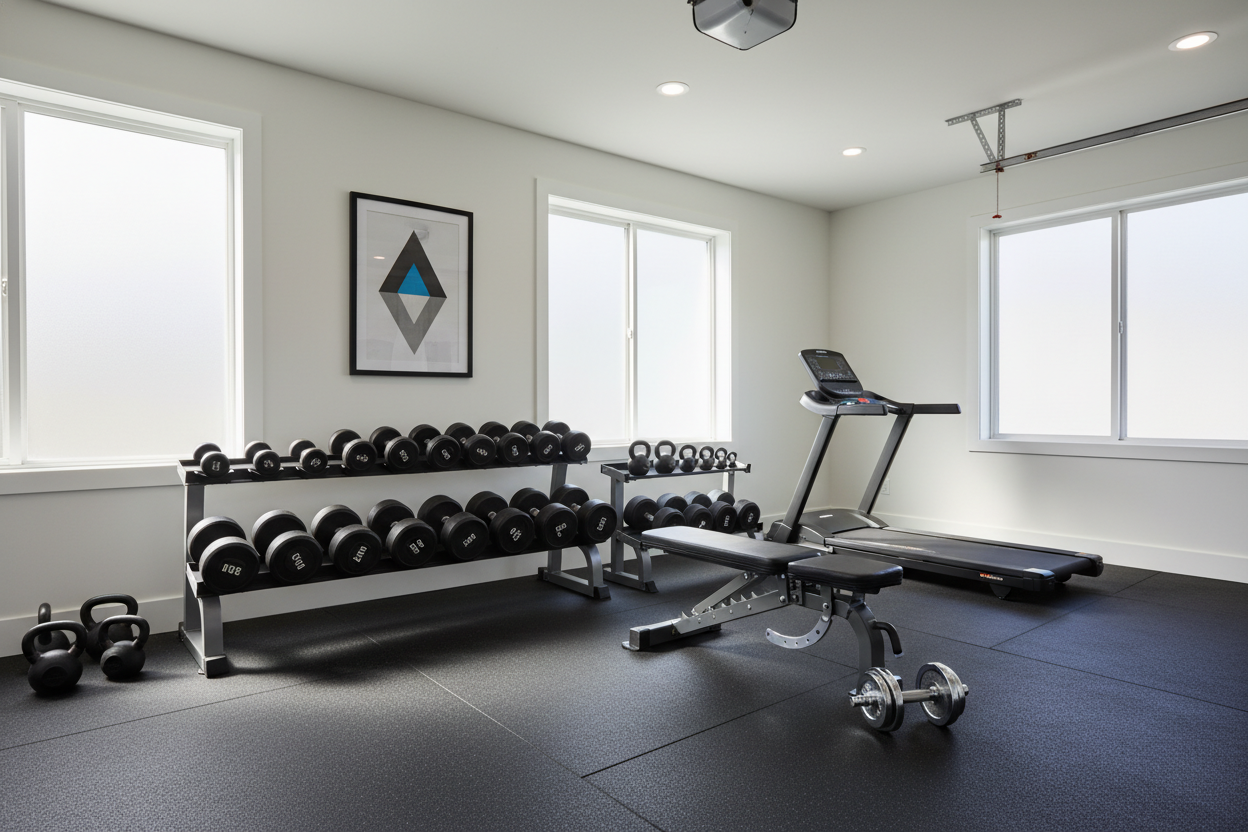
I remember staring at my single-car garage five years ago, trying to decide if I should buy a lawnmower or a squat rack. I chose the rack, but then came the real headache: choosing the right dumbbells for weights to fill the space. When you are working with a 10x10 slab of concrete, you cannot afford to buy gear that just sits there looking pretty.
Quick Takeaways
- Dumbbells are king for muscle growth and isolation.
- Kettlebells excel at high-intensity conditioning and 'flow' workouts.
- Adjustable dumbbells are the ultimate space-saver for small garages.
- If you can only buy one, start with dumbbells and an adjustable bench.
The Great Iron Debate: What Actually Deserves Your Floor Space
Floor space is the most valuable currency in a home gym. I have seen too many guys buy a full set of kettlebells from 10lb to 70lb, only to realize they have no room left for a barbell. You have to be ruthless. Every piece of equipment needs to earn its keep every single week.
The reality of training at home is that you do not have a maintenance crew or a massive commercial footprint. You need tools that are versatile. If a piece of equipment only does one thing, it is probably a waste of your money. I have spent thousands on gear, and the stuff that stays is the stuff that allows for the most variety without requiring a dedicated storage shed.
Why Kettlebells Are Fun, But Flawed for Pure Muscle Growth
I love a heavy kettlebell swing as much as the next guy. The dynamic nature of bells makes them incredible for heart rate spikes and grip strength. But if your goal is strictly hypertrophy—building actual slabs of muscle—kettlebells can be incredibly frustrating. The weight jumps are usually too big.
Going from a 16kg to a 24kg bell is a massive leap. Good luck trying to progressively overload your overhead press when the next weight up is 17 pounds heavier. The offset center of gravity is great for 'functional' movement, but it is a nightmare when you just want to fatigue a specific muscle group like your triceps or delts without your wrists giving out first.
The Undeniable Versatility of Dumbbells for Weights
If you want to look like you lift, you need a reliable set of traditional dumbbells. They are the undisputed kings of the home gym for a reason. You can move in every plane of motion, hit every muscle group, and most importantly, you can micro-load your lifts. Small 2.5lb or 5lb jumps are what actually lead to long-term gains.
The real magic happens when you are pairing them with an adjustable bench. Suddenly, you have a complete chest and shoulder protocol that rivals any commercial gym setup. Try doing a high-volume incline fly with a kettlebell; the handle geometry makes it awkward and increases the risk of a shoulder tweak. Dumbbells just feel right for the heavy hitting movements.
The Budget and Footprint Reality Check
Let's talk about the bill. Buying a full run of fixed dumbbells is a quick way to go broke and lose your parking spot. That is why I almost always recommend a heavy set of adjustable dumbbells for home use. You get the equivalent of 15+ pairs of weights in the space of two shoeboxes.
You don't need a massive commercial rack to get a pro-level workout. In my current setup, I use one pair of adjustables that goes up to 80lbs. It takes up four square feet. To get that same weight range in kettlebells, I would need a dozen different bells, and I would still be missing the 'in-between' weights needed for smaller muscle groups.
My Personal Experience: The Hand-Tear Incident
A few years back, I went through a 'kettlebell only' phase. I bought a cheap cast-iron bell off a marketplace listing. The handle was finished poorly—sharp seams and aggressive coating. During a high-rep snatch set, it caught my palm and ripped a massive callous right off. I couldn't grip a bar for two weeks. It taught me two things: quality matters, and kettlebells are specialized tools, not a total replacement for the stability of a good dumbbell.
My Final Verdict: What Should You Actually Buy?
If you are starting from zero, buy the dumbbells. They are the foundation of strength training. They allow for more precise progression, better isolation, and they are easier for beginners to master. Once you have your foundational strength built and you have some extra cash, go ahead and buy one or two heavy kettlebells for swings and carries. But for the bulk of your 'meat and potatoes' lifting, stick to the dumbbells.
FAQ
Can I do kettlebell swings with a dumbbell?
You can, but it is not ideal. Holding the head of a dumbbell for swings works in a pinch, but the grip is less secure. If you want to swing regularly, buy one dedicated kettlebell.
Are adjustable dumbbells durable enough for drops?
Most are not. If you are the type of lifter who likes to ghost-drop weights after a heavy set of presses, stick to fixed rubber hex dumbbells. Adjustables have internal mechanisms that can break if abused.
Which is better for weight loss?
Neither. Muscle is built with resistance, and fat is lost in the kitchen. However, kettlebells make it easier to do 'complexes' that keep your heart rate high, which can help burn a few extra calories during the session.
Share:
Where Can You Buy a Barbell That Won't Bend in a Month?
Why That Aesthetic Workout Bench on Instagram is a Trap