
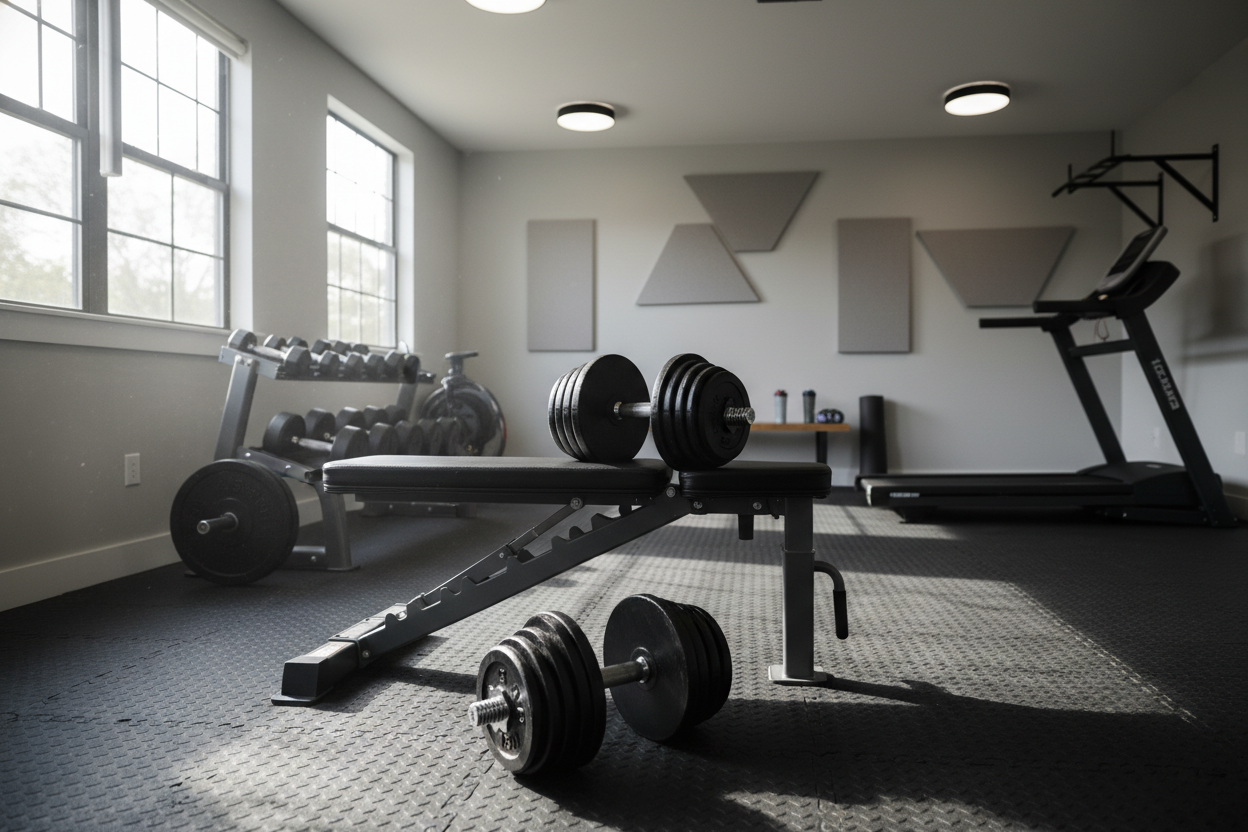
There is a specific kind of frustration that hits when you realize your dumbbell rows have become high-rep cardio sessions. You have been browsing standard dumbbells for years, but the 50-pounders just do not cut it anymore. Moving up to an 80lb dumbbell set is the logical next step for any serious lifter, but it is a massive jump in more ways than just the numbers on the end caps.
When I finally made the jump, I thought I was just buying more iron. I was wrong. I was buying a logistics problem. An 80 pound dumbbell set changes the gravity of your garage gym, requiring more floor reinforcement, more rack space, and a much larger budget for shipping than your starter kit ever did.
Quick Takeaways
- A full 5-80lb set requires a heavy-duty, three-tier rack—usually at least 65 inches wide.
- Expect to pay as much for shipping as you do for a single pair of 50s; heavy iron usually travels via LTL freight.
- Rubber hex is the standard for durability, but handle diameter often increases as the weight goes up.
- If space is tight, heavy adjustables are the only way to reach 80lbs without losing a parking spot.
So You Finally Maxed Out the 50s
Hitting the ceiling on a 5-50lb rack is a great feeling. It means the work is paying off. But the transition to heavier weights is where most home gym owners get sticker shock. When you were browsing standard dumbbells back in the day, a 5-50lb set felt like a lifetime investment. Now, those 50s feel like toys when you are trying to build real posterior chain strength or chest mass.
The jump to 80s means you are entering the realm of 'heavy' lifting. You are no longer just toning; you are moving serious mass. This requires a shift in mindset. You need handles that can take a beating and knurling that won't slip when your palms are sweating through a heavy set of Bulgarian split squats.
The Floor Space Math Nobody Warns You About
A standard 5-50lb set fits nicely on a 48-inch twin-tier rack. An 80lb dumbbell set is a different beast. To house weights from 5 to 80 pounds in 5-pound increments, you are looking at 16 pairs of dumbbells. That is nearly 1,400 pounds of iron sitting in one spot.
Most people realize too late that they need a three-tier, heavy-duty rack. If you are investing in rubber hexes, remember that the heads get significantly wider as they get heavier. An 80lb hex head is roughly 8 inches wide. Line those up, and your rack suddenly eats up an entire wall of your garage. Measure twice, because these racks do not just 'tuck away' into a corner.
Fixed Racks vs. Heavy Adjustables: The Ultimate Trade-Off
This is the fork in the road. Do you want the convenience of a commercial gym, or do you want to keep your floor space? A fixed 5-80lb rack is the gold standard for workout flow. You grab, you lift, you drop. No fiddling with pins or dials. But it is expensive and takes up a 6-foot footprint.
On the flip side, heavy adjustable dumbbells can get you to that 80lb mark in the space of a single pair. Modern systems are reliable, but they have a different feel. They are often longer and can feel 'clunky' during overhead movements. If you're doing fast-paced supersets, the fixed rack wins. If you're training in a literal closet, the adjustables are your only hope.
Do You Actually Need Every 5-Pound Increment?
Here is a pro tip that saved me a grand: you probably do not need the 55s, 65s, or 75s right away. Many lifters find success by skipping some weight increments entirely when they move into the heavy stuff. A 10-pound jump is manageable once you are working with 60+ pounds.
Buying just the 60s, 70s, and 80s allows you to bridge the gap without the massive cost of a full continuous set. You can use fractional magnetic weights if the 10-pound jump feels too aggressive. This strategy keeps your gym lean and your wallet full.
Freight Shipping and the Traps of Buying Heavy Iron
Weight is expensive to move. Once your order crosses the 300-500lb threshold, standard ground shipping is out the window. You are moving into LTL (Less Than Truckload) freight territory. This means a semi-truck, a pallet, and potentially a 'liftgate fee' just to get the weights off the truck.
Be wary of shady discount weight deals that promise 'free shipping' but hide the costs in inflated per-pound prices or low-quality casting. I have seen cheap 80lb dumbbells where the heads actually rotate or the rubber smells like a tire fire for six months. Buy once, cry once. Get quality iron that is pinned or welded securely.
My Personal Take
I remember when my first set of 80s arrived. I bought a budget rack off a popular marketplace, thinking it could handle the load. Three days later, the middle shelf started to sag like a wet noodle. I ended up spending more money replacing the rack than I saved on the weights. Don't be me. If you are going to move 80lb iron, buy a rack rated for at least 1,500 lbs. It is a safety issue, not just an aesthetic one.
FAQ
Do I need a special floor for 80lb dumbbells?
Yes. Dropping an 80lb dumbbell on bare concrete will eventually crack it. You need at least 3/4-inch stall mats. Don't trust the thin foam puzzle mats; the weight will compress them instantly and offer zero protection to your slab.
Are 80lb dumbbells too heavy for a beginner?
For most movements, yes. But for things like goblet squats or rows, you might reach 80lbs faster than you think. However, if you can't strictly press the 40s yet, an 80lb set is probably overkill for your current needs.
What is the best handle style for heavy dumbbells?
Look for contoured, chrome-plated handles with medium knurling. Fully straight handles can feel awkward at higher weights, and 'aggressive' knurling might tear your hands up during high-volume row sessions.
Share:
The 4 Hidden Differences Between Cheap Iron and Pro Dumbbells
Does a Multi Gym Leg Press Actually Belong in a Serious Garage?