
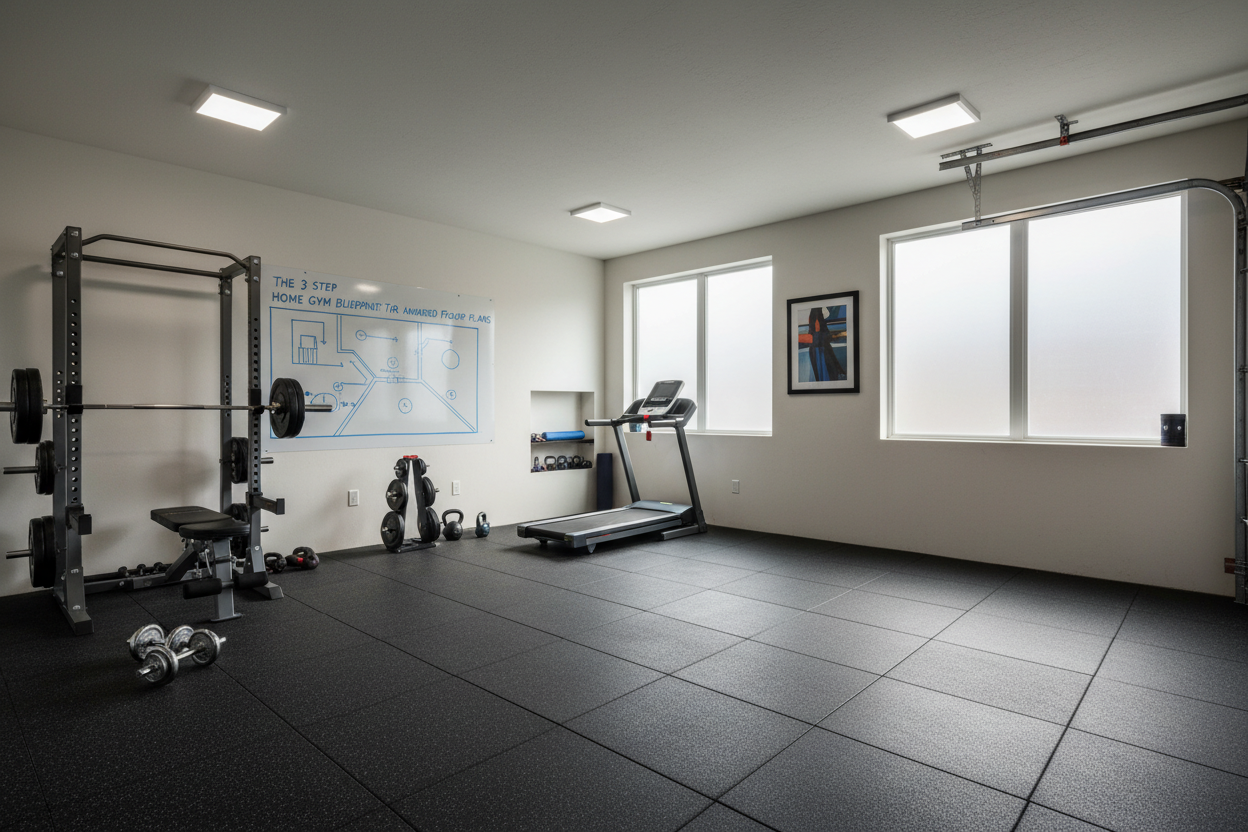
I remember the day my first power rack arrived. I had spent weeks measuring the garage floor, convinced it would fit with inches to spare. But I forgot about the overhead garage door track and the fact that I actually need to, you know, stand next to the thing to load it. If you want to avoid the headache of returning 400 pounds of steel, you need a solid home gym blueprint before you touch a single bolt.
- Tape out every footprint with blue painter’s tape to visualize the 'dead space' gear creates.
- Standard barbells are 7.2 feet long; you need at least 10 feet of width to avoid punching holes in your drywall.
- Ceiling height is usually the dealbreaker for pull-ups and overhead presses.
- Prioritize a 24-inch safety buffer between machines to avoid feeling like you are lifting in a closet.
Why Your First Tool Should Be Masking Tape, Not a Credit Card
Don’t trust your eyes. Grab a roll of masking tape or blue painter’s tape. Tape the exact footprint of the rack, the bench, and the plate tree on your floor. It is easy to look at a spec sheet and think '48 inches wide is fine,' but once that tape is on the floor, you might realize you have blocked the path to your water heater or the laundry machine.
Physical drafting reveals the invisible space gear actually occupies. I have seen too many guys buy a massive cage only to realize they can't actually open their gym door once the bench is rolled out. Taping it off costs three dollars and twenty minutes; a return shipping fee on a rack costs hundreds.
How to Nail Your Home Gym Floor Plan Design
Your home gym floor plan design needs to account for more than just where the feet of the equipment sit. You have to factor in 'operational volume'—the space you occupy while moving. I always recommend a 24-inch safety buffer around every piece of stationary gear. If you are trying to squeeze in a complete home gym, you are looking at a minimum of 150 to 200 square feet to keep things from feeling cramped.
Check your doorway swings. If your rack is too close to the entrance, you will be constantly fighting the door just to move a bench. Also, look up. If you have a low basement ceiling, that 90-inch rack is going to be a very expensive paperweight. Measure twice, tape once, and buy once.
The 36-Inch Barbell Clearance Rule
This is the math that saves your walls. A standard Olympic bar is 86 to 91 inches long. If you center your rack in an 8-foot wide room, you only have about 5 inches of space on either side. Good luck sliding a 45-pound plate on without scraping the paint off your house. You need at least 36 inches of clearance on each side of the rack sleeves to load and unload plates comfortably without doing a weird sideways shuffle.
Factoring in Multi-Station Footprints
Machines are not static objects. A leg extension or a functional trainer has arms and cables that travel well beyond the base frame. If you are looking at a Smith machine home gym station, remember the bar path is fixed, but the footprint grows significantly once you add a bench and plate storage. Always measure the machine at its maximum extension—where the weights are at the top of the pull—not just where it sits when it is turned off.
Avoiding the Aesthetic Trap in Small Spaces
I have seen people spend $500 on neon signs and motivational wall decals before they even have a decent floor mat. It is a trap. You need to stop letting Pinterest ruin your gym at home design by prioritizing mirrors and mood lighting over actual floor space. If a mirror is positioned where you normally drop your deadlifts, it is just expensive glass waiting to shatter.
Focus on the 'flow.' Can you move from your squat rack to your dumbbell rack without tripping over a weight tree? If the answer is no, your gym looks better on Instagram than it feels during a heavy triples session. Function beats aesthetics every single time.
Testing Your Layout Before Bolting Anything Down
Once the tape is on the floor, do a 'ghost workout.' Grab a broomstick and mimic some overhead presses. If the broom hits a light fixture or a ceiling joist, a real barbell definitely will. Squat in your taped-off rack area. If you feel cramped just standing there, you will hate it when there is actual iron in the room.
I once bolted a rack into my basement concrete only to realize I couldn't do pull-ups because my head would hit a HVAC duct. I had to unbolt the whole thing, patch the holes, and move it three feet to the left. It was a four-hour mistake that a piece of tape would have caught in ten seconds. Test the flow, check the heights, and then—and only then—start ordering the gear.
FAQ
How much space do I really need for a power rack?
The rack itself might be 4x4 feet, but you need a 10x10 foot area to account for the barbell width and the space to move around the back to load plates.
Can I build a gym in a 10x10 spare bedroom?
Yes, but you should look at folding racks or half-racks. A full 6-post cage will swallow that room and leave no space for anything else.
Do I need to bolt my rack to the floor?
If it is a light-gauge rack or you plan on doing kipping pull-ups, yes. If it has a flat-foot base and you are just doing slow, controlled lifts, you can often get away without it, but bolting is always safer.
Share:
I Built a Real Routine Using Only the Equipment at Planet Fitness
Is an Adjustable Weight Bench With Resistance Bands Worth It?