
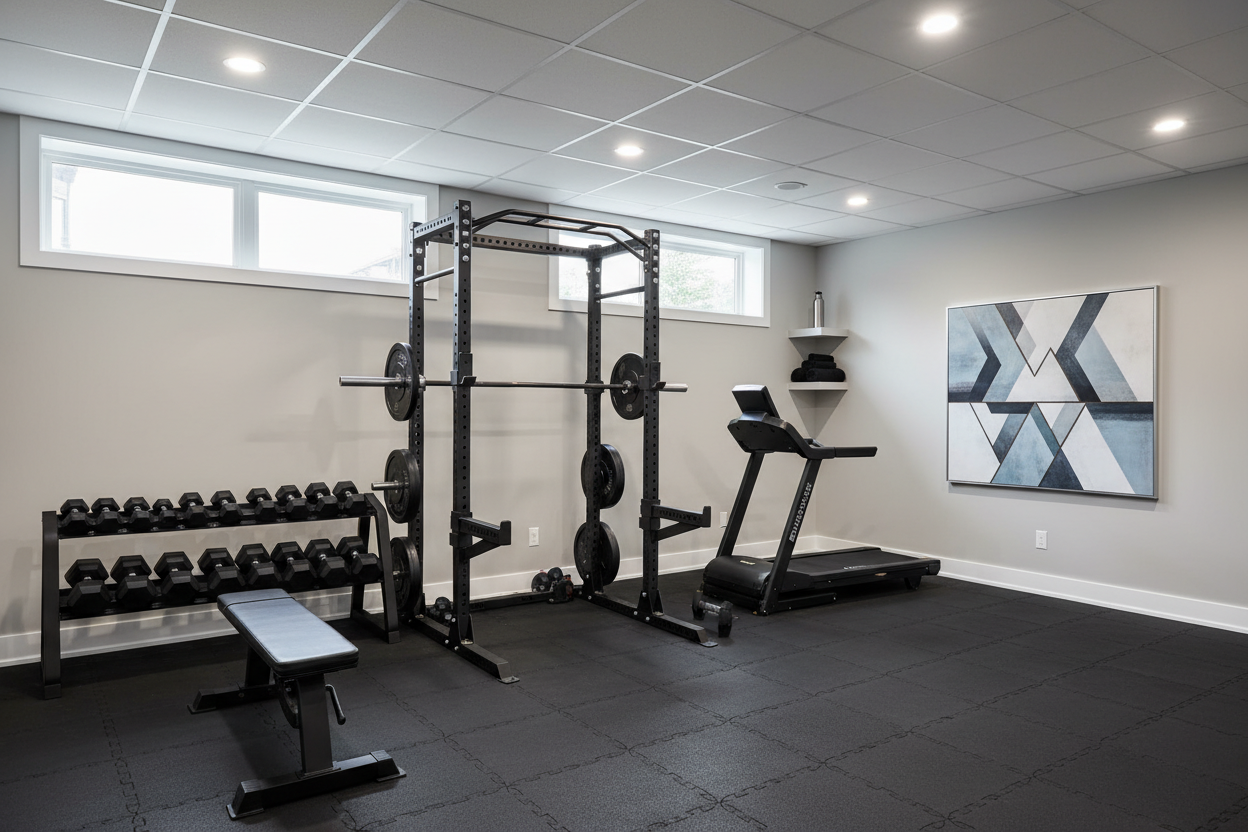
I remember the first time I bought a 'home gym.' It was a folding bench from a big-box store that wobbled if I breathed too hard. That is the trap most people fall into. They think they are saving space, but they are really just buying future scrap metal. Finding the best at home weight lifting equipment isn't about what hides under your bed; it is about what stays bolted to the floor when you are grinding out that last heavy rep.
Quick Takeaways
- Skip the folding 'as-seen-on-TV' junk; if it folds, it probably fails under real load.
- Prioritize 11-gauge steel for any rack or centerpiece.
- Flooring is just as important as the iron—get 3/4-inch rubber.
- Look for commercial-grade weight capacities of at least 800-1,000 lbs.
Exercise Gear vs. True Lifting Hardware
Most 'fitness gear' is designed to be sold, not used. Real hardware is designed to survive. When you start building a functional home gym, you have to decide if you want a toy or a tool. Tools have welds that look like stacks of dimes and powder coating that doesn't flake off the first time a barbell grazes it.
Cheap equipment uses 14-gauge steel or thinner. It feels light because it is light. When you are moving 200+ pounds, you want mass under you. True at home lifting equipment should feel overbuilt. If you can pick up the entire rack by yourself, it probably isn't heavy-duty enough for serious progression.
The Anchor: Picking the Best Weight Machine for Home Gym Gains
Your entire setup needs an anchor. For most of us, that's a power rack or a functional trainer. If you're training solo in a garage—which most of us are—safety is the only thing that matters. I'm a massive fan of heavy-duty Smith machine setups because they combine a rack, a pull-up bar, and a cable system in a single footprint. It is often the best weight machine for home gym owners who don't have 1,000 square feet to play with.
When evaluating these, ignore the '75-in-1' exercise claims. Look at the pulleys. Are they plastic or aluminum? Do they use sealed bearings or cheap bushings? A machine with 2,000-lb rated aircraft cables will feel smooth for a decade; a cheap one will start sticking and fraying before your first year is up.
Building the Best Basement Gym (Without Ruining Your Foundation)
Basements are the ultimate lifting dens, but they are unforgiving. If you drop a heavy set of deadlifts on bare concrete, you're going to crack your foundation. For the best basement gym, you need a layer of 3/4-inch stall mats at a minimum. Once the floor is set, you need a bench that doesn't feel like a balance beam.
I have tested chest press machines with independent arms that provide that commercial-grade stability without needing a spotter. This is critical for basement lifting. If the bench weighs less than 70 pounds, it’s going to slide around when you try to drive your legs. You want something with a wide tripod base and high-density foam that doesn't bottom out.
How to Spot the Best At Home Lifting Equipment Online
Don't let a glossy Photoshop render fool you. You need to read the spec sheet like a pro. Look for the 'Static Weight Capacity.' If it's under 500 lbs, walk away. You also want to check the upright dimensions—3x3 inch or 2x3 inch steel is the standard for serious gear. Anything smaller will feel like a coat rack.
Budgeting is also an art form. I tell people to stop overpaying for your cast iron plates so they can dump that extra cash into the rack and the bar. A plate is a plate—it just needs to weigh what it says it weighs. But a cheap barbell or a flimsy rack can actually cause injury. Spend the money on the moving parts.
My Non-Negotiable Checklist for Serious Home Lifters
If I were starting over today, I wouldn't buy a single attachment until I had the basics covered. You can find the exact foundational weight lifting items that will last twenty years if you avoid the 'gadget' aisle. Focus on the big three: a rack, a high-quality bench, and a barbell with decent knurling.
I once bought a 'space-saving' rack that used pins instead of bolts. I was doing pull-ups and the whole thing started to sway like a palm tree in a hurricane. It was terrifying. I ended up selling it for a $200 loss two weeks later. Now, if it doesn't weigh at least 200 lbs unassembled, I don't want it in my house. Buy once, cry once.
FAQ
Is 11-gauge steel really necessary for a home gym?
If you're just doing light toning, no. But if you plan on squatting or benching heavy, 11-gauge provides the structural integrity and weight needed to keep the rack from shifting or tipping. It's about safety and a solid feel.
How much ceiling height do I need for a power rack?
Most standard racks are about 80 to 90 inches tall. Always measure your ceiling twice, especially in basements with low-hanging ductwork. You'll also want at least 12 inches of clearance above the bar for pull-ups.
What is the best flooring for heavy lifting?
Forget the interlocking foam tiles from the toy aisle. You want 3/4-inch thick recycled rubber mats. They protect the concrete, dampen the noise, and provide a non-slip surface for your feet.
Share:
Why I Swapped My App for a Real Home Fitness Trainer
I Cut Open a Dumbbell Set Hexagon to See Why They Break