
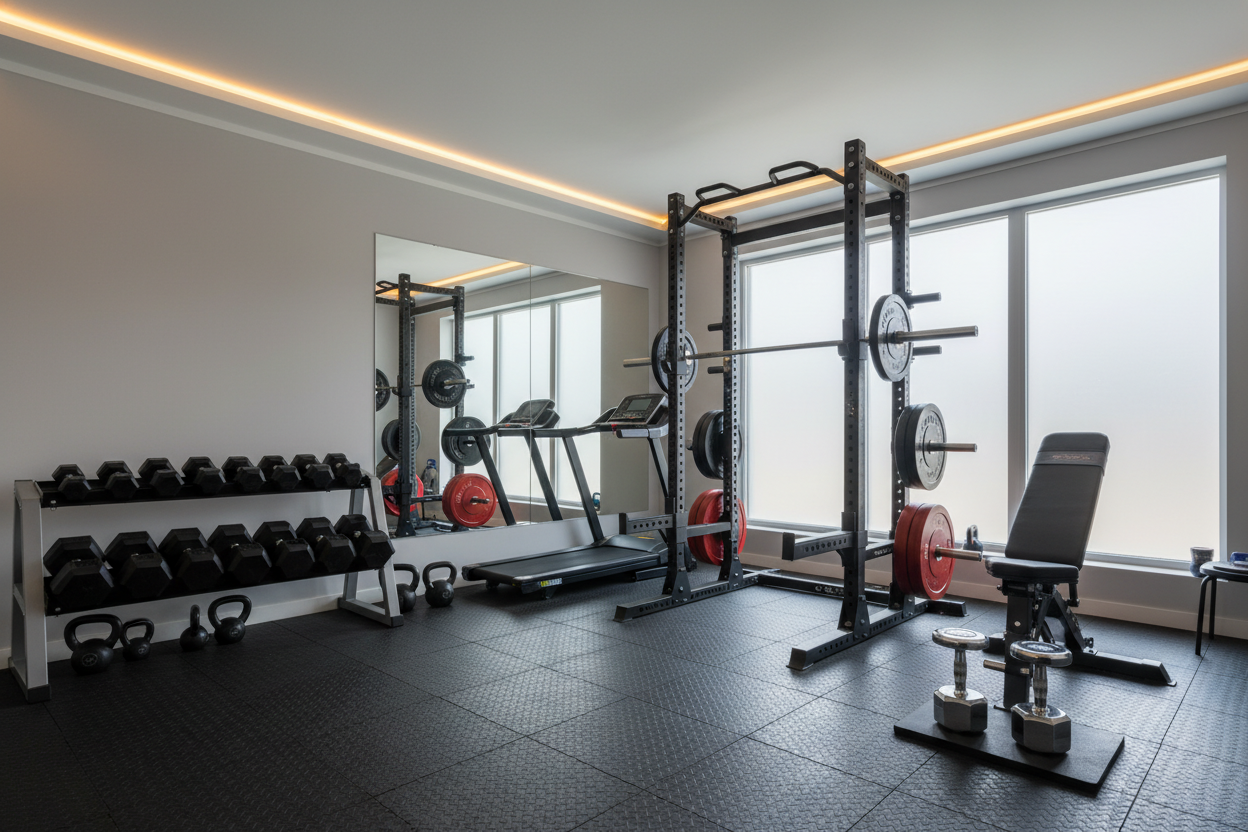
I spent a decade chasing the dream of finding the best gym for weightlifting. I paid $150 a month for 'exclusive' clubs that had exactly one squat rack and a line of people waiting to use it for bicep curls. I’ve trained in basement dungeons where the air was 90% rust and in high-end commercial facilities where they’d kick you out for using chalk. It took me too long to realize that the perfect spot doesn't exist out in the wild.
- Commercial gyms prioritize treadmill density over barbell availability because cardio machines sell memberships.
- The cost of a high-end garage setup usually pays for itself in under three years of avoided monthly fees.
- Real weightlifting requires specific specs: 11-gauge steel, 2-inch hole spacing, and plates that aren't made of plastic.
- Training at home means your music, your chalk usage, and zero waiting for the rack.
Stop Paying to Wait for the Only Good Power Rack
You know the 5:30 PM struggle. You’ve got heavy triples on the program, your pre-workout is peaking, and the only decent power rack in the building is being used for high-volume upright rows by a teenager. You stand there, checking your watch, losing your pump and your patience. It’s a losing game. Most commercial facilities aren't built for us; they're built for the 80% of people who never touch a barbell.
I remember one specific Tuesday where I spent 45 minutes waiting for a platform just to do some basic cleans. That was the day I went home and started measuring my garage. When you're serious about your numbers, you can't leave your progress up to the whims of a commercial gym's peak-hour crowd. You need a space that respects the iron.
What Actually Makes a Facility the Best Gym for Weight Lifting?
Most people think the gym with best equipment is the one with the most machines. They're wrong. A real lifter looks for unbent bars with aggressive knurling, calibrated plates that don't rattle like a bag of loose change, and a floor that can handle a 400-lb drop without cracking the foundation. The reality is that the average big-box gym doesn't want you dropping weights or making noise.
Transitioning to a home gym isn't just about saving time on the commute. It’s about utility. In a commercial club, you're paying for the sauna, the juice bar, and the 50 treadmills you never use. In your own space, every dollar goes into the steel. You get to choose the bar that fits your grip and the rack that won't wobble when you re-rack a heavy squat.
How to Build a Space That Rivals the Best Weightlifting Gyms
Replicating the best weightlifting gyms doesn't require 5,000 square feet. It requires a solid foundation. If you're short on space but still want to move heavy weight safely, a heavy-duty Smith machine home gym station can be the centerpiece of a small-footprint sanctuary. It handles the big compounds and provides the safety of built-in spotters when you're training solo at 11 PM. This is how you actually build the best gym for strength training.
I’ve seen guys try to go cheap on their first rack. They buy something from a big-box sporting goods store and then wonder why it shifts three inches every time they rack 225. Don't do that. Invest in 11-gauge steel. Look for a 3x3 frame. You want gear that is overbuilt for your current PRs so you have room to grow into it over the next decade.
Don't Fall for the Gimmicky All-in-One Trap
I've seen it a thousand times: the 'Total Body' machine made of thin-walled steel that shakes when you breathe on it. Avoid those like the plague. The Best Weight Machine Isn't That Massive Corner Multi-Gym you see in late-night infomercials. Those machines use cheap plastic pulleys and cables that feel like they’re going to snap the second you try to row more than 100 pounds. You need mechanical tension, not a fancy coat of paint.
Accessory Gear That Actually Survives Heavy Use
Once the rack and bar are set, you need the right support. I used to use a wobbly $50 bench I found on Craigslist. Huge mistake—it felt like it was going to collapse during every heavy press, and the vinyl was slicker than a bowling alley. For accessories, I now look for commercial-grade builds like the strength training glute bench HT01-B. It’s built like a tank, stays put when you’re driving your heels into the floor, and takes up minimal space compared to the bloated machines at the local club.
Stop Hunting for the Perfect Facility (Just Build It)
The hunt for the best gym for weight lifting ends when you stop looking at other people's buildings and start looking at your own. There is no better feeling than walking ten feet from your kitchen into a room where the bar is already loaded, the music is exactly what you want, and nobody is going to ask you how many sets you have left. It’s not just about the weights; it’s about the focus. Build the sanctuary you deserve.
FAQ
Is a garage gym more expensive than a membership?
Upfront? Yes. Long-term? No. If you spend $2,000 on a solid setup and cancel a $60/month membership, the gear pays for itself in under three years. Plus, high-quality gym equipment holds its resale value remarkably well—unlike that treadmill in the attic.
What is the minimum space I need for a weightlifting gym?
You can fit a full power rack or a Smith machine station in a 6x8 foot area. Just make sure you have enough ceiling height for overhead presses and enough width to load a standard 7-foot Olympic barbell without hitting the walls.
How do I protect my garage floor from heavy drops?
Don't just drop weights on bare concrete. At a minimum, get 3/4-inch horse stall mats. If you're doing heavy deadlifts or Olympic lifts, consider building a simple plywood and rubber lifting platform to distribute the force and save your foundation.
Share:
Bulgarian Split Squat Muscles Worked: Every Muscle This Exercise Targets
How I Squeezed a Real Compact In Home Gym Into 50 Square Feet