
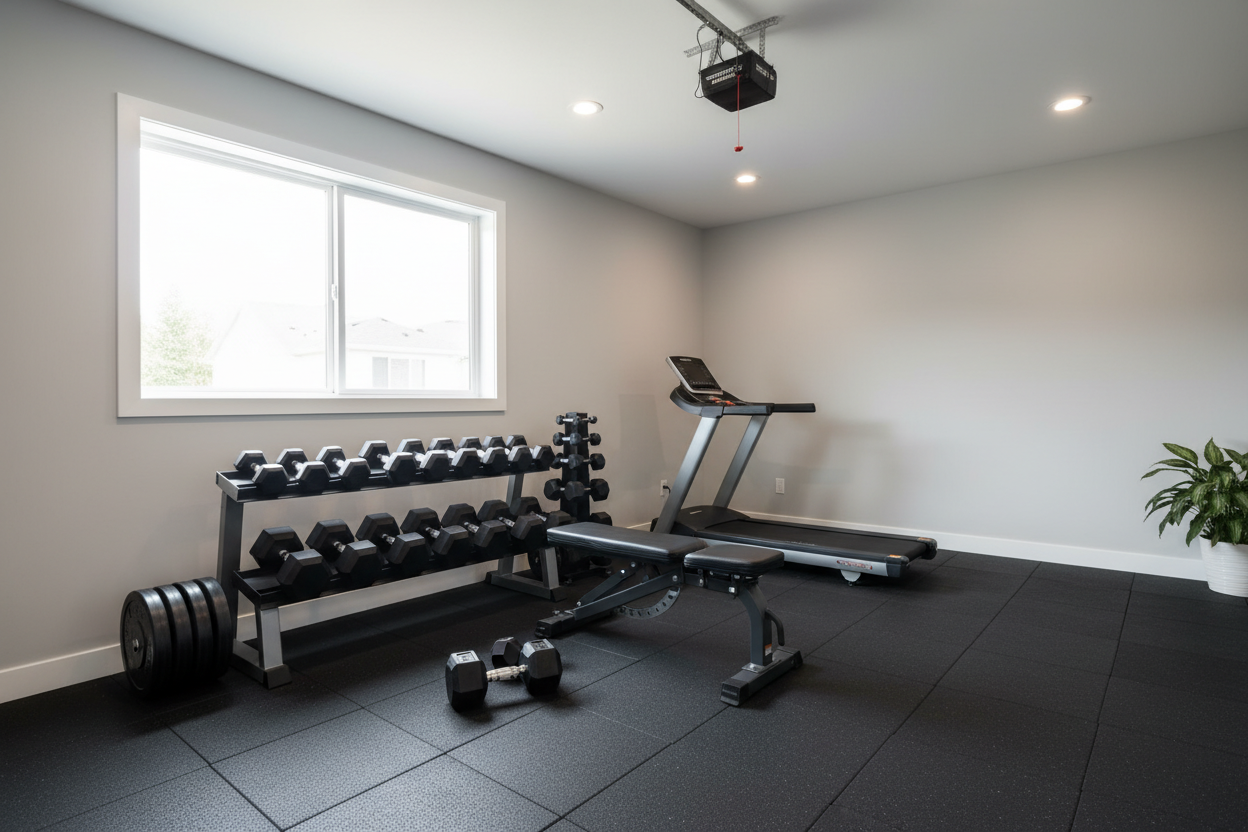
I remember the night I almost pulled the trigger on a vertical climber from a 2 AM infomercial because my local commercial gym hiked their rates for the third time in a year. I spent hours scrolling through forums, only to realize most people are just trying to sell you plastic junk that ends up as a clothes rack. Finding the best home gym fitness equipment shouldn't feel like a part-time job or a drain on your life savings.
Quick Takeaways
- Focus on the 'Iron Triangle': A rack, a barbell, and plates.
- Prioritize 11-gauge steel for your rack to ensure it doesn't wobble during squats.
- Avoid 'all-in-one' machines that use proprietary cables or bands; they are hard to repair.
- A 12-inch wide bench pad is the industry standard for shoulder health.
Why You Keep Wasting Money on the Wrong Gear
Social media ads are excellent at convincing you that you need a screen-based rower or a vibrating platform to get in shape. It is a trap. Most beginners fall for the 'best home gym equipment to have' lists that prioritize aesthetics over utility. You buy a lightweight, gimmicky machine, use it for three weeks, and then realize it doesn't provide enough resistance for a heavy leg day.
Stop overcomplicating your floor plan with machines that only do one thing. To build real muscle, you need the lifting weight equipment you actually need: tools that allow for progressive overload without the frame flexing every time you add a ten-pound plate.
The Iron Triangle: Where to Spend Your First $1,000
If you want the best home strength training equipment, you start with the foundation. A power rack, a high-quality barbell, and iron or bumper plates will outlast you. This trio allows you to perform squats, presses, rows, and deadlifts—the movements that actually move the needle on your physique.
Spend the bulk of your budget on the barbell. It is the only piece of gear you touch during every single set. A bar with a decent knurl and a 190,000 PSI tensile strength rating is the sweet spot for most garage gym owners.
Picking a Rack That Won't Collapse
Steel gauge matters more than the paint job. Look for 11-gauge steel with 3x3 or 2x3 uprights. If you see a rack made of 14-gauge steel with 2x2 uprights, keep walking. It might be fine for a 135-lb bench press, but the second you try to do pull-ups or rack a heavy squat, you will feel the sway. Skipping cheap, wobbly frames is the most critical rule of buying the best home weight training equipment.
When browsing for the best home equipment, check for Westside hole spacing in the bench zone. This allows you to set your safety pins at the exact height you need so you don't get pinned under the bar during a solo session.
The Adjustable Bench Reality Check
A cheap bench is a recipe for a shoulder injury. I have used benches with a four-inch gap between the seat and the backrest, and it feels like laying on a cattle guard. You want a pad that is at least 2.5 inches thick with high-density foam that doesn't bottom out under a 200-lb lifter.
Stability is king. Look for a heavy-duty adjustable weight bench that has a tripod-style front leg. This design gives your feet more room to plant firmly on the floor, which is essential for generating leg drive during your bench press.
What About Cables, Pulleys, and Fixed Machines?
Once you have the big three, you might want more variety. That is when you look into the best home gym weight equipment that offers cable versatility. Functional trainers are great, but they take up a massive footprint. If you are tight on space, a Smith machine home gym station is a solid hybrid. These units often combine a power rack with a fixed-path barbell and a plate-loaded pulley system, giving you the safety of a machine with the utility of a rack.
Cables allow you to hit high-volume isolation work—like face pulls and tricep pushdowns—that are awkward to do with just a barbell. Just make sure the pulley ratio is 1:1 or 2:1 so you know exactly how much weight you are actually moving.
Stop Overthinking It and Start Lifting
You don't need a 2,000-square-foot commercial space to get results. I have seen guys get stronger in a 6x8 corner of a basement than people in luxury health clubs. Buy the best home gym workout equipment that fits your current program. If you are doing a basic 5x5, you don't need a cable crossover yet. You need a bar and a place to squat.
Pull the trigger on a few quality pieces rather than a room full of cheap ones. If you want a deeper look at systems that grow with you, check out the best home resistance training equipment for serious lifting before you spend another dime on a gym membership.
My Honest Mistake
I once bought a 'budget' power tower because it was on sale for $99. Every time I tried to do a dip, the whole tower tipped forward. I ended up having to weight the legs down with sandbags, which looked terrible and tripped me up. I eventually sold it for $20 and bought a real rack with dip attachments. Buy once, cry once.
Frequently Asked Questions
How much space do I really need?
An 8x8 foot area is the bare minimum for a rack and a standard Olympic barbell. If you have a 10x10 space, you have plenty of room for a bench and a plate tree.
Do I need bumper plates or iron plates?
If you plan on doing Olympic lifts or deadlifting on a concrete floor, get bumpers. If you are just doing traditional powerlifting and have rubber flooring, iron plates are cheaper and take up less room on the bar.
What floor should I use?
Don't buy those 'puzzle piece' foam mats. They tear and compress. Go to a farm supply store and buy 3/4-inch thick rubber horse stall mats. They are indestructible and dampen noise better than anything else.
Share:
I Refuse to Buy Single-Use Machines to Exercise Anymore
Stop Calling It 'The Leg Thing': Real Fitness Machines Names