
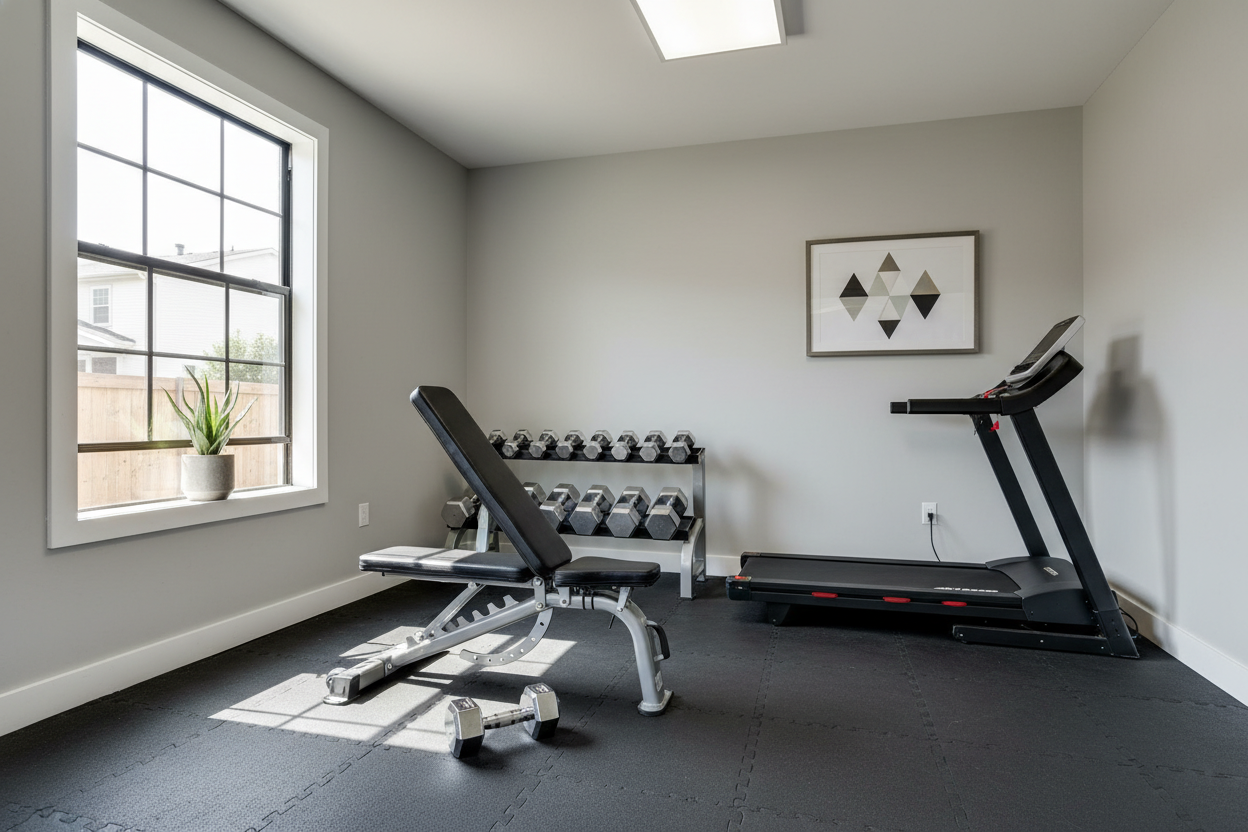
I remember the first time I tried to max out my incline press in my garage. I had the 90s ready, my music was cranking, and I kicked those weights up with everything I had. Halfway through the second rep, I felt a sharp pinch in my lower back because my tailbone had slid right into the two-inch canyon between the seat and the backrest. It’s a classic mistake: buying a bench for dumbbells based on price or a generic 'heavy duty' label without looking at the geometry that actually matters for free weight training.
- Pad Gap: Anything over one inch is a liability for your spine during seated presses.
- Seat Tilt: If the seat doesn't angle up, you'll slide off during heavy inclines.
- Base Design: A tripod (three-leg) base is superior for foot placement compared to wide H-frames.
- Tapered Pads: Narrower tops allow your shoulder blades to move naturally, preventing impingement.
Why Barbell Benches and Dumbbell Benches Aren't the Same Thing
Most people start their home gym search by looking for a generic Weight Bench, assuming a flat surface is a flat surface. That’s a fast track to shoulder pain. When you’re pinned under a barbell, the rack dictates your path. But with a dumbbell workout bench, you are the stabilizer. You need a pad that is wide enough to support your spine but narrow enough at the shoulders to let your scapula retract and rotate. If the pad is too wide, it blocks your elbows from reaching a full range of motion at the bottom of a chest fly.
Furthermore, barbell-centric benches are often built with massive, wide front feet to prevent the rack from tipping. When you are using a bench for dumbbell workout routines, those wide feet are just things for you to trip over. You need to be able to tuck your feet back to create a solid arch and engage your legs. A dedicated free-weight bench prioritizes a smaller footprint and a 'tripod' front post so your feet can stay planted exactly where they need to be for maximum power output.
The Infamous Pad Gap Problem
Let’s talk about the 'Gap.' You know the one. Most adjustable benches use a simple bolt-and-pivot hinge that leaves a massive void when you move the backrest into an incline or upright position. When you are doing a seated shoulder press, your lumbar spine is screaming for support. If that support is missing because there's a two-inch hole in the upholstery, your body will compensate by rounding the lower back. It’s uncomfortable at 30 pounds; it’s dangerous at 80.
I’ve tested benches where the gap is so pronounced you can actually feel the steel frame through the foam. A high-quality bench for dumbbells solves this with a sliding adjustment mechanism or a 'zero-gap' design. This ensures that regardless of the angle, the transition from the seat to the backrest is seamless. You want a consistent surface that supports your entire posterior chain, especially when you’re grinding out that final rep of a heavy incline press and every millimeter of stability counts.
Seat Angles Matter When You Train With Bench and Dumbbells
If you've ever tried to press on a cheap bench, you’ve probably experienced the 'slide.' You set the backrest to a 45-degree angle, you kick the weights up, and by rep three, your butt is six inches away from the backrest. This happens because the seat pad is fixed horizontally. When you train with a bench and dumbbells, a multi-angle seat is non-negotiable. You need that seat to tilt upward by 15 to 30 degrees to 'cup' your hips and keep you locked into the backrest.
Contrast this with a massive Weight Bench With Barbell Rack And Biceps And Leg Extension Curl Station Z3. While those units are great for a total-body circuit in a small space, the fixed nature of many combo units often sacrifices the aggressive seat angles you need for heavy dumbbell work. When you're handling heavy iron, you don't want to be fighting gravity just to stay on the bench; you want all your energy going into the press. A dedicated adjustable seat ensures your shoulders stay in the 'pocket' of the pad, reducing the risk of a messy rotator cuff tweak.
The Tripod Base Trick for Heavy Kicks
Leg drive isn't just for the powerlifting platform. Even in a bench for dumbbell workout session, your legs are your foundation. If you can't get your feet under your hips because there's a 24-inch wide steel bar in the way, your stability is trashed. This is why the 'tripod' base—a single post at the front and a wide bar at the back—is the gold standard for free weight enthusiasts. It allows you to 'tuck' your feet, creating the tension necessary to stay tight under heavy loads.
I’ve seen plenty of 'budget' benches on Amazon that look sturdy because they have huge, sprawling frames. But in practice, they are a nightmare. I actually wrote about this when asking Does the Form Fit Workout Bench Survive Heavy Dumbbells? in a previous breakdown. The conclusion is always the same: if the frame gets in the way of your natural stance, it’s a bad bench. A tripod base gives you the freedom to move your feet during the 'kick up'—that crucial moment where you transition the dumbbells from your knees to your shoulders. If you trip during that move, you aren't just missing a set; you're heading to the ER.
My Go-To Setup for a Dedicated Free Weight Space
After years of swapping gear, my criteria for a permanent pressing station are simple: it has to be heavy enough not to wobble, but smart enough to stay out of my way. You want a frame made of at least 11-gauge steel and upholstery that feels like a basketball—grippy, not slick. If the vinyl is too smooth, you’ll slide around like you’re on a slip-and-slide once you start sweating. Look for a bench that offers a 'ladder' style adjustment for the backrest; it’s faster and more secure than pull-pins when you’re changing angles between sets.
If you're tired of the 'gap' and the wobble, I highly recommend looking at the Adjustable Weight Bench Owb01. It hits all the marks: it has the tripod base for your feet, the seat tilt to prevent sliding, and a pad gap that won't eat your spine. It’s the kind of gear that doesn't just hold weight; it actually makes your lifting feel more 'locked in.' Stop settling for a bench that was designed for a 1980s chrome-and-plastic gym. Get something that can handle real iron.
Personal Experience: The Lawn Chair Incident
Early in my lifting career, I bought a 'pro' bench from a big-box sporting goods store. It was rated for 500 pounds, and I weighed 200, so I figured my 80-pound dumbbells were safe. I was wrong. During a heavy set of flat presses, the locking pin sheared off because the tolerances were so loose. The bench collapsed into a decline while I had 160 pounds over my face. I walked away with a bruised ego and a lesson learned: weight ratings are often marketing fluff. You need to look at the weld quality and the thickness of the steel, not just the number on the box.
FAQ
How wide should a dumbbell bench pad be?
Ideally, between 10 and 12 inches. Anything wider will restrict your shoulder blades during chest flyes; anything narrower will feel unstable when you're trying to balance heavy weights.
Is a flat bench better than an adjustable one?
A flat bench is always more stable because it has no moving parts, but it limits your training. If you can only afford one, get a high-quality adjustable bench. Just ensure it has a minimal pad gap.
Why does my bench wobble when I sit on it?
Check the bolts first—they often loosen over time. If the bolts are tight and it still wobbles, it’s likely a design flaw in the base or poor manufacturing tolerances in the hinge. This is why a tripod base with a wide rear stabilizer is preferred.
Share:
Exactly How Long a 300 lb Dumbbell Set Will Last a Beginner
How to Pick Leg Lift Machines That Don't Wreck Your Knees