
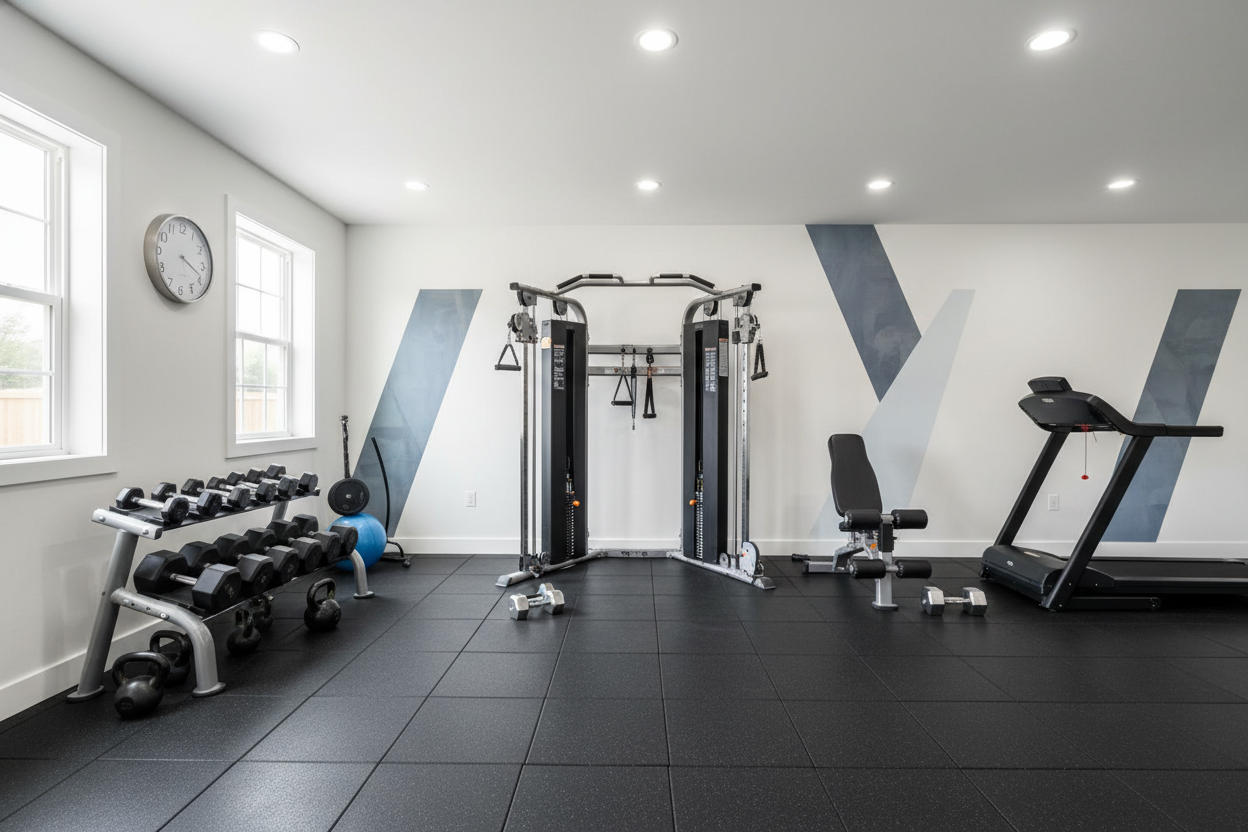
I remember my first day in a commercial gym. I walked straight to the dumbbell rack, grabbed a pair of 25s, and tried to copy a guy doing Arnold presses. I nearly dropped one on my forehead because my stabilizer muscles were non-existent. Starting with a beginner gym machine workout isn't 'taking the easy way out.' It is the smartest way to build a foundation before you try to balance heavy iron in open space.
- Machines handle the stability so you can focus on the muscle contraction.
- Aligning your joints with the machine's pivot point is the only way to avoid 'junk' volume.
- Progression is easier to track—just move the pin down one plate.
- You can build a high-level physique without ever touching a barbell if you train with intensity.
Why I Tell My Friends to Ignore the Dumbbell Rack (For Now)
Most veterans will shove a barbell into a novice's hands and tell them to squat. I think that's a mistake. If you don't know how to retract your scapula or hinge at the hips, a barbell is just a heavy stick waiting to wreck your lower back. Beginner weight training machines provide a fixed path of motion. This safety net allows you to establish a mind-muscle connection without worrying about dropping a weight on your chest.
Using machine exercises for beginners lets you push closer to failure safely. When you're learning, your brain is busy trying to figure out how to stand; it shouldn't also be trying to balance a 45-lb bar. Machines isolate the target muscle, teaching your body what a real quad or lat pump feels like before you move to complex free-weight movements.
The Unspoken Rules of Using the Selectorized Circuit
Don't be the person who just sits down and starts pumping. Every machine has a pivot point—usually marked by a bright bolt or a colored cap. Your joint (elbow or knee) needs to align with that point. If it doesn't, the machine is fighting your natural mechanics, which is how you end up with 'mysterious' shoulder pain. Adjust the seat height first.
Read the placards. They aren't just there for decoration; they show the start and end positions. Also, consider how to build a weight loss machine workout that doesnt suck by keeping your rest periods between 45 and 60 seconds. This keeps the intensity high and the heart rate elevated, turning a standard circuit into a metabolic powerhouse.
The Step-by-Step Beginner Gym Machine Workout Plan
This routine is a full-body circuit designed for three days a week. You want at least one day of rest between sessions. We are hitting the biggest muscle groups first to maximize your energy. This beginner machine workout plan is about quality over quantity—don't rush the eccentric (the lowering phase) of the lift.
Lower Body: Leg Press and Hamstring Curls
Start with the leg press. Place your feet shoulder-width apart and keep your lower back pressed firmly into the pad. If your butt lifts off the seat at the bottom, you're going too deep. Follow this with seated hamstring curls. I prefer the seated version over the lying version because it's harder to 'cheat' by lifting your hips. It’s an essential part of any beginners machine workout because it protects the knees by strengthening the posterior chain.
Upper Body Push: The Chest Press and Shoulder Press
Set the chest press handles so they align with the middle of your chest. If you have access to a Weight Bench Chest Press Machine Independent Arms Z1 Pro, use it. Machines with independent arms prevent your dominant side from doing all the work, which is a common issue for novices. For the shoulder press, avoid 'flaring' your elbows out too wide; keep them slightly tucked to save your rotator cuffs. Aim for 3 sets of 10-12 reps per movement.
Upper Body Pull: Seated Cable Rows and Lat Pulldowns
Back training is where most people fail because they pull with their biceps. Imagine your hands are just hooks. Pull with your elbows. On the lat pulldown, lean back about 10 degrees and pull the bar to your upper chest, not your stomach. For the seated row, keep your chest high and don't let the weight stack 'clunk' between reps. Keeping tension on the muscle is the secret to a machine workout for beginners.
How to Actually Progress Without Stalling Out
Progression on machines is straightforward: once you can hit 12 clean reps on all three sets, move the pin down to the next weight increment. If the jump is too big—say, going from 50 lbs to 65 lbs—try to hit 15 reps at 50 lbs before moving up. If you're training at home and want a guided path but more versatility, a Smith Machine Home Gym Station is the perfect bridge between a selectorized machine and free weights.
When Should You Graduate to Free Weights? (Or Do You Need To?)
There is a massive myth that you 'must' move to barbells to be fit. It’s nonsense. I know guys with 20-inch arms who haven't touched a barbell in years. You can scale your gym machine workout for beginners indefinitely by adding volume or slowing down the tempo. However, if you want to learn the 'big' lifts, start incorporating one dumbbell or barbell movement per session after 8 weeks of consistent machine work.
I actually know a veteran lifter who traded free weights for a full body workout machine at home because he could push to absolute failure without needing a spotter. Machines aren't just for newbies; they're for anyone who values joint longevity and targeted muscle growth.
My Honest Mistake
For years, I avoided the leg extension machine because a 'guru' told me it was bad for my ACL. My quads suffered, and I developed a strength imbalance that actually led to a knee strain. I started using the machine with light weight and high reps, and the pain vanished. Don't let gym elitism talk you out of using effective tools.
FAQ
How long should this workout take?
If you're resting 60 seconds between sets, you should be in and out in 45 to 55 minutes. That includes a 5-minute warm-up.
Can I do this workout every day?
No. Your muscles grow while you rest. Stick to 3 or 4 days a week with at least 24 hours between sessions.
What if my gym doesn't have a specific machine?
Most machines have an equivalent. No seated row? Use the T-bar row machine or a chest-supported row. The goal is the movement pattern, not the specific brand of equipment.
Share:
Can a Single All In One Gym Machine Really Replace a Commercial Club?
Stop Buying Flimsy Racks: The Best Home Gym Equipment Under $500