
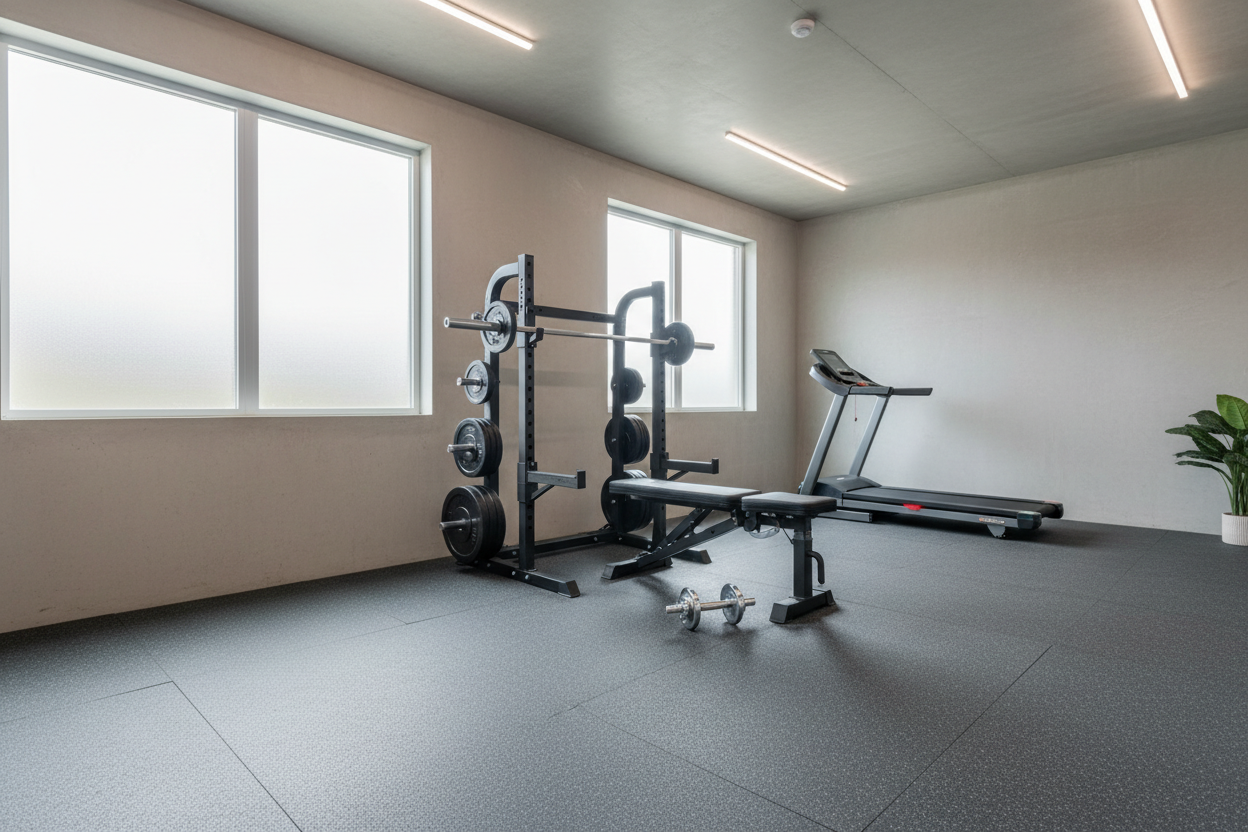
I remember my first garage setup. I was young, broke, and convinced I could get jacked using a plastic-coated weight set I found on the curb and a bench that felt about as stable as a folding card table. After my first heavy set of bench presses, the frame groaned, the welds creaked, and I realized I was one rep away from a very expensive hospital visit. Building a space that is actually essential for home gym success isn't about filling a room with shiny chrome; it is about buying the few pieces of gear that won't fail when you finally start moving real weight.
Quick Takeaways
- Prioritize a 3x3 or 2x3 11-gauge steel power rack for safety and versatility.
- Invest in a multi-purpose barbell with a high tensile strength (190k PSI+) to avoid permanent bending.
- Standard iron plates are the most cost-effective way to build a heavy home gym list of equipment.
- A heavy-duty adjustable bench with a 12-inch pad width is the gold standard for stability.
Stop Buying Fluff: The 'Buy Once, Cry Once' Rule
Most people treat their first gym build like a trip to a buffet—they want a little bit of everything. They buy the adjustable kettlebells, the suspension trainers, and the latest vibrating foam roller before they even have a place to squat. This is a mistake. When you are curating a Home Gym, you have to adopt the 'buy once, cry once' mentality. It is much better to spend $800 on a rack that will last thirty years than to spend $300 on a flimsy upright that you will outgrow in six months.
The fitness industry is designed to sell you gadgets that solve problems you don't have. You don't need a machine that tracks your 'muscle symmetry' via Bluetooth. You need gravity and a way to hold onto it. By stripping back your expectations to the core necessities for home gym training, you free up your budget for high-quality steel. High-quality steel doesn't lose its value. If you buy a reputable power rack today, you could likely sell it for 80% of its retail price five years from now. You can't say the same for a plastic 'all-in-one' home gym system.
Minimalism in the gym isn't just about saving money; it is about focus. When you only have the essentials, you stop scrolling through Instagram for 'new' exercises and start focusing on the big compound movements that actually build muscle. A barbell and a rack are the ultimate truth-tellers. They don't care about your 'fitness journey'—they only care if you can move the weight.
The Power Rack: Your Non-Negotiable Foundation
If the barbell is the king of exercises, the power rack is the throne. This is the single most important piece of at home gym essentials. A good rack does two things: it holds your weight between sets, and it saves your life when you hit failure. Look for something made of 11-gauge steel. If the product description doesn't list the steel gauge, it is probably thin, 14-gauge junk that will wobble every time you try to rack a squat.
Safety pins or flip-down safeties are the real reason you buy a rack. If you're training alone in a garage at 6:00 AM, you need to know that if you get stuck at the bottom of a bench press, you aren't going to end up as a headline. A full power rack also gives you a dedicated pull-up station, which is one of the most important home gym necessities for back development. Cheap half-racks might save you $100 and a few square feet, but they lack the structural integrity for heavy attachments and often require being bolted to the floor just to stay upright during a set of dips.
For those of you working with a cramped one-car garage or a spare bedroom, space is the enemy. I often point people toward The Bare Minimum Equipment for a Home Gym (That Doesn't Suck) to see how to maximize a small footprint. However, even in a tight space, never compromise on the rack's weight capacity. You want a unit rated for at least 800 to 1,000 lbs. You might not be squatting that today, but you want equipment that grows with your strength, not something that feels sketchy the moment you hit a two-plate squat.
A Good Barbell Will Outlive You (If You Pick Right)
The barbell is the primary interface between you and the weight. Do not buy the '300-lb weight set' from a big-box sporting goods store. Those bars are usually made of cheap, soft steel with bolt-on sleeves that will eventually start to jiggle or, worse, slide off entirely. A real multi-purpose barbell should have a 28.5mm to 29mm diameter and a tensile strength of at least 190,000 PSI. This ensures the bar has enough 'whip' to feel good but enough stiffness to handle heavy deadlifts without permanently bending.
Knurling is another factor beginners overlook. You want a knurl that feels like a firm handshake—not a cheese grater that rips your calluses off, but not so smooth that it slides out of your hands the moment you sweat. If you're doing a mix of powerlifting and general strength training, look for a bar with dual knurl marks. This helps you consistently place your hands for everything from overhead presses to wide-grip rows.
Maintenance matters too. If your gym is in a humid garage, an oxide or chrome finish will rust within a year. Look for Zinc or, if you have the budget, Stainless Steel. A stainless steel bar feels the best in the hand because there is no plating between you and the metal. It’s an investment, but it’s one of those basic home gym equipment pieces that you will literally never have to replace if you oil it once a month.
Weight Plates: Why Old School Iron Usually Beats Bumpers
There is a massive trend right now toward bumper plates—those thick, colorful rubber plates used in CrossFit. They look cool, and they are great if you are doing Olympic cleans and dropping the bar from overhead. But for 90% of people building a home gym list of equipment, standard cast iron plates are superior. Why? Because they are thinner and cheaper. You can fit more iron on the bar, and you can usually find them used for a fraction of the price of brand-new bumpers.
Iron plates also have that classic 'clank' that just feels right in a garage. If you are worried about the noise or your floor, get some 3/4-inch stall mats. You don't need to spend double the money on rubberized plates just to protect the concrete. The only exception is if you plan on doing a lot of deadlifts and don't want to wake the neighbors. In that case, a pair of 45-lb bumpers paired with iron change plates is a solid compromise.
When buying plates, don't forget the small stuff. A set of 1.25-lb or 2.5-lb 'fractional' plates is essential fitness equipment for home progression. Most people can't add 10 lbs to their overhead press every week, but they can add 2.5 lbs. These small jumps are how you avoid plateaus and keep the numbers moving up over months and years.
The Adjustable Bench: Wobble is the Enemy of Gains
A cheap bench is a liability. If you are lying down with 200 lbs over your face, the last thing you want to feel is the frame shifting side-to-side. Most budget benches have a narrow tripod base or thin steel that flexes under load. When looking for must-have gym equipment at home, prioritize a bench with a weight capacity of at least 1,000 lbs (including your body weight). This usually indicates the use of heavy-duty 11-gauge steel and reinforced pivot points.
Pad width is the other 'pro' secret. A lot of cheap benches have 10-inch pads. This is too narrow for most adults and doesn't provide enough surface area to drive your shoulder blades into during a press. Look for a 12-inch wide pad. It provides significantly more stability and helps prevent shoulder impingement. Also, check the 'gap' between the seat and the back pad. A massive 3-inch gap is uncomfortable and can throw off your positioning.
Adjustability is key for versatility. An incline bench opens up dozens of variations for chest, shoulders, and arms. Just make sure the adjustment mechanism—whether it's a ladder style or a pin—is rock solid. I’ve used benches where the pin didn't fully engage, and having the backrest drop mid-set is an experience I wouldn't wish on my worst enemy. Spend the extra $100 for a bench that feels like a tank.
When Should You Actually Buy Cables and Machines?
Once you have the 'Big Four' (Rack, Bar, Plates, Bench), you have everything you need to get world-class results. However, there comes a point where you might want to add some isolation work or variety. This is phase two of your home gym needs. You shouldn't buy machines until you've mastered the barbell, but once you're ready, look for pieces that offer the most bang for your buck.
For those who train alone and want to push their limits without a spotter, a Smith Machine Home Gym Station is a strategic upgrade. It allows for safe, fixed-path movements like heavy shrugs, calf raises, or incline presses where you can lock the bar out at any point. It’s a great way to add volume without the systemic fatigue of constantly stabilizing a free-weight bar.
The biggest hole in most barbell-only gyms is vertical pulling. You can do pull-ups, but eventually, you need more volume or different angles. I highly recommend adding a 3 In 1 Lat Pulldown Low Row Station Ls01. This single piece of equipment covers lat pulldowns, seated rows, and even tricep extensions. It’s a compact way to add functional variety without turning your garage into a cluttered mess. Focus on these 'multi-use' machines rather than single-purpose ones like a leg extension machine.
Personal Experience: My $500 Mistake
Years ago, I thought I was being smart by buying a 'complete' home gym set from a guy on Craigslist for $500. It included a rack, a bar, and 300 lbs of weights. The problem? The rack used 2-inch uprights that shook when I did pull-ups, and the barbell was so low-quality that it developed a permanent 'U' shape after I loaded it with 315 lbs for a set of deadlifts. I ended up having to replace every single piece within a year. I spent $500 to realize that cheap gear is actually more expensive in the long run. Now, I tell everyone: buy the best bar you can afford and a rack that scares you with how heavy it is. You'll never have to buy them again.
Home Gym FAQ
What is the minimum floor space I need?
You can fit a functional setup in an 8x8 ft area, but a 10x10 ft space is more comfortable. This allows for a standard 7-ft barbell and enough room to load plates on the sides without hitting the walls.
Can I build a gym on a second floor?
Yes, but you need to be mindful of the load. A full rack and 500 lbs of weights can easily exceed 800 lbs in a small footprint. Use a plywood platform to distribute the weight across the floor joists and avoid dropping heavy deadlifts.
Do I really need a power rack if I only use dumbbells?
If you are strictly doing dumbbell work, you don't 'need' a rack, but you are severely limiting your ceiling for strength. A rack is the only way to safely perform heavy squats and presses, which are the most important home gym equipment movements for overall growth.
Share:
Stop Staring at Dumbbells: Use Beginner Gym Workout Machines Instead
Why the Body Champ 2-Piece Olympic Weight Bench Beats Fixed Racks