
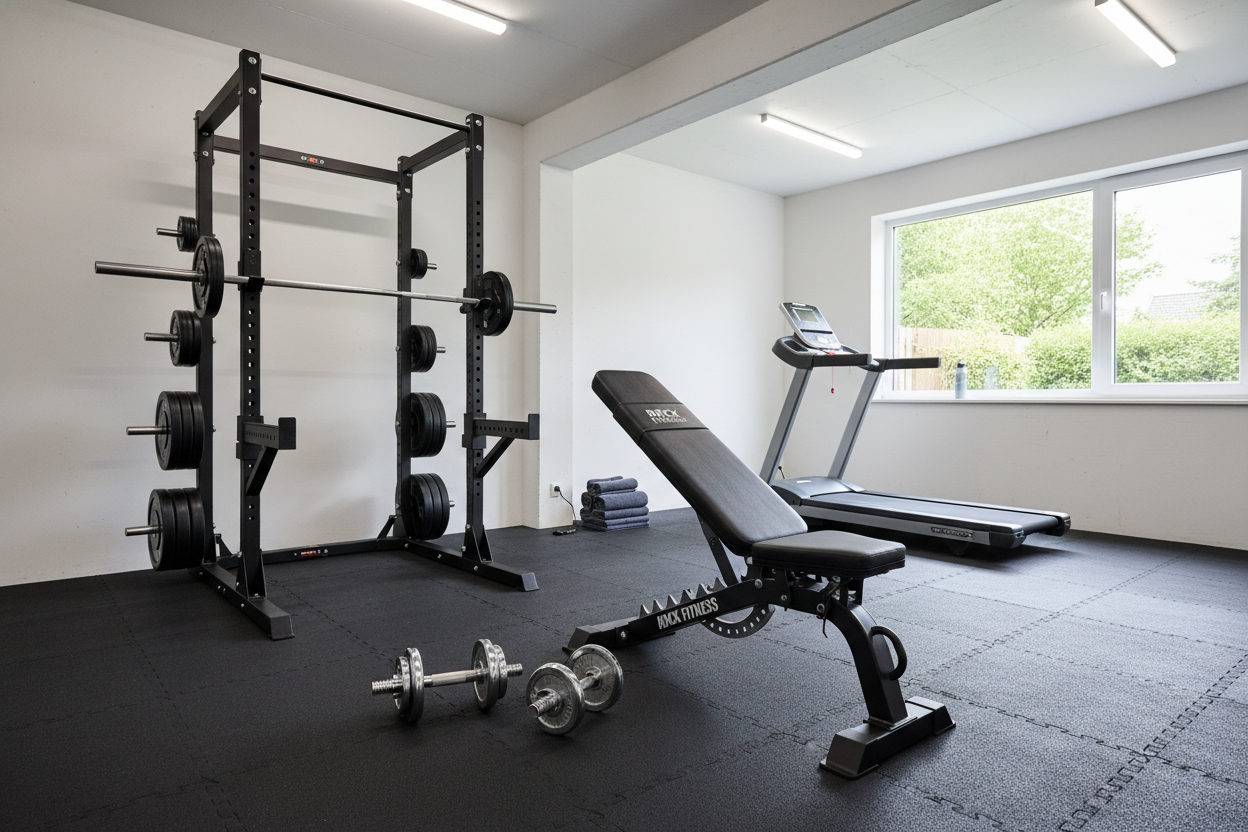
I was scrolling through social media ads when the rock fitness bench kept popping up in my feed every three minutes. It looks sleek in the glossy marketing photos, but I've been burned by 'aesthetic' gear before—the kind of stuff that looks like a million bucks but wobbles the second you pick up a pair of 80s. I decided to buy one, drag it into my garage, and put it through a brutal four-week strength block to see if it's worth your hard-earned cash or just another piece of junk destined for the scrap heap.
- Tripod base design makes it easy to level on uneven garage floors.
- The vinyl upholstery has a surprising amount of 'bite' for a budget-friendly option.
- Assembly is straightforward, though you'll want your own tools for a tight fit.
- The 2-inch pad gap is noticeable but manageable for most lifters.
First Impressions: Unboxing and Assembling the Steel
The box arrived looking like it had been through a title fight, which is pretty standard for heavy gym equipment. Thankfully, the internal packaging held up. Everything was wrapped in plastic and foam, so there were no major scratches on the powder coat right out of the gate. The first thing I noticed was the weight of the main frame—it’s got some heft to it, which is always a good sign when you're about to trust a piece of metal with your life.
Now, let's talk about the assembly. They include those little flat 'wrenches' that are basically toys. Throw them in the trash immediately. To get this rock fitness bench feeling solid, you need a real socket wrench set. It took me about 35 minutes to get it fully bolted together. The hardware is decent—zinc-plated bolts that didn't strip the moment I applied some torque. The instructions were actually written in clear English, which is a rare treat in the world of budget home gym gear. Once it was tightened down, the frame felt rigid, though I did notice the wheels are a bit on the small side. If you have thick rubber stall mats with a lot of texture, rolling this thing around feels a bit like driving a sports car on a gravel road.
The Padding and Upholstery (Does It Feel Like Plywood?)
Bad padding is where cheap benches go to die. If the foam is too soft, you bottom out and feel the plywood base against your shoulder blades. If it's too hard, it feels like you're benching on a sidewalk. The padding on this rock fitness weight bench hits a respectable middle ground. It’s about 2.5 inches thick and has enough density to keep you supported during a heavy press without feeling like it's crushing your spine.
The vinyl texture is a major win here. I compared it to the Fitness Gear Pro utility bench, and the Rock Fitness model actually has a bit more 'bite' to it. You won't slide around like you're on a slip-and-slide when your back gets sweaty during a high-rep set. However, the stitching isn't exactly artisan quality. I noticed a few loose threads near the corners right out of the box. It’s not falling apart yet, but it’s something to keep an eye on if you're training in a high-heat environment where sweat might degrade the seams faster. For the price, the upholstery feels more premium than it has any right to, but don't expect it to last ten years of daily abuse without a few battle scars.
Stability Under Load: The Heavy Press Test
This is where we separate the toys from the tools. A reliable weight bench shouldn't make you wonder if you're about to tip over mid-set. I took this bench through a heavy chest day, peaking with 100-lb dumbbell presses and some heavy-duty Bulgarian split squats. For the most part, it stayed planted. The tripod foot design is the secret sauce here; because it only has three points of contact with the floor, it doesn't rock on uneven concrete like a four-legged bench would.
However, no bench is perfect. When I started doing heavy rows with one knee on the pad, I noticed a slight lateral sway. It’s not enough to be dangerous for most people, but if you’re an elite lifter pushing 400+ lbs on a barbell, you’re going to notice that 14-gauge steel has its limits. It doesn't have that 'bolted to the earth' feel of a 3x3-inch 11-gauge competition bench. But for the guy or girl training in their garage three times a week, it’s plenty stable. I never felt like the welds were going to fail, and the ladder catch for the incline stayed locked in even when I was aggressively re-racking the weight. It's a solid mid-range performer that punches slightly above its weight class, but it’s not a tank.
Adjustability, Incline Angles, and That Annoying Gap
The adjustment system uses a ladder-style catch for the back pad and a pop-pin for the seat. I love ladder catches because they are fast. I hate fumbling with threaded knobs mid-workout when I'm trying to keep my heart rate up. You get all the standard angles: flat, several inclines, and even a slight decline if you're into that sort of thing. Switching from a flat press to a 45-degree incline takes about three seconds, which makes supersets a breeze.
The elephant in the room is the pad gap. When the bench is in the flat position, there’s a roughly 2-inch space between the seat and the back pad. If you’re a shorter lifter, your lower back might fall right into that hole. I'm 5'11, and I had to adjust my starting position a few times to find the sweet spot where I wasn't sinking into the abyss. If you find the gap too distracting for your lifting style, you might prefer a sturdy adjustable weight bench that uses a tighter hinge design or a zero-gap mechanism. It’s not a dealbreaker for me, but it’s the main area where the budget nature of the bench shows its face. The seat itself also has three adjustment angles, which is crucial for staying locked in during steep incline work so you don't slide off the front.
Final Verdict: Does It Belong in Your Garage?
The Rock Fitness bench is a respectable piece of kit for the average home lifter. It’s significantly better than the flimsy, lightweight stuff you’ll find at big-box sporting goods stores that feels like it’s made of soda cans. If you’re just starting out or moving into intermediate weights, this will serve you well for years without breaking the bank. It looks professional, the padding is solid, and the tripod base is a lifesaver for garage gyms.
That said, if you’re a serious powerlifter or someone who demands absolute zero movement, you might want to save your pennies for something heavier. Compared to the Day 1 Fitness adjustable bench, the Rock Fitness model feels a bit more 'premium' in its finish and upholstery, but the structural integrity is comparable. Buy it if you want a bench that looks great and handles 90% of what a garage athlete needs, but keep your expectations realistic—it’s a high-quality consumer bench, not a piece of commercial facility equipment.
Is the Rock Fitness bench good for tall lifters?
The back pad is long enough for most lifters up to about 6'2. If you're any taller than that, you might find your head hanging off the top during flat presses, which isn't ideal for neck stability.
What is the actual weight capacity?
The manufacturer claims an 800-lb capacity. In my testing, I felt perfectly safe up to about 500 lbs (combined user and barbell weight). If you're pushing north of 600 lbs, you'll start to see more flex than most people are comfortable with.
Does it fold for storage?
No, this is a fixed-frame adjustable bench. It has wheels and a handle for moving it around your space, but it won't fold flat to tuck under a bed or hang on a wall. You'll need a dedicated 4-foot footprint for it.
Share:
The 4 Specs That Actually Matter When Hunting for the Best Weight Bench
Does Your Home Gym Actually Need a Real Life Fitness Machine?