
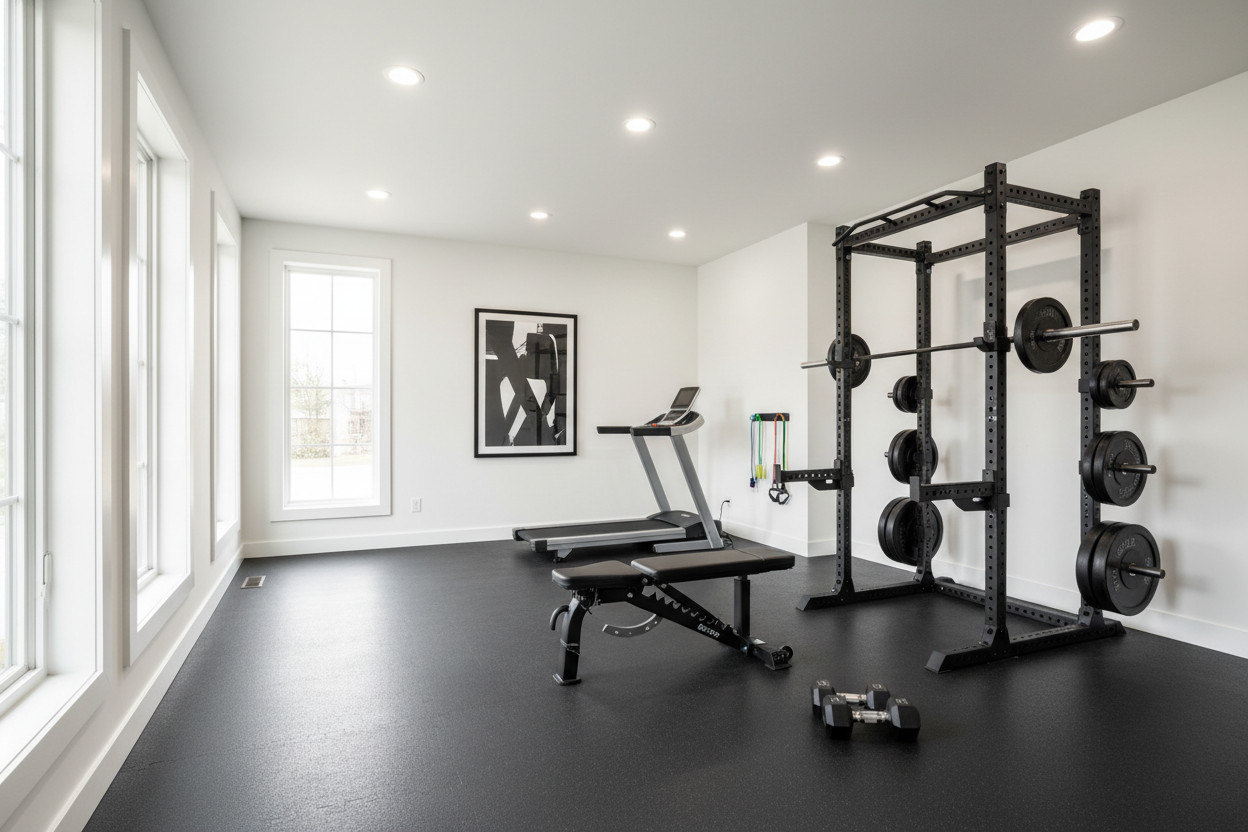
I spent a decade paying $80 a month to wait for a squat rack. When I finally decided to build my own space, I realized the best fitness equipment home gyms actually need isn't what's trending on social media. It's the stuff that doesn't rattle when you drop a heavy set of deadlifts or groan when you re-rack a heavy squat.
- Look for 11-gauge steel on racks and benches for maximum stability.
- Avoid any gear with plastic structural components or thin 'residential' bolts.
- Prioritize a high-quality barbell over fancy, single-use machines.
- Measure your ceiling height twice before buying a power rack to avoid pull-up mishaps.
Why 'Residential Grade' Usually Means 'Trash'
Most best fitness equipment home gym searches lead you to 'residential grade' gear. In the industry, that's often code for 'we used the thinnest steel possible to save on shipping costs.' If a rack uses 14-gauge steel, it’s basically a clothes hanger. You want 11-gauge steel—it's thicker, heavier, and won't wobble when you're trying to stay tight under a heavy load.
Check the welds. If they look like a bird pooped on the joint, walk away. Smooth, consistent 'stack of dimes' welds indicate a machine that was built to last decades. Look at the hardware too. If the bolts are smaller than your pinky finger, that equipment isn't meant for serious strength gains. High-end gear uses M16 or M20 hardware for a reason: it doesn't shear under pressure.
The Only Real Foundation for a Serious Setup
The best workout gym equipment starts with a power rack and a barbell. I see people fill their garages with 'smart' mirrors and adjustable dumbbells that max out at 20 pounds. That’s not a gym; that’s a closet full of expensive paperweights. You need iron that can grow with you as you get stronger.
Beginners often think they need fifteen different machines to hit every muscle angle. They don't. The Best Home Gym Fitness Equipment Is Just 3 Things: a rack, a bar, and plates. This foundation allows for the big compound movements that build real-world strength. Everything else is just an accessory to the main event.
When Does Buying a Multi-Station Actually Make Sense?
There comes a point where your joints might need a break from the constant stabilization of free weights. If you’re chasing pure hypertrophy and want to take your sets to absolute failure without a spotter, a Smith Machine Home Gym Station is a smart pivot. It provides a fixed path that lets you torch your quads or chest without the risk of a barbell pinning you to the floor.
How to Spot Fake Heavy-Duty Cable Systems
Not all cable machines are created equal. If the pulleys are made of cheap nylon, they will degrade and start squeaking within months. Look for aluminum pulleys with sealed bearings for a smooth pull. Also, check the cable thickness—anything less than 3/16 of an inch is a red flag. If the weight ratio feels 'mushy,' the pulleys are likely misaligned or the friction is too high.
Putting It All Together Without Cramping Your Space
You don't need a 2,000-square-foot warehouse to get strong. I’ve seen incredible setups in 10x10 spare bedrooms. The trick is choosing footprint-efficient gear. Fold-back racks are great for multi-purpose rooms, but a slim four-post rack usually offers better stability if you have the permanent floor space.
When you finally curate your Home Gym, leave yourself some breathing room. You need at least three feet of clearance on either side of a barbell to load plates without hitting a wall. Map it out with masking tape on the floor before you click 'buy.' It saves a lot of frustration during assembly day.
Personal Experience: The Wobble of Regret
I once tried to save $150 by buying a generic adjustable bench from a big-box store. On paper, it was 'heavy duty.' In reality, the first time I tried heavy incline presses, the backrest shifted two inches to the left mid-rep. I felt my shoulder tweak and realized I’d traded my safety for a few bucks. I sold it for twenty bucks and bought a 90-pound beast of a bench that doesn't budge. Buy once, cry once.
FAQ
Is 11-gauge steel really necessary for a home gym?
If you plan on lifting over 300 pounds or want a rack that doesn't move when you do pull-ups, yes. It's about stability and long-term durability.
How much ceiling height do I need for a power rack?
Most standard racks are 82 to 90 inches tall. Always leave at least 12 inches above the rack if you plan on doing pull-ups, otherwise, you'll be hitting your head on the ceiling every set.
Should I get iron or bumper plates?
Get bumpers if you're doing Olympic lifts or deadlifting on a concrete floor. If you're focused on powerlifting and want to fit more weight on the bar, thin iron plates are the way to go.
Share:
Cables, Leverage, or Pins? Making Sense of Weight Machine Types
Why the Life Fitness Pro Series Is the Ultimate Used Gym Hack