
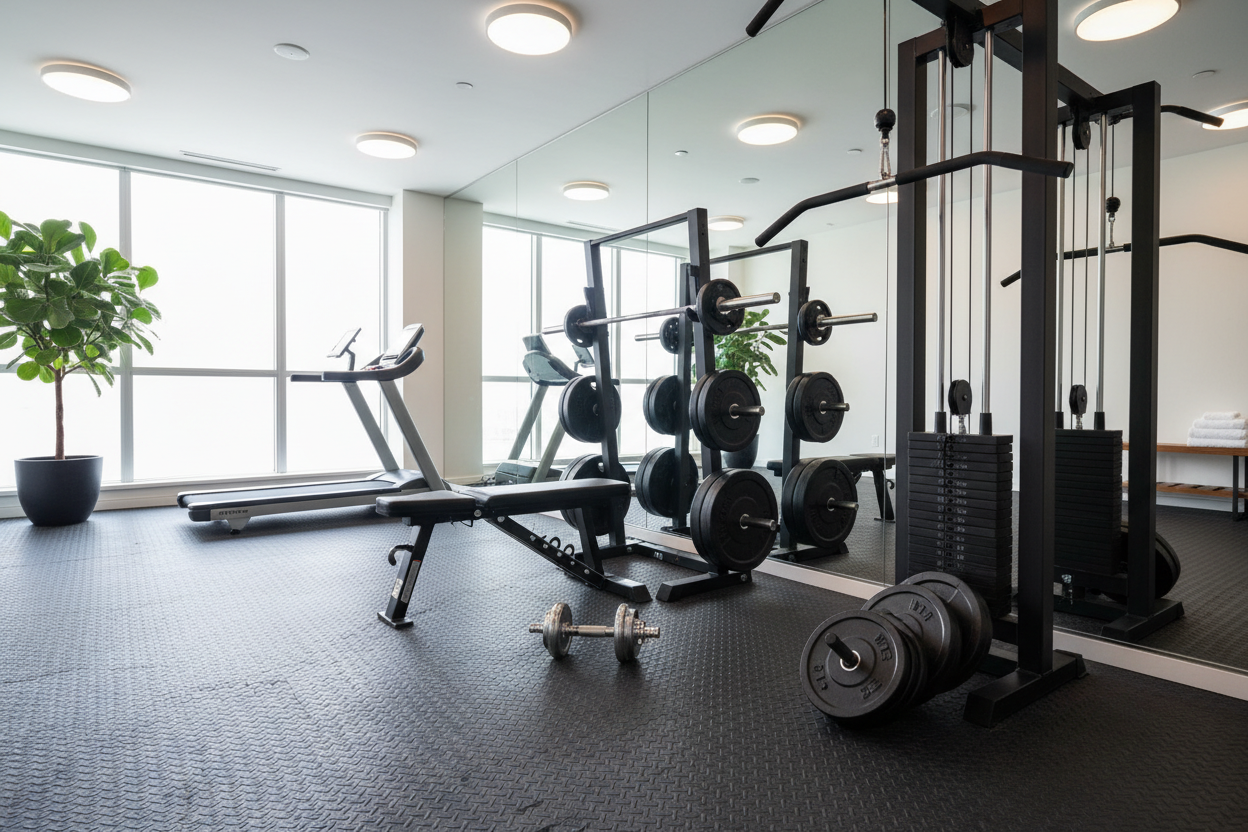
You know that feeling when you are at the bottom of a heavy rep and the weight just... sticks? It is not your lats giving out; it is the cheap nylon pulleys on your budget rig screaming for mercy. I have spent thousands of hours in commercial gyms and hundreds of hours in my own garage, and nothing ruins a back day faster than inconsistent pulldown machine weights. If you are tired of fighting the machine instead of the resistance, you are likely dealing with the hidden tax of low-end cable geometry.
- Friction is the enemy of hypertrophy; budget machines have too much of it.
- Plate-loaded machines save money but cost you time and smoothness.
- A 200lb selectorized stack usually beats 300lbs of plates on a friction-heavy slider.
- Pulley ratios (1:1 vs 2:1) drastically change the 'real' weight you are pulling.
The Cable Friction Reality Check
Most people think a cable is just a cable. It is not. On a high-end commercial unit, the weight moves like it is floating on oil. On a budget home rig, you are often dealing with plastic bushings sliding over powder-coated square tubing. That metal-on-metal or plastic-on-metal contact creates a 'stutter' in the movement. When you are trying to find a mind-muscle connection with your lower lats, that jerky motion is a total focus killer.
The issue usually stems from the pulley wheels themselves. Cheap machines use plastic pulleys with low-grade bearings that bind under heavy loads. If you are loading 200 pounds of lat pulldown machine weights onto a carriage held together by bolts and hope, that carriage is going to tilt. Once it tilts, the friction increases exponentially. You end up pulling 200 pounds on the way down, but the machine 'holds' 40 pounds of it on the way up, robbing you of the eccentric phase where the real muscle growth happens.
I always tell people to look for aluminum pulleys and chrome-plated guide rods. Chrome is smoother and harder than powder-coated steel. If the machine you are looking at uses the same black paint on the guide rods as it does on the frame, run the other way. You will be stripping that paint off with every rep, creating a sticky mess that no amount of silicone spray can fix.
Plate-Loaded Post vs. A Dedicated Weight Stack
The biggest fork in the road for a home gym owner is deciding between a plate-loaded carriage and a selectorized weight stack. Plate-loaded units are significantly cheaper and easier to ship, but they come with a 'clunky' tax. You have to manually lug 45-pound plates over to the machine, slide them on, and then take them off when you are done. If you are doing drop sets, forget about it. By the time you strip two plates off, your heart rate has dropped and the pump is gone.
Selectorized stacks, where you just move a pin, are the gold standard for a reason. They offer a consistent, vertical path of travel that is almost impossible to replicate with a sliding carriage. Even the most stubborn barbell purists are half right about the raw feel of iron, but they usually change their tune once they experience the constant, fluid tension of a high-quality selectorized stack. The convenience of jumping from 150 to 100 pounds in two seconds makes your accessory work much more effective.
However, if you are on a budget, a plate-loaded machine can work IF it uses a high-quality linear bearing system. Look for machines that use round guide rods rather than square ones. Square tubes are notorious for 'binding' if the weight is not perfectly balanced on both sides. If you do go plate-loaded, invest in some thin competition plates so you can keep the center of gravity closer to the guide rods.
Why Selectorized Lat Pulldown Machine Weights Feel Heavier
Have you ever noticed that 100 pounds on one machine feels like 150 on another? That is the pulley ratio at work. A 1:1 ratio means if you pull the handle 12 inches, the weight stack moves 12 inches. You are feeling every single pound. A 2:1 ratio means the weight only moves 6 inches for every 12 inches of handle travel. This cuts the felt resistance in half.
Most cheap functional trainers use a 2:1 ratio to make the cables feel 'longer' and smoother, but a dedicated lat pulldown should ideally be 1:1. If you are buying a machine with 200 pounds of lat pulldown machine weights and it is a 2:1 ratio, you only actually have 100 pounds of effective resistance. For a big guy doing heavy triples, you will max that out in a week. Always check the specs for the 'effective resistance' before you drop a grand on a machine that you will outgrow by next Tuesday.
How Much Weight Do You Actually Need to Max Out?
I see guys obsessed with getting a 300-pound stack for their home gym. Unless you are an IFBB pro or a specialized powerlifter, you probably do not need it. On a true 1:1 machine with low friction, 200 pounds is a massive amount of weight for a strict lat pulldown. Most people who 'max out' the 250-pound stack at the local commercial gym are using a massive amount of momentum and leaning back so far it becomes a seated row.
If you focus on a full stretch at the top and a squeeze at the bottom without using your body weight to jump-start the rep, 150 to 180 pounds will humble you quickly. When shopping, prioritize the quality of the movement over the total number of plates. A 200-pound stack that moves smoothly is infinitely better than a 300-pound stack that catches and jerks. Also, consider the top plate weight. Some cheap machines have a 20-pound top plate, making small jumps impossible. Look for stacks that offer 10-pound increments or have an 'adder weight' system for those 2.5-pound micro-gains.
Making It Work in a Cramped Garage
Most of us are not working with unlimited square footage. A dedicated lat pulldown machine is a footprint hog. If you are tight on space, look for a wall-mounted cable station or a rack-attached option. These allow you to keep your floor space open for deadlifts and cleans while still getting your vertical pulling volume in. If you go the rack-attached route, make sure your rack is bolted to the floor or has front foot extensions, otherwise, a heavy pulldown will tip the whole rig forward.
To maximize your versatility, I recommend positioning a reliable weight bench near your cable unit. You can use it for seated rows, face pulls, or even chest-supported rows if the cable height is adjustable. Using an adjustable weight bench allows you to set an incline and do chest-supported cable rows, which are arguably the best movement for mid-back thickness without the lower back fatigue of a barbell row. It turns a single-purpose pulldown into a full-on back station.
The Final Verdict: Where to Spend Your Money
If you have the cash and the ceiling height, buy a selectorized 1:1 lat pulldown with a 200-pound stack and aluminum pulleys. It is a 'buy once, cry once' investment that will actually make you want to train your back. If you are on a strict budget, get a high-quality plate-loaded unit with round guide rods, but be prepared to spend a lot of time cleaning and lubing those rods to keep the friction down.
Do not be fooled by high weight capacities on cheap machines. A machine rated for 400 pounds that feels like a gravel grinder at 100 pounds is a waste of money. Focus on the pulleys, the guide rods, and the ratio. Your lats will thank you.
Personal Experience: The $200 Mistake
Years ago, I bought a cheap plate-loaded attachment for my power rack. It looked great in the photos, but the first time I loaded three 45s on it, the plastic bushings compressed so much that the carriage barely moved. I had to 'jerk' the weight to get it started, which eventually led to a nasty bicep strain. I ended up selling it for $50 on Craigslist and buying a standalone unit with real guide rods. Learn from my ego; the cheapest option usually costs more in the long run when you factor in the frustration and potential injury.
FAQ
Do I need to grease my lat pulldown machine weights?
Yes, but do not use heavy grease. Use a dry silicone spray or a specialized PTFE lubricant on the guide rods. Heavy grease attracts dust and gym chalk, which eventually turns into a sticky paste that increases friction.
Can I swap plastic pulleys for aluminum ones?
Usually, yes. Most machines use standard 3.5-inch or 4.5-inch pulleys. Swapping the stock plastic ones for aluminum pulleys with high-quality bearings is the single best 'hack' to make a cheap machine feel expensive.
Is a 2:1 ratio bad for lat pulldowns?
It is not 'bad,' but it is limiting. You will need a much heavier weight stack to get the same stimulus. If the machine has a 200lb stack at 2:1, you are effectively capped at 100lbs of pull, which many lifters will outgrow quickly.
Share:
I Browsed First Place Equipment to See If Local Shops Still Matter
I Fact-Checked the Will Smith Bench Press Numbers (Is 385lbs Real?)